
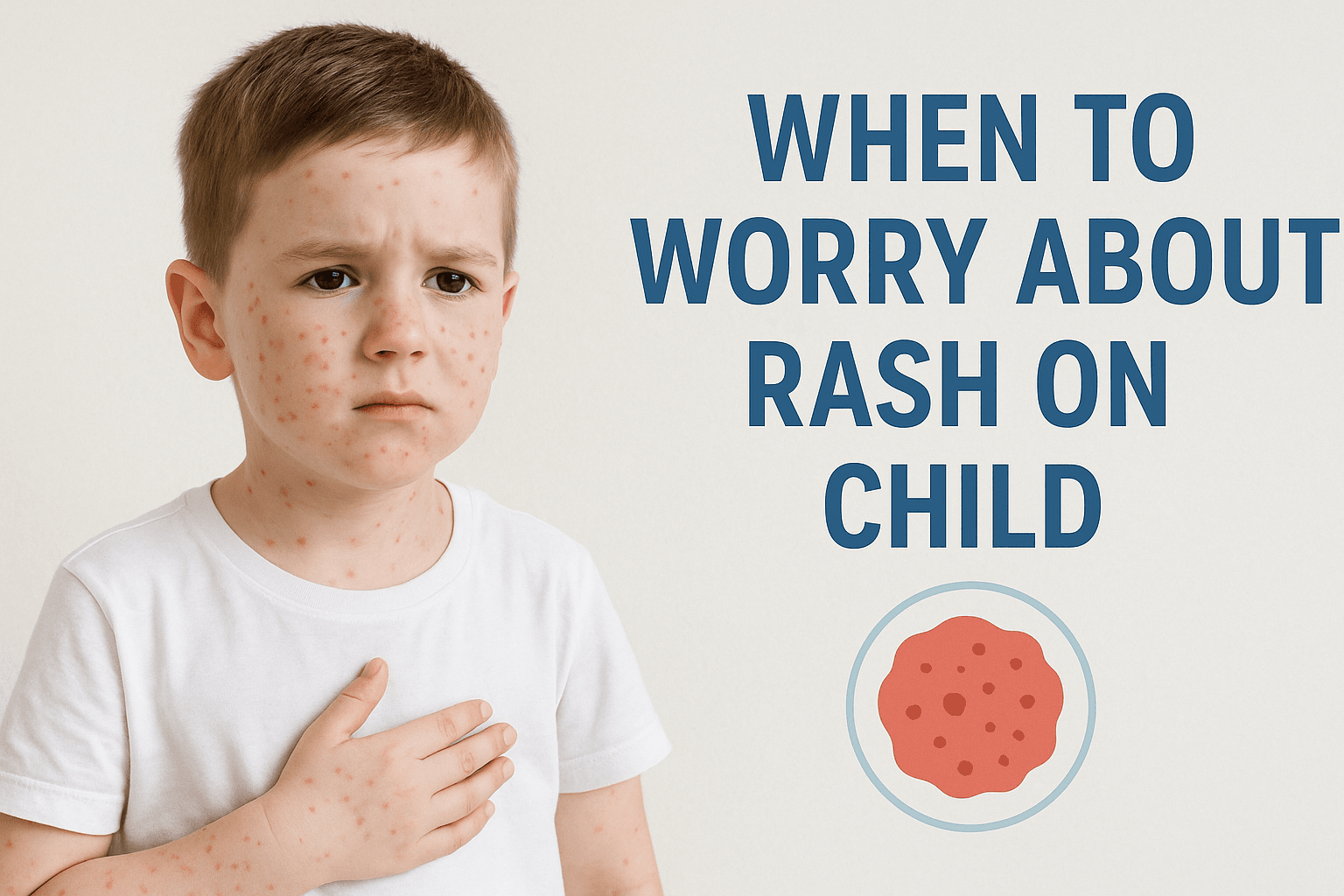
Worry About a Rash on a Child,,
Rashes are something every parent encounters at some point — red spots, tiny bumps, or patchy skin can suddenly appear on your child’s body and cause instant panic.
While most rashes are harmless and clear up naturally, a few can indicate serious medical problems that need immediate attention.
This detailed guide will help you understand everything about rashes in children — from common causes and home care to knowing exactly when to worry and call the doctor.
🌿 What Exactly Is a Rash?
A rash is any noticeable change in the skin’s color, texture, or appearance. It may look like:
- Red or pink spots
- Itchy patches
- Tiny bumps or blisters
- Peeling or dry skin
A rash can appear anywhere — on the face, hands, chest, back, legs, or diaper area.
Sometimes it causes itching or burning, and other times it might not bother the child at all.
Rashes are the body’s response to irritation, infection, or an allergic reaction.
So before panicking, it’s important to understand what type of rash your child has.
🧒 Why Do Children Get Rashes So Often?
Children have sensitive and developing skin, which reacts quickly to environmental factors.
Their immune system is still learning to fight new germs, so even a minor trigger — like heat or food — can cause a visible skin reaction.
The most common causes of rashes in children include:
- Viral Infections – such as measles, chickenpox, roseola, or hand-foot-mouth disease.
- Bacterial Infections – like impetigo or scarlet fever.
- Allergic Reactions – to foods, insect bites, or medications.
- Heat & Sweat – causing prickly heat or “heat rash.”
- Irritants – like soaps, detergents, or rough clothing.
- Chronic Conditions – such as eczema or psoriasis.
Let’s now look at each of these in detail.
🌞 1. Viral Rashes
Viral rashes are among the most common in children.
They often appear during or after a mild viral illness — such as cold, cough, or fever.
🔹 What It Looks Like:
Small, pink or red spots spread across the body, sometimes itchy but usually painless.
🔹 Common Viruses That Cause Rashes:
- Measles: Starts on the face, then spreads down the body. Often with cough, runny nose, and red eyes.
- Chickenpox: Itchy blisters that form scabs later.
- Roseola: High fever for 2–3 days, followed by pink spots after fever breaks.
- Hand-Foot-Mouth Disease: Small blisters on hands, feet, and inside the mouth.
🔹 Home Care:
Most viral rashes are harmless.
Give rest, keep your child hydrated, and use mild lotion or aloe vera gel for itching.
Fever can be managed with prescribed medicine.
🍎 2. Allergic Rashes (Hives)
Allergic rashes appear suddenly and spread quickly.
They may be caused by certain foods (like peanuts, milk, eggs), medicines, insect bites, or even pollen.
🔹 What It Looks Like:
Raised, red, itchy bumps called hives (urticaria) that move around the body.
🔹 When to Worry:
If you notice:
- Swelling of lips, tongue, or eyelids
- Trouble breathing
- Dizziness or fainting
⚠️ These are signs of anaphylaxis, a medical emergency.
Call your doctor or go to the emergency room immediately.
🍼 3. Diaper Rash
One of the most common problems in babies.
It happens due to prolonged moisture, friction, and contact with urine or stool.
🔹 What It Looks Like:
Red, shiny patches around the diaper area — sometimes with small bumps.
🔹 How to Prevent:
- Change diapers often.
- Allow air to reach the skin between changes.
- Use barrier creams like zinc oxide.
- Avoid scented wipes and soaps.
If the rash becomes bright red with tiny spots at the edges, it might be yeast infection — see a doctor for antifungal cream.
☀️ 4. Heat Rash (Prickly Heat)
In hot or humid weather, children sweat more, and sweat glands get blocked.
This causes small itchy bumps known as prickly heat.
🔹 Where It Appears:
Neck, shoulders, chest, or back.
🔹 How to Treat:
- Keep the child cool and dry.
- Dress in loose cotton clothes.
- Avoid applying heavy creams or oils.
- Bathe in cool water.
This rash usually goes away within 2–3 days.
🌾 5. Eczema (Atopic Dermatitis)
Eczema is a long-term skin condition that can start in early childhood.
The skin becomes dry, red, itchy, and flaky.
🔹 Triggers:
Cold weather, dust, soaps, stress, or certain foods.
🔹 Common Areas:
Face, elbows, behind knees, or on the wrists.
🔹 Care Tips:
- Moisturize twice daily (especially after bathing).
- Use gentle, fragrance-free soaps.
- Avoid scratching — keep nails short.
- Consult a doctor for medicated creams if it worsens.
When to Worry About a Rash on a Child
Not all rashes are harmless.
Some are signs of serious infection or allergic reaction.
Here’s how to know it’s time to call the doctor or visit emergency care.
🚨 1. Rash with Fever or Illness
If your child’s rash appears with:
- High fever
- Vomiting
- Fatigue
- Headache
It could indicate meningitis, measles, scarlet fever, or Kawasaki disease.
These need urgent medical treatment.
🚨 2. Rash That Doesn’t Fade (Non-Blanching Rash)
Press a clear glass against the rash — if it does not fade or lighten, it may be a meningococcal infection (sepsis).
This is a medical emergency — seek help immediately.
🚨 3. Rash That Looks Like Bruises or Purple Dots
Purple or bruise-like spots can mean blood vessel infection or bleeding disorder.
Do not ignore this — it requires urgent evaluation by a doctor.
🚨 4. Rash with Breathing Trouble or Swelling
If your child has hives and is wheezing or swelling around lips, eyes, or throat, it’s a severe allergic reaction (anaphylaxis).
Call emergency medical services right away.
🚨 5. Painful, Swollen, or Oozing Rash
If the rash becomes painful, red, and warm, or starts oozing pus, it may be a bacterial infection (cellulitis).
Needs antibiotics and medical care.
🚨 6. Rash with Blisters or Peeling Skin
Large blisters or peeling skin may signal Stevens-Johnson syndrome or toxic shock syndrome — both are life-threatening.
Immediate hospital care is needed.
🚨 7. Rash in a Newborn (Below 2 Months)
Even a mild rash in a newborn can be serious, especially with fever, poor feeding, or sleepiness.
Always show the baby to a pediatrician — newborns can fall sick very fast.
🏠 Home Care for Mild Rashes
If your child’s rash looks mild and your doctor says it’s safe to treat at home, here’s what you can do:
- Keep the skin clean and cool.
Use lukewarm water for bathing — never hot. - Avoid scratching.
Cut nails short and use mittens for babies. - Use soothing lotions.
Calamine lotion or aloe vera gel helps reduce itching. - Avoid harsh soaps or fragrances.
Use mild, baby-safe cleansers only. - Dress in soft cotton clothes.
Avoid synthetic fabrics that trap heat. - Hydrate well.
Encourage plenty of fluids and healthy meals rich in vitamins. - Give prescribed medicines only.
Never use over-the-counter steroid creams without a doctor’s advice.
🌼 Prevention Tips Every Parent Should Follow
- Keep your child’s skin moisturized daily.
- Wash hands frequently to prevent infections.
- Use hypoallergenic soaps and detergents.
- Keep the child’s nails clean to prevent scratching injuries.
- Maintain room temperature — not too hot or humid.
- Ensure good nutrition — vitamins A, C, and E support healthy skin.
❤️ Conclusion
A rash on your child’s skin can look scary, but remember — most rashes are mild and temporary.
What matters most is how your child feels.
If they are playful, eating well, and active, the rash is likely harmless.
However, if the rash comes with fever, looks purple, spreads rapidly, or your child seems very tired or unwell — it’s time to see the doctor immediately.
Early diagnosis and treatment can prevent serious complications.
As a parent, your awareness is your child’s best protection.
Keep calm, stay informed, and always trust your instincts. 💖
If you don’t want to read, you can watch the video by clicking on this Link…
https://onlinehelpful.com/blog/
https://youtu.be/WiIEb-Kbup4?si=4-sG57cX9Ze3gDqy
Frequently Asked Questions
1. Can teething cause a rash on my baby’s face?
Yes, teething can cause a mild rash around a baby’s mouth and chin. It happens because of excessive drooling, which irritates the skin. Gently wipe the saliva and apply a mild moisturizer to protect the area.
2. How long do viral rashes last in children?
Viral rashes generally last 3 to 7 days. Once the virus leaves the body, the rash fades naturally. Ensure your child stays hydrated and well-rested during recovery.
3. What does a serious rash look like on a child?
A serious rash may appear as purple dots, bruise-like marks, or blisters that spread quickly and do not fade when pressed. If your child also has fever or seems weak, seek medical help immediately.
4. Can allergies cause rashes in children?
Yes, allergies to food, medicines, or insect bites can cause red, itchy bumps (hives). Most are mild, but if your child has breathing problems or swelling of lips and eyes, get emergency medical care.
5. What home remedies help soothe a child’s rash?
Use cool compresses, aloe vera gel, or calamine lotion to reduce irritation. Dress your child in soft cotton clothes and keep their skin clean and dry. Avoid scented soaps or lotions.
6. When should I take my child to the doctor for a rash?
You should call the doctor if your child’s rash:
Appears suddenly with high fever
Turns purple or bruised
Spreads rapidly
Causes pain, swelling, or pus
Occurs in a newborn under 2 months