
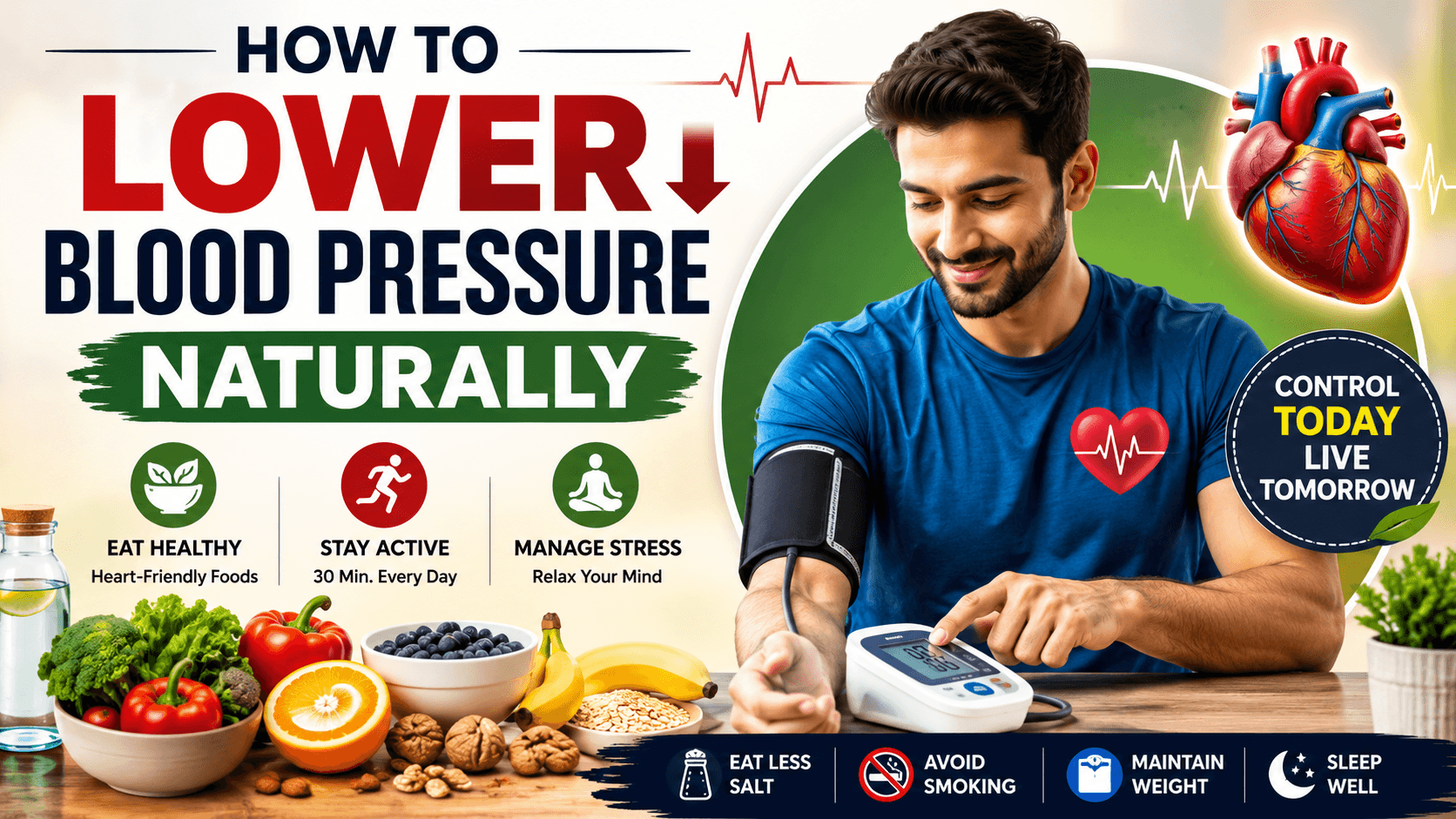
Best Lifestyle Changes to Lower Blood Pressure Naturally
High blood pressure (hypertension) is a common health condition that often develops without noticeable symptoms. Without proper management, it can raise the risk of serious health complications, including heart disease, stroke, kidney damage, and other long-term medical conditions. The encouraging news is that healthy lifestyle habits can naturally help reduce blood pressure while supporting better overall health and well-being.
Maintain a Healthy Weight
Maintaining a healthy body weight is one of the most effective lifestyle changes for lowering high blood pressure naturally. Losing as little as 5–10% of your body weight can help lower blood pressure, reduce the workload on your heart, and improve your overall cardiovascular health.
Exercise Regularly
Engaging in regular physical activity helps keep your heart strong, improves blood circulation, and supports healthy blood pressure levels.
Best exercises include:
- Brisk walking
- Cycling
- Swimming
- Jogging
- Dancing
- Yoga
Try to get at least 30 minutes of moderate-intensity exercise on most days of the week to support your heart health and overall well-being.
Follow a Heart-Healthy Diet
Eating a healthy, balanced diet supplies essential nutrients that help regulate blood pressure and support overall heart health.
Eat more of these foods:
- Fresh fruits
- Green leafy vegetables
- Whole grains
- Beans and legumes
- Nuts and seeds
- Low-fat dairy products
- Fish rich in omega-3 fatty acids
Limit these foods:
- Processed foods
- Fast food
- Sugary drinks
- Fried foods
- Foods high in saturated fat
- High-sodium (salty) snacks
Reduce Salt Intake
Consuming too much salt causes the body to retain extra fluid, which can raise blood pressure and place additional strain on the heart.
Tips to reduce sodium:
- Cook meals at home.
- Read food labels before buying.
- Choose low-sodium products.
- Avoid adding extra salt to meals.
Manage Stress Effectively
Long-term stress may contribute to high blood pressure.
Healthy ways to reduce stress include:
- Deep breathing exercises
- Meditation
- Yoga
- Listening to relaxing music
- Spending time with family and friends
- Taking short breaks during work
Get Enough Quality Sleep
Adults should aim for 7–9 hours of quality sleep every night. Lack of quality sleep can contribute to higher blood pressure and have a negative impact on your heart and overall cardiovascular health.
Avoid Smoking and Limit Alcohol
Smoking damages blood vessels and raises blood pressure immediately after each cigarette. Excessive alcohol consumption can gradually raise blood pressure and increase the risk of long-term heart and cardiovascular problems.
For better heart health:
- Quit smoking completely.
- Limit alcohol consumption.
- Seek professional help if needed.
Monitor Your Blood Pressure Regularly
Checking your blood pressure regularly helps you understand whether your lifestyle changes are working.
You should:
- Use a reliable home blood pressure monitor.
- Record your readings.
- Share them with your healthcare provider during check-ups.
Healthy lifestyle habits form the foundation of maintaining normal blood pressure and supporting long-term heart health. Regular exercise, a balanced diet, stress management, quality sleep, and avoiding harmful habits can significantly lower blood pressure naturally. If your blood pressure remains consistently high despite lifestyle changes, consult a healthcare professional and continue taking any prescribed medications exactly as directed.
Best Foods, Drinks, and Healthy Habits to Naturally Lower High Blood Pressure
Controlling high blood pressure involves more than just taking medication—it also requires adopting healthy daily habits and making positive lifestyle changes. The foods you eat, the drinks you choose, and your daily habits all play an important role in maintaining healthy blood pressure levels. A balanced lifestyle can help improve heart health, reduce the risk of complications, and support long-term wellness.
Eat More Potassium-Rich Foods
Potassium helps balance sodium levels in the body and relaxes blood vessel walls, making it easier for blood to flow.
Good sources of potassium include:
- Bananas
- Oranges
- Avocados
- Spinach
- Sweet potatoes
- Tomatoes
- Beans
- Coconut water (in moderation)
Choose Heart-Healthy Foods
A nutrient-rich diet can naturally support healthy blood pressure.
Include these foods in your daily meals:
- Fresh fruits and vegetables
- Whole grains such as oats and brown rice
- Lean proteins like fish and skinless chicken
- Low-fat dairy products
- Nuts and seeds
- Olive oil and other healthy fats
Reduce Sodium Intake
Consuming too much sodium causes the body to hold onto excess fluid, which can raise blood pressure and put extra strain on the heart and blood vessels.
Simple ways to eat less salt:
- Avoid packaged and processed foods.
- Read nutrition labels carefully.
- Use herbs and spices instead of salt.
- Limit pickles, chips, and instant noodles.
Drink Plenty of Water
Staying hydrated helps your body function properly and supports healthy circulation.
Healthy drink choices include:
- Plain water
- Lemon water (without added sugar)
- Coconut water
- Herbal tea
- Low-fat milk
Limit Sugary and Caffeinated Drinks
Some beverages may contribute to higher blood pressure when consumed in excess.
Reduce or avoid:
- Soft drinks
- Energy drinks
- Excess coffee
- Sweetened fruit juices
- Alcoholic beverages
Maintain Healthy Daily Habits
Consistently practicing healthy habits each day may seem small, but they can lead to significant improvements in your blood pressure and overall health over time.
Healthy habits to follow:
- Walk every day.
- Sleep for 7–9 hours.
- Maintain a healthy weight.
- Avoid smoking.
- Manage stress through meditation or yoga.
- Take prescribed medicines on time.
Control Portion Sizes
Eating large portions can lead to weight gain, which may increase blood pressure.
Helpful tips:
- Eat slowly.
- Use smaller plates.
- Avoid overeating.
- Include vegetables in every meal.
Monitor Your Progress
Keeping track of your lifestyle habits helps you stay motivated.
You can:
- Measure your blood pressure regularly.
- Keep a food diary.
- Track your daily exercise.
- Set realistic health goals.
Healthy eating, smart drink choices, and positive daily habits work together to lower blood pressure naturally. Consistency is the key to long-term success. Pair these healthy lifestyle habits with regular medical check-ups to support heart health, manage blood pressure effectively, and lower the risk of complications related to hypertension.
When to See a Doctor for High Blood Pressure: Warning Signs & Treatment
High blood pressure is often called the “silent killer” because it usually has no obvious symptoms. Many people with dangerously high blood pressure experience no noticeable symptoms and may feel completely healthy despite the condition. That’s why regular monitoring and knowing when to seek medical attention are essential. Early diagnosis and proper treatment can prevent serious complications such as heart attack, stroke, kidney disease, and vision problems.
Know the Warning Signs
Although high blood pressure often has no symptoms, extremely high blood pressure (a hypertensive crisis) may cause noticeable warning signs.
Seek immediate medical attention if you experience:
- Severe headache
- Chest pain
- Shortness of breath
- Blurred or double vision
- Dizziness or confusion
- Nosebleeds that won’t stop
- Irregular heartbeat
- Severe anxiety
These symptoms may indicate a medical emergency and should never be ignored.
Check Your Blood Pressure Regularly
Regular monitoring helps detect high blood pressure before complications develop.
You should monitor your blood pressure if you:
- Are over 40 years old
- Have a family history of hypertension
- Are overweight or obese
- Have diabetes or kidney disease
- Smoke or drink alcohol regularly
- Lead a physically inactive lifestyle
Keeping a record of your blood pressure readings can help your doctor evaluate your condition more accurately.
When Should You Visit a Doctor?
You should schedule a medical appointment if your blood pressure readings remain consistently high.
See a healthcare provider if:
- Your blood pressure readings consistently remain at or above 130/80 mmHg, even after repeated measurements.
- Lifestyle changes do not improve your readings.
- You experience frequent headaches or dizziness.
- You develop chest pain or difficulty breathing.
- You have a personal history of heart disease, stroke, kidney disease, or other cardiovascular conditions that increase your health risks.
Never ignore repeated high blood pressure readings, even if you feel well.
Medical Treatments for High Blood Pressure
If healthy lifestyle changes do not adequately control your blood pressure, your healthcare provider may prescribe medication to help manage it.
Common treatment options include:
- Blood pressure-lowering medications
- A low-sodium, heart-healthy diet
- Regular physical activity
- Weight management
- Stress reduction techniques
- Routine follow-up appointments
Take medications exactly as prescribed and never stop them without consulting your doctor.
Prevent Serious Complications
Untreated high blood pressure can damage many organs over time.
Possible complications include:
- Heart attack
- Stroke
- Heart failure
- Kidney damage
- Vision loss
- Memory and cognitive problems
Proper treatment greatly reduces these risks.
Tips for Long-Term Blood Pressure Control
Healthy habits remain important even if you are taking medication.
Remember to:
- Eat a balanced diet.
- Exercise regularly.
- Limit salt intake.
- Avoid smoking and excessive alcohol.
- Get enough sleep.
- Manage stress effectively.
- Keep regular medical check-ups.
Knowing when to seek medical care for high blood pressure can save your life. Regular monitoring, recognizing warning signs, and following your doctor’s treatment plan are the best ways to protect your heart and overall health. Combining medical care with healthy lifestyle choices offers the greatest chance of keeping your blood pressure under control for years to come.
Conclusion
Lowering your blood pressure is one of the best investments you can make for your long-term health. By adopting healthy lifestyle habits, eating a heart-friendly diet, staying physically active, reducing stress, and limiting salt intake, many people can naturally improve their blood pressure levels. Regular monitoring is equally important, as high blood pressure often develops without noticeable symptoms. If your readings remain consistently high or you experience warning signs such as chest pain, severe headaches, or shortness of breath, seek medical advice without delay. Combining healthy daily habits with professional medical care when needed can help protect your heart, reduce the risk of serious complications, and support a longer, healthier, and more active life.
➤ Click this link to discover powerful remedies for common body diseases and valuable tips to protect and maintain your overall health.
https://onlinehelpful.com/category/health/
➤ Prefer watching instead of reading? Click the link below to view the complete video guide.
https://youtu.be/xmi9qghwQEY?si=UkiQuigX9EWCDfFC
Frequently Asked Questions
Q1. What is considered normal blood pressure?
A: A normal blood pressure reading is generally below 120/80 mmHg. Readings consistently above 130/80 mmHg may indicate high blood pressure and should be discussed with a healthcare provider.
Q2. Can high blood pressure be lowered naturally?
A: Yes. Many people can lower their blood pressure naturally by eating a healthy diet, reducing salt intake, exercising regularly, maintaining a healthy weight, managing stress, and avoiding smoking and excessive alcohol.
Q3. Which foods help lower blood pressure?
A: Foods that may help include leafy green vegetables, bananas, berries, oats, whole grains, beans, nuts, seeds, low-fat dairy products, and fish rich in omega-3 fatty acids.
Q4. How much exercise is recommended to reduce high blood pressure?
A: Most adults should aim for at least 150 minutes of moderate-intensity exercise per week, such as brisk walking, cycling, swimming, or jogging.
Q5. Does reducing salt really help lower blood pressure?
A: Yes. Eating less sodium helps reduce fluid retention, making it easier for your heart to pump blood and lowering blood pressure over time.
Q6. When should I see a doctor for high blood pressure?
A: You should consult a doctor if your blood pressure is consistently 130/80 mmHg or higher, lifestyle changes are not helping, or you experience symptoms such as chest pain, severe headaches, dizziness, or shortness of breath.
Q7. Can stress increase blood pressure?
A: Yes. Long-term stress can contribute to higher blood pressure. Relaxation techniques such as deep breathing, meditation, yoga, and regular physical activity can help manage stress effectively.
Q8. Can I stop taking blood pressure medication once my readings improve?
A: No. Never stop taking blood pressure medication without consulting your doctor. Your healthcare provider will determine whether your treatment plan should be adjusted based on your condition.