
Introduction
Why Pearl Harbor Remembrance Day ,,
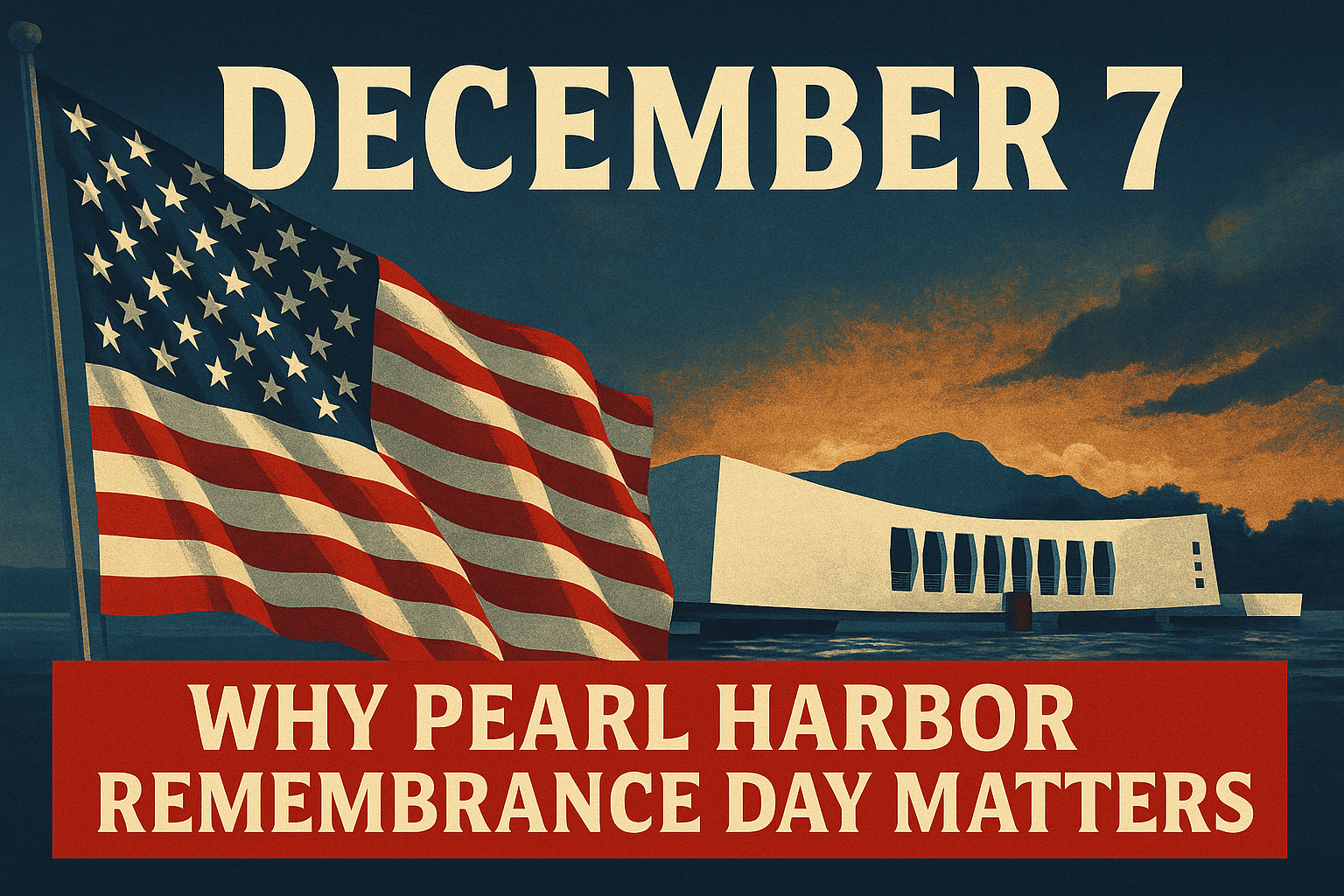
December 7 is widely remembered as one of the most significant and defining dates in American and world history. On this day in 1941, the United States naval base at Pearl Harbor, Hawaii, was attacked by the Imperial Japanese Navy in a devastating surprise air assault. What began as a peaceful Sunday morning quickly turned into chaos as bombs fell from the sky, battleships exploded, and American servicemen scrambled to defend themselves.
This attack pushed the United States into World War II, shifting the direction of global politics and reshaping the future of nations for decades to come.
Every year, Pearl Harbor Remembrance Day is observed to honor the brave men and women who died during the attack, the survivors who showed unbelievable courage, and the lessons this tragic event still teaches the world today. It is not only a moment to look back at history but also an opportunity to reflect on the values of peace, preparedness, unity, sacrifice, and resilience.
In this long and detailed article, we will explore:
- What happened on December 7, 1941
- Why the day holds importance for America and the world
- How the United States observes this memorial
- Real-life stories of courage
- The long-term global impact of the attack
- Important lessons for today’s generation
- How individuals can honor this day
What Really Happened on December 7, 1941?
On the early morning of December 7, 1941, the Imperial Japanese Navy launched a massive, well-coordinated, and carefully planned air attack on the U.S. Pacific Fleet stationed at Pearl Harbor. The goal was clear: destroy America’s military power in the Pacific in a single blow.
For months, Japan’s military strategists had studied the harbor, the positions of American ships, and the weaknesses in their defenses. Their ultimate aim was to cripple the U.S. Navy and prevent it from interfering with Japan’s expansion across Asia.
Timeline of the Attack
7:55 AM – First Wave
More than 180 Japanese aircraft, including torpedo planes, dive bombers, fighters, and high-altitude bombers, arrived suddenly over Pearl Harbor. Within minutes:
- Battleships were struck by torpedoes
- Runways were bombed
- Hangars burst into flames
- American aircraft were destroyed while still on the ground
- Thousands of servicemen were caught by surprise
The sky turned dark with smoke, and the waters of the harbor began to fill with burning oil and debris.
8:50 AM – Second Wave
A second wave of Japanese aircraft soon followed, targeting:
- Fuel storage tanks
- Shipyards
- Remaining battleships
- Military installations
This wave caused additional destruction, making it nearly impossible for the U.S. forces to launch an organized defense.
By 10:00 AM – Silence After the Storm
In under two hours, Pearl Harbor had been transformed from a peaceful base into a scene of massive devastation.
The total damage was overwhelming:
- 2,403 Americans killed
- 1,178 wounded
- 8 battleships damaged or sunk
- Nearly 200 aircraft destroyed
One of the most tragic losses was the USS Arizona, which suffered a direct bomb hit. The enormous explosion that followed killed over 1,100 crew members instantly, making it the single deadliest moment of the attack.
Later, President Franklin D. Roosevelt described December 7 as
“a date which will live in infamy.”
Why Pearl Harbor Remembrance Day Matters
Pearl Harbor Remembrance Day is not just a historical marker—it is a significant memorial that highlights sacrifice, courage, national unity, and the price of peace.
1. It Honors the Brave People Who Lost Their Lives
The attack took the lives of thousands of sailors, soldiers, airmen, and civilians. Many of them were young men who had joined the military with dreams, hopes, and futures ahead of them. Their lives ended suddenly in an attack they never expected.
Remembering them is a way to:
- Respect their bravery
- Acknowledge their sacrifice
- Honor their dedication to protecting the nation
Those who survived the attack lived with emotional and physical scars, and their stories remind us of the cost of freedom.
2. It Teaches the World the High Cost of War
War does not just affect armies—it affects families, communities, countries, and future generations. Pearl Harbor shows the world that:
- Peace can vanish in moments
- Innocent people pay the heaviest price during conflict
- Nations must work hard to avoid war through diplomacy
By reflecting on Pearl Harbor, people today learn to value peace and understand the consequences of global conflict.
3. It Was a Turning Point in World War II
Before Pearl Harbor, the United States was not an active participant in World War II. But after the attack:
- The U.S. declared war on Japan
- Germany and Italy declared war on the U.S.
- America officially joined the Allied forces
This changed the direction of the war dramatically. The industrial strength, manpower, and military strategy of the United States helped defeat the Axis powers, bringing an end to the war in 1945.
4. It Serves as a Powerful Lesson in Preparedness
Pearl Harbor exposed major weaknesses in:
- Military intelligence
- Communication systems
- Strategic planning
- Early warning defenses
Today, nations around the world continue to study the attack to avoid repeating similar mistakes. It emphasizes the importance of:
- Effective intelligence sharing
- Strong national security
- Being alert to global threats
- Improving technology and communication
5. It Symbolizes the Strength of National Unity
The attack shocked the nation, but it also united Americans like never before:
- Citizens volunteered to join the military
- Factories transformed into war production centers
- Women took on jobs previously held only by men
- Communities supported war efforts
This unity played a major role in America’s victory in World War II and continues to inspire patriotic spirit even today.
How the U.S. Observes Pearl Harbor Remembrance Day
1. National Moment of Silence (7:55 AM)
Across the United States, people pause at 7:55 AM, the exact time the attack began, to honor the memory of those who lost their lives.
2. Ceremonies in Hawaii
The main memorial ceremonies take place at Pearl Harbor, especially at the USS Arizona Memorial. Survivors, military officials, veterans’ families, and visitors gather to:
- Attend flag ceremonies
- Lay wreaths
- Listen to speeches
- Share survivor stories
These ceremonies are emotional and deeply respectful, reminding everyone of the bravery shown that day.
3. Flags at Half-Staff
Government buildings, schools, and homes across the country lower the American flag to half-staff to honor the fallen heroes.
4. Educational Programs and Documentaries
Schools, museums, and media platforms share:
- Historical documentaries
- Survivor interviews
- Photographs from 1941
- Detailed explanations of the attack
These programs help ensure that younger generations understand the significance of Pearl Harbor.
5. Social Media Tributes
Millions of people use social media to share:
- Photos
- Quotes
- Stories
- Memorial posts
This helps keep the memory of the event alive online.
Stories of Incredible Courage From Pearl Harbor
Although Pearl Harbor was a tragic attack, it also revealed stories of extraordinary bravery and sacrifice.
1. Doris “Dorie” Miller – The Heroic Cook
Doris Miller, an African American Navy cook who had no formal combat training, became one of the bravest heroes of the attack. During the chaos:
- He carried wounded sailors to safety
- Took control of an anti-aircraft gun
- Fired at Japanese aircraft
- Saved many lives
For his heroic actions, he received the Navy Cross, becoming one of the first American heroes of World War II.
2. The Pilots Who Fought Back
Lieutenant Kenneth Taylor and Lieutenant George Welch were among the few pilots who managed to launch fighter planes during the attack. Despite overwhelming odds:
- They shot down multiple Japanese aircraft
- Protected the harbor
- Inspired countless Americans
Their bravery became legendary.
3. The USS Arizona Crew
Even as the USS Arizona was sinking, many sailors stayed at their posts trying to save others. Their selfless actions became a symbol of ultimate sacrifice and duty.
Long-Term Impact of Pearl Harbor on the World
The Pearl Harbor attack created long-lasting effects that shaped world history.
1. Rise of the U.S. as a Global Superpower
After World War II, the United States emerged as:
- A leading global military force
- A major economic power
- A key player in international politics
This new leadership role continues to shape global affairs today.
2. Creation of the United Nations
To prevent future wars, world leaders—including the United States—established the United Nations in 1945. Its goals include:
- Promoting peace
- Encouraging diplomatic solutions
- Preventing conflicts
Pearl Harbor played a major role in motivating nations toward unity.
3. Improved Global Military Intelligence
After the attack, countries realized the importance of:
- Early warning systems
- Stronger communication networks
- Better radar technology
- International intelligence cooperation
This led to the creation of modern intelligence agencies and defense strategies.
4. A New U.S.–Japan Relationship
Despite being enemies in 1941, today:
- The U.S. and Japan are close allies
- They work together in defense, technology, and trade
- Their partnership promotes peace in the Asia-Pacific region
This transformation shows how former enemies can build cooperation and trust.
Lessons Modern Generations Should Learn
Pearl Harbor is not just a historical event—it is a lesson for today and the future.
1. Never Take Peace for Granted
Peace can be fragile. The attack shows how quickly it can be disturbed and why maintaining peace requires continuous effort.
2. Always Stay Prepared
Preparedness is essential for both nations and individuals. Strong defense, intelligence, and communication can prevent devastating losses.
3. Unity Makes a Nation Stronger
The unity shown by Americans after the attack demonstrates that people working together can overcome any crisis.
4. Honor the Past to Protect the Future
By remembering Pearl Harbor, we ensure that such mistakes and tragedies are not repeated.
How You Can Honor Pearl Harbor Remembrance Day
Even if you are far from Hawaii, you can still pay tribute by:
- Observing a moment of silence
- Visiting a military memorial
- Watching documentaries or reading history books
- Sharing educational posts online
- Teaching children about the event
- Lighting a candle in remembrance
- Donating to veteran support groups
Every small action keeps the legacy alive.
Conclusion
Pearl Harbor Remembrance Day, observed every December 7, is a powerful and emotional reminder of sacrifice, bravery, and the fragile nature of peace. The events of 1941 not only changed the direction of the United States but also shaped the future of the entire world.
By remembering the heroes—both those who fought and those who fell—we honor their legacy. December 7 will always matter because it teaches us to value peace, stay prepared, remain united, and never forget the true cost of freedom.
If you don’t want to read, you can watch the video by clicking on this Link…
https://youtu.be/4S6EGJl-VDc?si=YIaFI3Ltk6GRawec
https://onlinehelpful.com/blog/
Frequently Asked Questions
1. What is Pearl Harbor Remembrance Day?
Pearl Harbor Remembrance Day is observed every year on December 7 to honor the 2,403 Americans who lost their lives during the 1941 attack on the U.S. naval base at Pearl Harbor, Hawaii. It is a day dedicated to remembering their sacrifice and understanding the importance of peace.
2. Why did Japan attack Pearl Harbor?
Japan attacked Pearl Harbor to weaken the U.S. Pacific Fleet and prevent America from interfering with its plans to expand throughout Asia. The Japanese military believed that a surprise attack would cripple American forces, giving Japan time to take control of resource-rich regions.
3. How long did the Pearl Harbor attack last?
The attack lasted less than two hours, from approximately 7:55 AM to 9:55 AM on December 7, 1941. Despite the short duration, it caused massive loss of life and destruction.
4. How many people died during the Pearl Harbor attack?
A total of 2,403 Americans were killed and 1,178 were wounded. Most of the casualties were sailors serving aboard battleships in the harbor.
5. What was the USS Arizona, and why is it important?
The USS Arizona was one of the battleships targeted during the attack. It suffered a massive explosion when a bomb struck its ammunition magazine. More than 1,100 sailors died instantly, making it the deadliest moment of the attack. Today, the USS Arizona Memorial serves as a tribute to those who perished.
6. How did the U.S. respond to the attack on Pearl Harbor?
The next day, on December 8, 1941, the United States declared war on Japan. Soon after, Germany and Italy declared war on the U.S., officially bringing America into World War II.
7. Why is Pearl Harbor considered a turning point in World War II?
Pearl Harbor brought the United States into the war, dramatically boosting the strength of the Allied forces. America’s industrial power, military growth, and global leadership played a crucial role in defeating the Axis powers.
8. How is Pearl Harbor Remembrance Day observed today?
The day is remembered through:
A national moment of silence at 7:55 AM
Memorial ceremonies at the USS Arizona Memorial
Flags flown at half-staff
Educational programs, documentaries, and museum events
Social media tributes
9. Is Pearl Harbor Remembrance Day a federal holiday?
No, it is not a federal holiday. Government offices and schools remain open, but the day is officially recognized for national remembrance and reflection.
10. What lessons does Pearl Harbor teach modern generations?
Pearl Harbor teaches the importance of:
Staying prepared
Maintaining strong national defense
Valuing peace and diplomacy
Learning from history
Remaining united during national challenges
11. Can the public visit the Pearl Harbor memorials?
Yes. The USS Arizona Memorial, Pearl Harbor Visitor Center, and several other historic sites are open to the public. They offer guided tours, exhibits, and educational programs.
12. Why is December 7 still important today?
December 7 is important because it reminds us of the cost of freedom, the bravery of those who served, and the importance of avoiding future conflicts. It is a day to reflect on history and honor those who sacrificed their lives.