
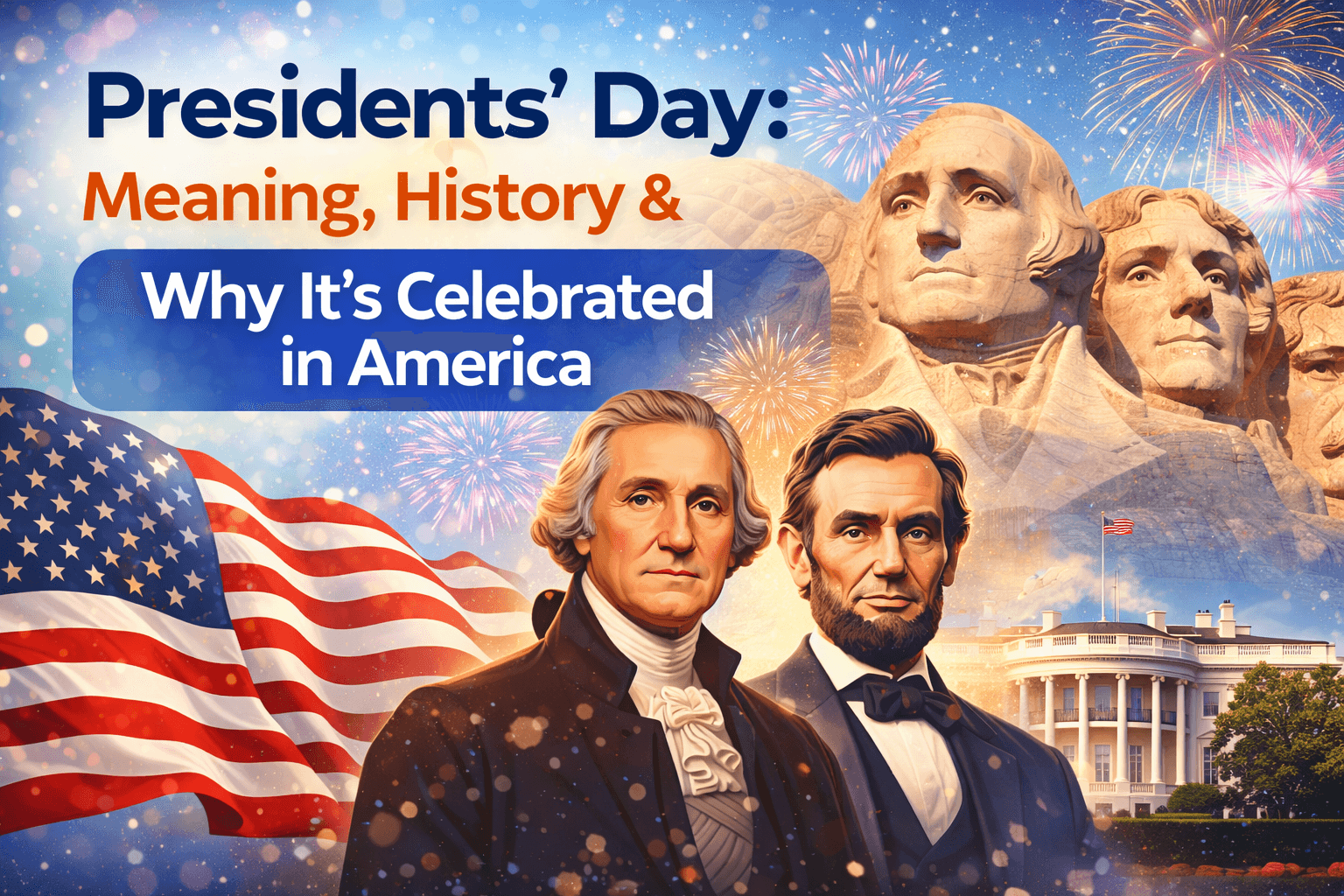
Every nation has a day when it pauses to honor the leaders who shaped its destiny. In the United States, that day is Presidents’ Day — a national holiday dedicated to remembering the lives, achievements and leadership of American presidents, especially George Washington and Abraham Lincoln. While many people enjoy sales, long weekends and parades, the real essence of this day goes much deeper. It is a moment to reflect on how leadership, decisions and vision built the foundation of the modern United States.
In this article, we explore the meaning, history, origin and celebration of Presidents’ Day in a smooth, enjoyable reading flow. If you’re writing for a global audience or simply curious about American culture, this guide will give you everything — from facts to significance, from stories to celebration style.
What is Presidents’ Day?
Presidents’ Day is a federal holiday in the United States dedicated to honoring all U.S. presidents, past and present. Although the day originally began as a celebration of George Washington’s Birthday, it gradually evolved into a broader commemoration of American leadership. Today, people associate this holiday not only with Washington but also with Abraham Lincoln and other influential presidents who contributed to shaping America.
More than just a holiday, Presidents’ Day reminds people of the values the nation was built upon — democracy, freedom, justice and responsibility.
Simply put:
Presidents’ Day = A tribute to the leaders who shaped America’s history and future.
When is Presidents’ Day Celebrated?
Presidents’ Day is observed annually on the third Monday of February.
It falls around the birthdays of:
- George Washington – February 22
- Abraham Lincoln – February 12
Choosing a Monday allows Americans to enjoy a long weekend, which makes this holiday even more popular nationwide.
How Presidents’ Day Began – The Origin Story
The foundation of Presidents’ Day starts with George Washington, the first President of the United States. He led the nation during its formative years after independence and became a symbol of honesty, leadership and unity. After his death, people began celebrating his birthday to honor him.
Later, when Abraham Lincoln, the 16th President, led the country through the Civil War and helped abolish slavery, Americans began celebrating his birthday as well. Both leaders became icons of American history.
In 1971, the Uniform Monday Holiday Act was introduced. The purpose was to give citizens more long weekends by moving federal holidays to Mondays. As a result, Washington’s Birthday celebration was combined and gradually transformed into what we now call Presidents’ Day.
Over time, this day evolved from celebrating one leader to honoring every U.S. president, recognizing how each one played a part in shaping the nation.
Why Presidents’ Day Is Celebrated (The Real Meaning)
Presidents’ Day is more than just a calendar holiday or a weekend break. It holds emotional, historical and cultural significance for Americans. This day reflects respect for leadership, democracy and the long journey of the nation.
Here are the core reasons Why Presidents’ Day is celebrated:
- To Honor U.S. Presidents and Their Contributions
Leadership isn’t easy — it shapes the future of millions. This day recognizes that role. - To Remember George Washington and Abraham Lincoln
Two iconic leaders whose decisions still influence America today. - To Celebrate National Values
Freedom, equality, integrity and democracy are central themes. - To Educate Younger Generations
Schools highlight historical lessons, biographies and leadership qualities. - To Inspire Future Leaders
It reminds people that great leadership comes from courage, vision and responsibility.
In essence, Presidents’ Day is a reminder that nations grow when leaders carry responsibility with wisdom.
How the U.S. Celebrates Presidents’ Day
Unlike festival holidays filled with fireworks or large celebrations, Presidents’ Day has a proud, respectful and educational tone. It celebrates through learning, remembrance and national spirit.
Although every state celebrates differently, here are the common ways:
1. Parades and Public Programs
Cities organize parades with marching bands, flags and patriotic performances.
2. Museum Visits
People visit museums related to Washington, Lincoln and other presidents to learn more about their contributions.
3. School Activities
Children participate in essay competitions, history lessons, drawing activities and storytelling about U.S. presidents.
4. Shopping Deals and Sales
Interestingly, Presidents’ Day is famous for big shopping discounts, especially on electronics, furniture and clothing. Stores promote “Presidents’ Day Sale” nationwide.
5. Honoring Military and Public Service
Some communities honor soldiers, veterans and civil servants — a symbol of national pride.
6. Family Time & Road Trips
With a long weekend, many families relax, travel or enjoy outings together.
Though celebrations vary, the central emotion remains the same — respect for leadership.
Famous U.S. Presidents Associated With This Day
While all presidents are honored on this holiday, two leaders stand at the heart of this celebration:
George Washington
- First President of the United States
- Led the nation after independence
- Known as The Father of His Country
Abraham Lincoln
- 16th President
- Ended slavery
- Led the nation during the Civil War
- Known for courage, equality and humanity
Their contributions built strong pillars for the United States, which still guide the nation.
Interesting Facts About Presidents’ Day
- Presidents’ Day was once celebrated as Washington’s Birthday.
- It later expanded to honor all U.S. presidents, including modern leaders.
- Many government offices remain closed on this day.
- It’s one of the biggest shopping sale holidays in America.
- Some states still officially call it Washington’s Birthday.
- Many schools teach children about leadership and history on this day.
These facts make the holiday more relatable beyond textbooks.
Why Presidents’ Day Matters Today
In a rapidly changing modern world, celebrating Presidents’ Day preserves the identity of a nation. It connects citizens with history, leadership struggles, and sacrifices made to protect freedom. It reminds people that powerful nations are built not only by soldiers and workers but also by thoughtful leaders.
When people celebrate Presidents’ Day, they don’t just remember past leaders — they reflect on what good leadership means today.
- Are we grateful for the privileges we have?
- Do we understand how history shaped freedom?
- Are we learning values from great leaders?
These reflections make the day meaningful.
Conclusion
Presidents’ Day stands as a bridge between history and modern times. It is a reminder of where America came from and what shaped it into a global nation. While many people enjoy the long weekend, shopping discounts and relaxing holidays, the emotional depth of Presidents’ Day is rooted in respect — respect for leadership, responsibility and courage.
George Washington and Abraham Lincoln led during two very different but equally critical periods in U.S. history. Washington guided a new-born nation after independence, while Lincoln saved it from division and stood for equality. Their stories inspire not just Americans but leaders around the world. Presidents’ Day celebrates such principles — vision, freedom, unity and justice.
Celebrating this day does not always require grand gestures. Even a moment of learning about leadership, a visit to a museum, a story shared at home, or a message of gratitude is enough. The purpose is to remember that great nations are shaped by great decisions, and great decisions come from responsible leaders.
As we reflect on this national holiday, one thought stands clear:
Presidents’ Day is not only about the past — it inspires the future.
A nation that honors leadership today creates leaders for tomorrow.
If you don’t want to read, you can watch the video by clicking on this Link…
https://youtu.be/KUBYIyKIg_E?si=GaxBkvgZB7fI2d4p
https://onlinehelpful.com/blog/
Frequently Asked Questions
1. What is Presidents’ Day in the U.S.?
Presidents’ Day is a federal holiday in the United States dedicated to honoring all presidents, especially George Washington and Abraham Lincoln. It reflects respect for leadership, national values and American history.
2. Why is Presidents’ Day celebrated?
It is celebrated to recognize the contribution of U.S. presidents in shaping the country. Originally it honored George Washington’s birthday, but later included all presidents as a national tribute.
3. When is Presidents’ Day celebrated?
Presidents’ Day is observed every year on the third Monday of February, giving Americans a long weekend to remember leadership and enjoy public holiday activities.
4. Who is the most associated president with this day?
George Washington and Abraham Lincoln are the most associated leaders. Washington led the nation after independence, and Lincoln helped abolish slavery during the Civil War.
5. How do Americans celebrate Presidents’ Day?
People celebrate through museum visits, parades, history lessons, patriotic activities and big shopping sales. Schools conduct events, and families enjoy long weekend trips or time together.
6. Is Presidents’ Day only for Washington and Lincoln?
No. While the holiday began with Washington’s birthday, it later evolved into a day that honors all U.S. presidents, past and present.
7. Is it a federal public holiday in the U.S.?
Yes. Government offices, schools, and many businesses remain closed, while most stores offer special Presidents’ Day sales and discounts.
8. Why is it important to learn about Presidents’ Day?
It teaches us about leadership, democracy, national history and the impact great presidents have made on society. It also inspires young minds to understand values like responsibility and courage.