
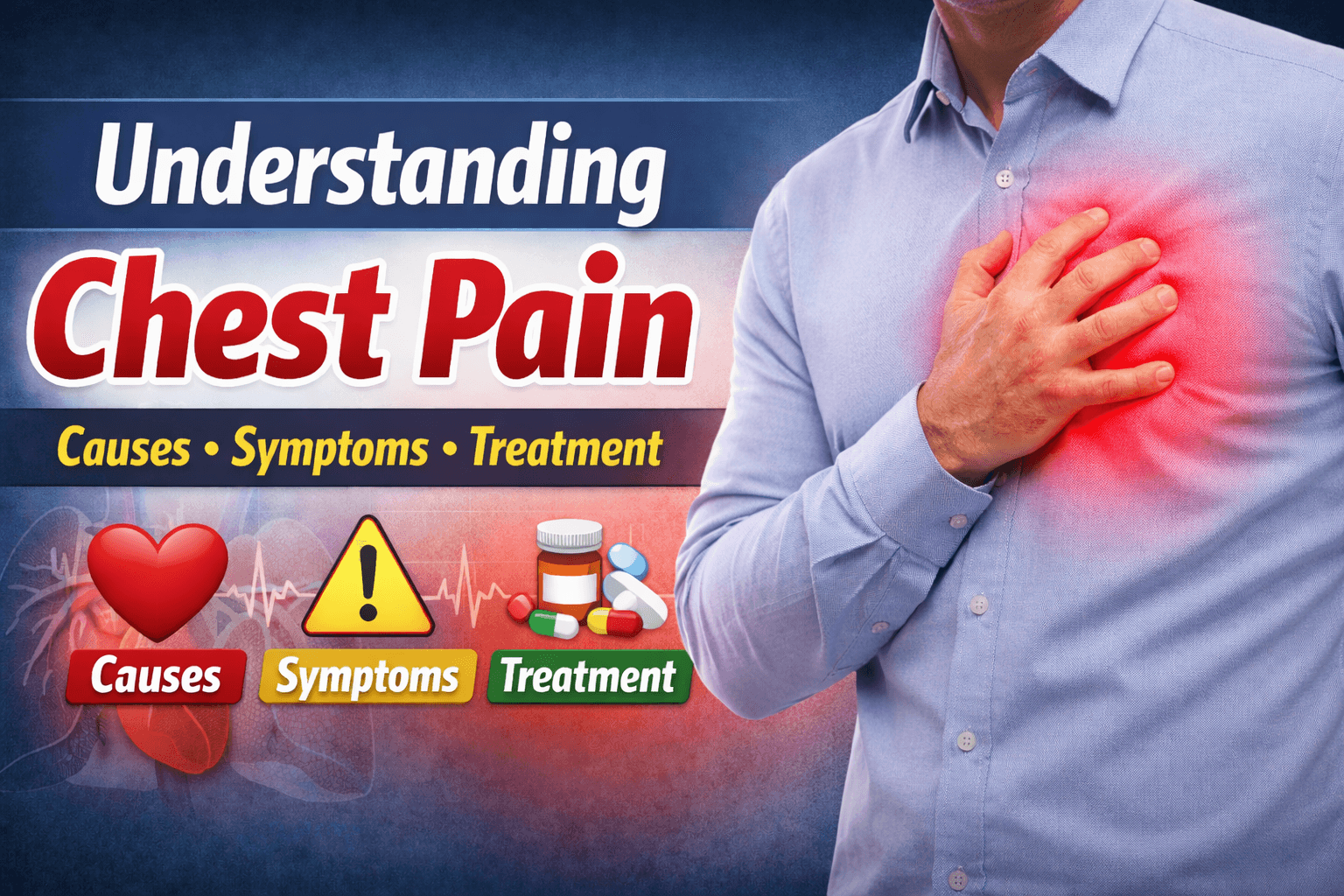
What Is Chest Pain? (Easy Explanation)
Chest pain is a common health problem that many people experience at some time in their life. It refers to any type of discomfort, pressure, tightness, or pain felt in the chest area. The chest is the part of the body between the neck and the upper stomach. Inside this area there are many important organs such as the heart, lungs, muscles, ribs, and parts of the digestive system. Because so many organs are present in the chest, pain in this area can happen for many different reasons.
Sometimes chest pain may be mild and temporary, such as pain caused by muscle strain or gas. In other cases, it can be serious and life-threatening, especially when it is related to the heart. That is why chest pain should never be ignored, and understanding its basic causes can help people respond quickly and safely.
The feeling of chest pain is not the same for everyone. Some people feel a tight pressure in the middle of the chest, while others feel a burning sensation, sharp pain, or heaviness. In certain cases, the pain may also spread to other parts of the body such as the left arm, shoulder, neck, jaw, or back. When chest pain spreads in this way, it can sometimes be a sign of a heart problem.
To understand chest pain better, it is helpful to look at some important points that explain how it feels and what may cause it.
Key Points About Chest Pain
• Different Types of Sensations
Chest pain may feel like pressure, tightness, burning, stabbing, or aching. The intensity can be mild, moderate, or severe.
• Location of Pain
The pain may occur in the center of the chest, on the left side, or sometimes on the right side.
• Pain That Spreads
Sometimes chest pain spreads to the arm, shoulder, neck, jaw, or back. This can happen especially when the heart is involved.
• Short Duration or Long Duration
Chest pain may last for a few seconds, a few minutes, or sometimes longer depending on the cause.
• Pain During Activity or Rest
Some people feel chest pain during physical activity, while others may experience it even while resting.
One of the most important causes of chest pain is related to the heart. When the heart does not receive enough oxygen-rich blood, a person may experience chest pain known as angina. In more serious situations, a heart attack can occur if the blood flow to the heart is blocked. Heart-related chest pain usually feels like strong pressure or heaviness in the chest and may be accompanied by other symptoms.
Common Symptoms That May Appear With Chest Pain
• Shortness of breath
• Sweating
• Dizziness
• Nausea or vomiting
• Pain spreading to the left arm or jaw
• Feeling of extreme pressure in the chest
However, not all chest pain is caused by heart problems. Many times it can be related to digestive issues. For example, acid reflux or heartburn occurs when stomach acid moves upward into the food pipe. This can cause a burning feeling in the chest, especially after eating spicy or heavy food. This type of pain is usually uncomfortable but not as dangerous as heart-related pain.
Another common reason for chest pain is related to the muscles and bones of the chest. If a person lifts something heavy, exercises too hard, or suddenly twists their body, the chest muscles may become strained. In this case, the pain usually becomes worse when touching the chest or moving the upper body.
Chest pain can also be connected to the lungs. Conditions such as lung infections, inflammation of the lung lining, or severe coughing can cause discomfort in the chest. In lung-related chest pain, people may notice that the pain becomes stronger when breathing deeply or coughing.
In addition to physical causes, stress and anxiety can also lead to chest pain. When a person experiences intense stress or panic, the body releases stress hormones that may create tightness in the chest and rapid heartbeat. This type of pain can feel frightening but is often related to emotional stress rather than a heart disease.
Because chest pain can have many causes, it is very important to pay attention to the symptoms. If the pain is severe, sudden, or occurs with symptoms like breathing difficulty, heavy sweating, or fainting, medical help should be taken immediately.
Simple Tips to Reduce the Risk of Chest Pain
• Eat a balanced and healthy diet
• Exercise regularly
• Avoid smoking and tobacco
• Manage stress and anxiety
• Maintain a healthy weight
• Get regular health checkups
In conclusion, chest pain is a symptom that should always be taken seriously. While some causes are minor and temporary, others may indicate serious health conditions. Understanding the basic signs and causes can help people take the right action at the right time and protect their overall health.
Why Does Chest Pain Occur? (Causes of Chest Pain)
Chest pain can occur for many different reasons because the chest area contains several important organs such as the heart, lungs, muscles, ribs, and digestive organs. When any of these organs face a problem or disturbance, it may result in chest pain. Sometimes the pain is mild and temporary, while in other cases it may indicate a serious medical condition. Therefore, understanding why chest pain occurs is very important for recognizing potential health risks and taking proper care.
In simple terms, chest pain happens when there is pressure, inflammation, injury, or reduced blood flow in the chest area. The body sends pain signals to warn us that something is wrong. These signals help people notice the problem and seek treatment if necessary.
There are several common situations in which chest pain can develop. Below are some important explanations that help readers easily understand the causes.
Main Reasons Why Chest Pain Occurs
• Reduced Blood Flow to the Heart
One of the most serious causes of chest pain is when the heart does not receive enough oxygen-rich blood. This can happen due to blocked or narrowed arteries. When this occurs, a person may feel pressure or tightness in the chest. If the blockage becomes severe, it may lead to a heart attack.
• Acidity or Acid Reflux
Many people experience chest pain due to digestive problems. When stomach acid moves upward into the food pipe, it causes a burning sensation in the chest. This condition is commonly known as heartburn. It usually happens after eating spicy, oily, or heavy food.
• Muscle Strain or Injury
Chest pain can also occur due to strain or injury in the chest muscles. Lifting heavy objects, sudden body movements, excessive exercise, or accidents can lead to muscle inflammation. This type of pain usually increases when touching or moving the chest area.
• Lung Problems
Sometimes chest pain may be related to the lungs. Lung infections, inflammation, or breathing problems can cause discomfort in the chest. People with lung-related chest pain may also experience coughing, fever, or difficulty breathing.
• Stress and Anxiety
Mental stress and anxiety can also cause chest pain. When a person is under extreme pressure or experiencing panic attacks, the body releases stress hormones. These hormones may cause tightness in the chest, rapid heartbeat, and difficulty breathing.
• Gas Formation in the Stomach
Excess gas in the stomach can create pressure that spreads toward the chest. This often causes discomfort or sharp pain in the chest area. Gas-related chest pain is usually temporary and may improve after digestion.
• Inflammation of Chest Tissues
Sometimes the tissues around the ribs become inflamed due to infection or injury. This condition can lead to sharp pain in the chest, especially when breathing deeply or moving the body.
Important Signs to Notice
Sometimes chest pain may appear together with other symptoms. Paying attention to these signs can help understand whether the problem is serious.
• Difficulty in breathing
• Pain spreading to the arm, neck, or jaw
• Heavy sweating
• Nausea or vomiting
• Feeling dizzy or weak
If these symptoms appear along with chest pain, medical attention should be taken immediately.
Main Causes of Chest Pain
Chest pain can happen for many different reasons. Sometimes it is caused by minor problems like gas or muscle strain, but in some cases it can be related to serious health conditions such as heart disease or lung infections. Because the chest contains important organs like the heart, lungs, ribs, muscles, and digestive organs, pain in this area can come from many different sources. Understanding the main causes of chest pain helps people identify the problem early and seek proper treatment if needed.
Below are some of the most common causes of chest pain explained in a simple way so readers can easily understand.
Major Causes of Chest Pain
• Heart Attack
A heart attack is one of the most serious causes of chest pain. It happens when blood flow to the heart muscles becomes blocked. When the heart does not receive enough oxygen, a person may feel strong pressure or heaviness in the chest. The pain may also spread to the left arm, shoulder, neck, or jaw. Other symptoms may include sweating, nausea, and shortness of breath.
• Angina
Angina is another heart-related condition that causes chest pain. It occurs when the heart muscles do not get enough oxygen-rich blood. Unlike a heart attack, angina pain usually occurs during physical activity or stress and may improve with rest.
• Acidity or Heartburn
Acid reflux is a common digestive problem that can cause chest pain. When stomach acid moves upward into the food pipe, it creates a burning sensation in the chest. This type of pain often occurs after eating spicy or oily food and may worsen when lying down.
• Gas Problem
Excess gas in the stomach can create pressure that spreads toward the chest area. This pressure may cause sharp or uncomfortable pain in the chest. Gas-related chest pain usually improves after digestion or passing gas.
• Muscle Strain
Chest pain can also occur when the chest muscles are strained or injured. This may happen due to heavy lifting, sudden movements, excessive exercise, or injury. The pain usually becomes worse when moving the chest or touching the affected area.
• Lung Infection
Infections in the lungs, such as pneumonia or inflammation of the lung lining, can also cause chest pain. In such cases, the pain may become worse when breathing deeply or coughing. Fever and breathing difficulty may also occur.
• Stress and Anxiety
Mental stress and panic attacks can sometimes cause chest pain. When a person experiences extreme stress, the body reacts by tightening muscles and increasing heart rate. This can create a feeling of pressure or tightness in the chest.
• Injury to the Ribs
A fracture or injury to the ribs may also cause chest pain. This type of pain usually increases while breathing, coughing, or moving the upper body.
Important Warning Signs
Sometimes chest pain can be a warning sign of a serious condition. If chest pain appears with the following symptoms, medical help should be taken immediately:
• Severe pressure in the chest
• Pain spreading to the arm, neck, or jaw
• Difficulty breathing
• Heavy sweating
• Feeling faint or dizzy
Medicines for Chest Pain
Chest pain can occur for different reasons, and the treatment or medicine depends on the exact cause of the pain. Sometimes chest pain may be caused by gas, acidity, muscle strain, or stress, while in other cases it may be related to heart problems or lung conditions. Because the causes can vary, it is very important to understand that medicines should always be taken according to a doctor’s advice, especially when the pain is severe or repeated frequently.
In many cases, mild chest pain can be treated with simple medicines that reduce pain, control acidity, or relax muscles. However, if chest pain is related to the heart, special medicines may be required to improve blood flow and protect the heart.
Below are some common types of medicines used for chest pain explained in simple points.
Common Medicines Used for Chest Pain
• Pain Relief Medicines
Pain relievers are sometimes used when chest pain is caused by muscle strain or inflammation. These medicines help reduce discomfort and improve mobility. However, they should only be used when the pain is not related to heart problems.
• Acidity or Antacid Medicines
If chest pain is caused by acidity or acid reflux, doctors may recommend antacid medicines. These medicines help neutralize stomach acid and reduce the burning sensation in the chest. People who frequently suffer from heartburn may benefit from these medicines.
• Gas Relief Medicines
Gas formation in the stomach can also cause pressure and pain in the chest. In such situations, doctors may suggest medicines that help remove gas and improve digestion. These medicines usually provide quick relief.
• Heart Medicines
When chest pain is related to heart problems such as angina, doctors may prescribe medicines that improve blood flow to the heart. These medicines help reduce pressure on the heart and prevent further complications.
• Blood Pressure Medicines
High blood pressure can increase the risk of chest pain and heart problems. Doctors may prescribe medicines that control blood pressure and help maintain healthy heart function.
• Cholesterol-Control Medicines
High cholesterol levels can lead to blockage in the arteries. Medicines that control cholesterol help reduce the risk of heart-related chest pain and improve overall heart health.
Important Things to Remember
• Never ignore repeated chest pain.
• Do not take strong medicines without consulting a doctor.
• If chest pain occurs suddenly with breathing difficulty or sweating, seek medical help immediately.
• Follow the doctor’s prescription and complete the full course of medicines if recommended.
Simple Lifestyle Support Along with Medicines
Medicines work better when they are combined with a healthy lifestyle. Some simple habits can help reduce the chances of chest pain.
• Eat healthy and balanced meals
• Avoid oily and very spicy foods
• Exercise regularly
• Manage stress and anxiety
• Avoid smoking and alcohol
Home Remedies for Chest Pain (Natural Remedies)
Chest pain can sometimes occur due to gas, acidity, muscle strain, stress, or mild digestive problems. In such cases, some simple home remedies may help reduce discomfort and provide relief. However, it is very important to remember that if chest pain is severe, sudden, or occurs with symptoms like difficulty breathing, heavy sweating, or pain spreading to the arm or jaw, medical help should be taken immediately. Home remedies are helpful only for mild and temporary chest pain.
Natural remedies have been used for centuries because they are simple, affordable, and easy to follow. Many natural ingredients found in the kitchen can support digestion, reduce inflammation, and relax the body. Below are some common and effective home remedies that may help relieve mild chest pain.
Common Home Remedies for Chest Pain
• Ginger Tea
Ginger is known for its anti-inflammatory and digestive properties. Drinking warm ginger tea can help reduce gas, acidity, and inflammation in the body. Ginger also improves digestion and may help relieve mild chest discomfort caused by stomach problems.
• Warm Water
Drinking warm water can help improve digestion and reduce gas formation in the stomach. Sometimes chest pain occurs due to trapped gas, and warm water may help release it naturally.
• Turmeric Milk
Turmeric contains natural compounds that help reduce inflammation and support healing. Drinking warm milk mixed with a small amount of turmeric may help reduce muscle-related chest pain and improve overall health.
• Basil Leaves (Tulsi)
Tulsi leaves are widely known for their medicinal benefits. Chewing a few fresh basil leaves or drinking tulsi tea can help improve breathing, reduce stress, and support heart health.
• Honey with Warm Water
Honey has natural soothing properties that may help calm the digestive system and reduce irritation in the chest area. Mixing a spoon of honey in warm water can provide gentle relief.
• Garlic
Garlic is often considered beneficial for heart health. It may help improve blood circulation and support healthy cholesterol levels. Some people consume raw garlic in small amounts as a natural remedy for heart-related health support.
• Hot Compress
If chest pain is caused by muscle strain, applying a warm compress to the chest area may help relax the muscles and reduce discomfort.
Lifestyle Habits That Support Natural Relief
Home remedies work best when combined with healthy daily habits. Certain lifestyle changes can also help prevent frequent chest discomfort.
• Eat light and healthy meals
• Avoid very oily and spicy foods
• Do not lie down immediately after eating
• Drink enough water during the day
• Manage stress through relaxation techniques
• Maintain a healthy body weight
When to Seek Medical Help
Although home remedies can be useful for mild chest pain, it is important to understand when professional medical help is necessary. If chest pain occurs with the following symptoms, it may indicate a serious condition.
• Severe pressure or tightness in the chest
• Pain spreading to the arm, neck, jaw, or back
• Difficulty breathing
• Dizziness or fainting
• Heavy sweating or nausea
In such situations, immediate medical attention is required.
Yoga for Chest Pain Relief
Yoga can play an important role in improving overall health and reducing mild chest discomfort. Many times chest pain occurs due to stress, poor posture, muscle stiffness, lack of physical activity, or breathing problems. Practicing yoga regularly helps improve blood circulation, strengthens the chest muscles, relaxes the mind, and supports better breathing. However, if chest pain is related to serious heart conditions, yoga should be practiced only after consulting a doctor.
Yoga is not only helpful for the body but also for mental health. Stress and anxiety are common reasons behind chest tightness and discomfort. Certain yoga poses and breathing techniques help calm the nervous system and reduce stress levels. When the body becomes relaxed, chest muscles also loosen, which can reduce mild pain.
Below are some simple and effective yoga practices that may help support chest health and reduce discomfort.
Helpful Yoga Practices for Chest Health
• Pranayama (Deep Breathing)
Pranayama is a breathing exercise that improves oxygen supply to the body. Deep breathing helps relax the chest muscles and lungs, making breathing easier. It also reduces stress and anxiety, which can sometimes cause chest tightness.
• Anulom Vilom
Anulom Vilom is a popular breathing technique in yoga. It involves breathing through one nostril at a time while keeping the mind calm. This practice helps balance the nervous system, improve lung function, and support heart health.
• Bhujangasana (Cobra Pose)
Bhujangasana helps stretch the chest, shoulders, and lungs. This yoga pose opens the chest area and improves posture. Regular practice can strengthen the chest muscles and improve breathing capacity.
• Tadasana (Mountain Pose)
Tadasana is a simple standing yoga pose that helps improve posture and balance. It stretches the chest and spine, allowing better airflow in the lungs and reducing stiffness in the upper body.
• Ardha Chakrasana (Half Wheel Pose)
This pose helps stretch the chest and strengthen the back muscles. It opens the chest area and improves flexibility, which may help reduce mild chest discomfort.
• Setu Bandhasana (Bridge Pose)
Bridge pose helps expand the chest and improve blood circulation. It also strengthens the back and improves breathing efficiency.
Benefits of Yoga for Chest Health
Regular yoga practice can provide several benefits for overall health and chest comfort.
• Improves blood circulation
• Strengthens chest and back muscles
• Enhances breathing capacity
• Reduces stress and anxiety
• Improves posture
• Supports heart and lung health
Important Safety Tips
While yoga can be helpful, it should be practiced carefully.
• Always start slowly and practice under guidance if possible
• Avoid difficult poses if you feel pain or discomfort
• Stop immediately if chest pain increases
• Consult a doctor before practicing yoga if you have heart problems
How to Prevent Chest Pain
Preventing chest pain is very important for maintaining good health. Many times chest pain occurs because of unhealthy lifestyle habits, poor diet, lack of physical activity, stress, or smoking. By making simple changes in daily life, people can reduce the risk of chest pain and protect important organs such as the heart and lungs. Prevention is always better than treatment because healthy habits can stop many health problems before they start.
Taking care of the body through proper nutrition, exercise, and stress management can significantly lower the chances of experiencing chest discomfort. Below are some simple and effective ways to prevent chest pain.
Important Ways to Prevent Chest Pain
• Eat a Healthy and Balanced Diet
A healthy diet plays a major role in maintaining heart health. Eating fruits, vegetables, whole grains, and protein-rich foods helps keep the body strong and reduces the risk of heart disease. Avoid eating too much oily, fried, and spicy food because it can cause acidity and digestive problems that may lead to chest pain.
• Exercise Regularly
Regular physical activity helps improve blood circulation and keeps the heart strong. Activities such as walking, jogging, cycling, or yoga can help maintain a healthy body weight and reduce the risk of heart problems.
• Avoid Smoking and Tobacco
Smoking damages the lungs and blood vessels, increasing the risk of heart disease and chest pain. Quitting smoking can significantly improve heart and lung health.
• Manage Stress Properly
Stress and anxiety can cause chest tightness and discomfort. Practicing relaxation techniques such as meditation, yoga, or deep breathing can help calm the mind and reduce stress.
• Maintain a Healthy Body Weight
Being overweight can increase the risk of heart disease, high blood pressure, and digestive problems. Maintaining a healthy weight through proper diet and exercise helps reduce the chances of chest pain.
• Get Regular Health Checkups
Regular medical checkups help detect health problems early. Monitoring blood pressure, cholesterol levels, and heart health can help prevent serious conditions that may cause chest pain.
• Avoid Overeating
Eating very large meals can put pressure on the digestive system and lead to acidity or gas, which may cause chest discomfort. Eating smaller and balanced meals can help prevent this problem.
• Drink Enough Water
Staying hydrated helps maintain proper digestion and supports overall body function. Drinking enough water throughout the day can help prevent digestive issues that may lead to chest pain.
Healthy Lifestyle Tips
• Sleep for 7–8 hours daily
• Avoid excessive alcohol consumption
• Maintain good posture while sitting and working
• Practice breathing exercises regularly
When to See a Doctor for Chest Pain
Chest pain should never be ignored because it can sometimes be a warning sign of a serious health problem. While mild chest discomfort may occur due to gas, muscle strain, or stress, some types of chest pain may indicate serious conditions such as heart disease or lung problems. Knowing when to seek medical help is very important because early treatment can prevent serious complications and save lives.
Many people ignore chest pain thinking it will go away on its own. However, if the pain is severe, sudden, or happens frequently, it is always safer to consult a doctor. Doctors can examine the symptoms, perform tests if needed, and identify the exact cause of the pain.
Below are some important situations where medical attention is necessary.
Warning Signs That Require Immediate Medical Help
• Severe Pressure in the Chest
If the chest pain feels like heavy pressure, squeezing, or tightness, it could be related to a heart problem. This type of pain should be checked by a doctor immediately.
• Pain Spreading to Other Parts of the Body
If the pain spreads to the left arm, shoulder, neck, jaw, or back, it may indicate a heart-related condition such as a heart attack.
• Difficulty Breathing
Chest pain combined with breathing difficulty can be a serious warning sign. It may indicate problems related to the heart or lungs.
• Heavy Sweating
Sudden sweating along with chest pain may signal a heart attack or other serious medical condition.
• Dizziness or Fainting
Feeling dizzy, weak, or faint during chest pain should never be ignored. These symptoms may indicate a serious health problem.
• Persistent Chest Pain
If chest pain lasts for more than a few minutes or keeps coming back frequently, medical evaluation is necessary.
• Pain After Physical Activity
If chest pain occurs during physical activity and improves after rest, it may be a sign of reduced blood flow to the heart.
Medical Tests Doctors May Recommend
To find the cause of chest pain, doctors may perform some medical tests.
• ECG (Electrocardiogram) – to check heart activity
• Blood Tests – to detect heart damage or infection
• Chest X-ray – to examine lungs and ribs
• Stress Test – to observe heart function during exercise
These tests help doctors understand the condition and provide the correct treatment.
Why Early Medical Care Is Important
Seeking medical help early can prevent serious complications. If chest pain is related to the heart, early treatment can reduce damage and improve recovery. Even if the cause is not serious, getting proper medical advice can provide peace of mind and ensure better health.
Conclusion
Chest pain is a health symptom that should never be ignored because it can be related to many different conditions in the body. Sometimes chest pain may occur due to simple problems like gas, acidity, muscle strain, or stress, but in other situations it may be connected to serious issues such as heart disease or lung problems. Since the chest contains important organs like the heart, lungs, muscles, and digestive system, pain in this area needs proper attention and understanding.
Throughout this discussion, we learned that chest pain can occur for many reasons and its symptoms can vary from person to person. Some people may feel pressure, tightness, burning, or stabbing pain in the chest. In certain cases, the pain may even spread to the arm, shoulder, neck, jaw, or back, which may indicate a more serious condition. Understanding these symptoms helps people recognize when the pain might require medical attention.
We also discussed the main causes of chest pain, including heart problems, acidity, gas, lung infections, muscle strain, and stress. Each cause may produce different types of discomfort, which is why identifying the exact reason behind the pain is very important. Medicines can help treat chest pain depending on the cause, but it is always safer to take medicines under proper medical guidance.
In addition to medical treatment, natural home remedies and healthy lifestyle habits can also play an important role in reducing mild chest discomfort. Remedies such as ginger tea, warm water, turmeric milk, tulsi leaves, and garlic may support digestion, reduce inflammation, and improve overall health. However, these remedies should only be used for mild symptoms and should not replace medical treatment when the pain is serious.
We also learned that yoga and breathing exercises can help improve chest health. Practices like pranayama, anulom vilom, and certain yoga poses help strengthen chest muscles, improve breathing capacity, and reduce stress. Since stress and anxiety can also cause chest tightness, relaxation techniques are very beneficial for both physical and mental health.
Prevention is another key aspect of maintaining good health. By following simple habits such as eating a balanced diet, exercising regularly, avoiding smoking, managing stress, maintaining healthy body weight, and getting regular health checkups, people can reduce the risk of many conditions that lead to chest pain.
Finally, it is extremely important to know when to seek medical help. If chest pain becomes severe, sudden, or occurs with symptoms like breathing difficulty, dizziness, sweating, or pain spreading to other parts of the body, immediate medical attention is necessary. Early diagnosis and proper treatment can prevent serious complications and protect overall health.
In conclusion, chest pain is a symptom that should always be taken seriously. Understanding its causes, symptoms, prevention methods, and treatment options can help people respond wisely and maintain a healthier life. Taking care of the heart, maintaining a balanced lifestyle, and seeking medical help when needed are the best ways to stay safe and healthy.
➤ Click this link to discover powerful remedies for common body diseases and valuable tips to protect and maintain your overall health.
https://onlinehelpful.com/category/complete-body-health/
Frequently Asked Questions
Q1. What are the main causes of chest pain?
A: Chest pain can occur due to several conditions, including heart disease, angina, acid reflux, gas, lung infections, muscle strain, or stress. In some cases, it may be a warning sign of a heart attack, so it should never be ignored.
Q2. How can you tell if chest pain is serious?
A: Chest pain may be serious if it feels like pressure or tightness in the chest and spreads to the arm, shoulder, neck, or jaw. Other warning signs include shortness of breath, sweating, dizziness, or nausea. Immediate medical attention is recommended in such cases.
Q3. Can gas cause chest pain?
A: Yes, gas and digestive problems can cause chest pain. When gas builds up in the stomach, it can create pressure that spreads to the chest area. This pain is usually temporary and improves after digestion.
Q4. What does heart-related chest pain feel like?
A: Heart-related chest pain often feels like strong pressure, squeezing, or heaviness in the chest. The pain may spread to the left arm, neck, jaw, or back and may be accompanied by breathing difficulty or sweating.
Q5. What are the symptoms of chest pain?
A: Common symptoms include chest pressure, tightness, burning sensation, stabbing pain, difficulty breathing, dizziness, nausea, and pain spreading to other parts of the upper body.
Q6. How is chest pain diagnosed by doctors?
A: Doctors may diagnose chest pain through physical examination and tests such as ECG, blood tests, chest X-ray, CT scan, or stress tests to identify the exact cause.
Q7. What treatments are available for chest pain?
A: Treatment depends on the cause. Doctors may recommend medications, lifestyle changes, heart treatments, or therapies to manage digestive or lung-related conditions.
Q8. Can stress or anxiety cause chest pain?
A: Yes, stress and anxiety can cause chest tightness or discomfort. Panic attacks may also create chest pain along with rapid heartbeat and difficulty breathing.
Q9. What are some home remedies for mild chest pain?
A: For mild chest pain caused by digestion or stress, remedies such as ginger tea, warm water, turmeric milk, and relaxation techniques may provide relief. However, severe pain should always be checked by a doctor.
Q10. How can chest pain be prevented?
A: Chest pain can often be prevented by maintaining a healthy lifestyle. Eating balanced meals, exercising regularly, avoiding smoking, managing stress, and getting regular health checkups can help reduce the risk.