
Introduction
where is hiatal hernia pain located in a woman?
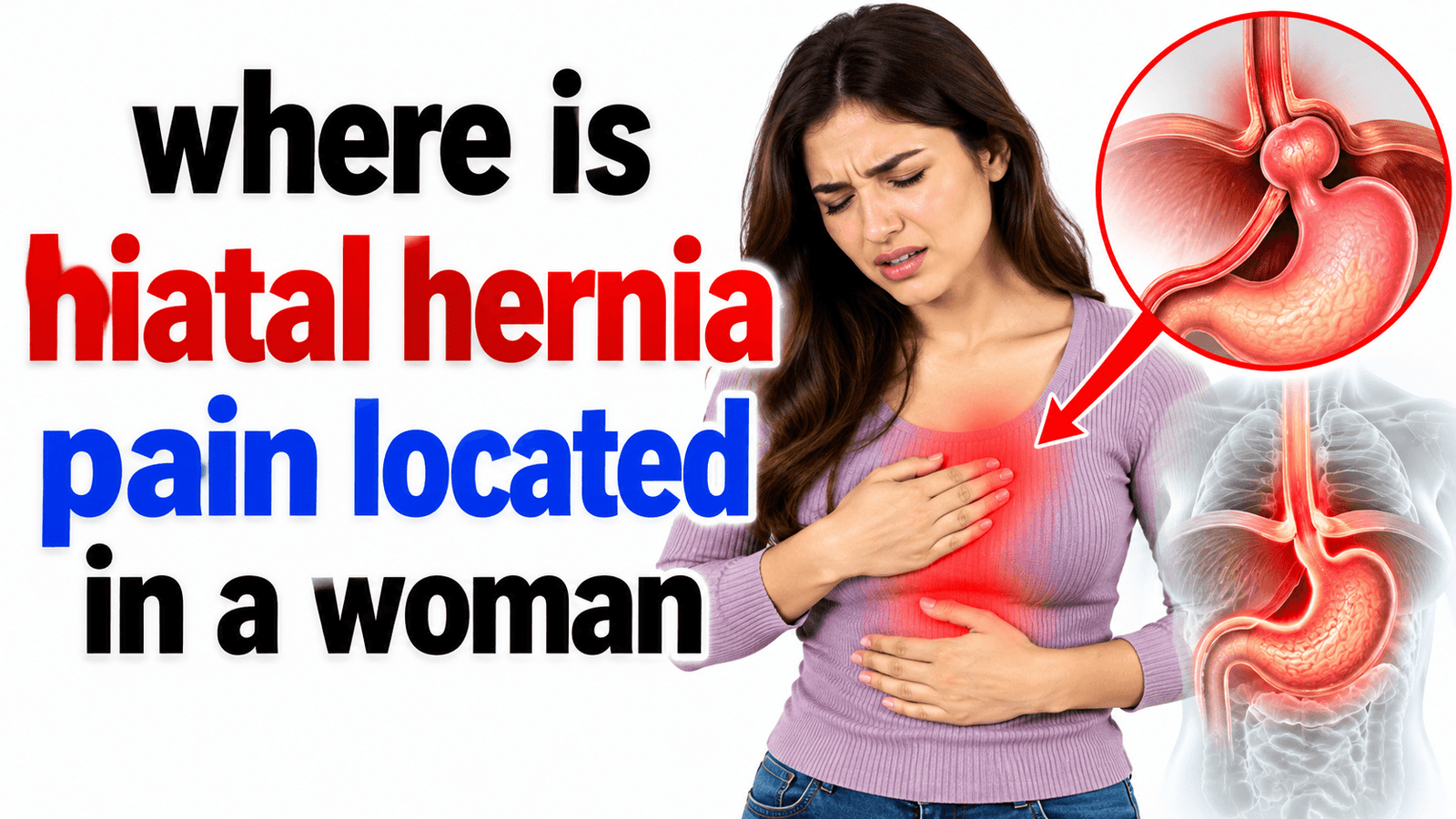
Hiatal hernia can cause discomfort in the chest or upper abdomen, and the location of the pain may sometimes make it difficult to know what is causing it. In women, hiatal hernia pain may commonly occur in the upper abdomen or lower chest, especially in the area located behind the breastbone. Some people may describe the sensation as pressure, burning, aching, or discomfort that becomes more noticeable after eating or when lying down.
However, pain location alone cannot confirm that a hiatal hernia is the cause. Similar symptoms can occur with acid reflux, indigestion, gallbladder problems, muscle pain, and other conditions. Understanding where hiatal hernia pain may occur, what it can feel like, and which symptoms may occur alongside it can help a woman recognize when the discomfort may need medical evaluation.
In this article, we will explain where hiatal hernia pain is commonly located in women, whether it can occur under the breast or ribs, whether it may spread to the back or shoulder, and when chest or abdominal pain should receive prompt medical attention.
Where Is Hiatal Hernia Pain Usually Felt in Women?
Hiatal hernia pain can be felt in different areas, but it is most commonly noticed in the upper abdomen or lower chest. This happens because a hiatal hernia occurs when part of the stomach moves upward through an opening in the diaphragm into the chest area. Some women may feel discomfort behind the breastbone, while others may notice pain or pressure just below the ribs or in the upper middle part of the abdomen.
The exact location can vary depending on the size of the hernia, whether acid reflux is also present, and how the person’s body responds. Hiatal hernia itself may cause no symptoms at all, while associated acid reflux can produce noticeable burning or discomfort.
Common Locations of Hiatal Hernia Pain
A woman with a symptomatic hiatal hernia may notice discomfort in:
- Lower or central chest: Pain or pressure may occur behind the breastbone.
- Upper middle abdomen: Discomfort can be felt in the area between the ribs and above the belly button.
- Upper abdomen beneath the ribs: Some people describe a feeling of fullness, pressure, or aching in this region.
- Upper stomach area after eating: Symptoms may become more noticeable after a large meal, particularly if the stomach feels overly full.
- Chest and upper abdominal area together: Reflux associated with a hiatal hernia can make the discomfort feel like it moves between these areas.
The pain does not necessarily have a single, predictable spot. Some women with a hiatal hernia have heartburn, regurgitation, bloating, difficulty swallowing, or a feeling of fullness rather than significant pain.
Why Can the Pain Be Felt in the Chest?
Because the upper part of the stomach can move through the diaphragm and into the chest, discomfort may be perceived in the lower chest or behind the breastbone. In addition, stomach acid moving upward into the esophagus can cause heartburn or a burning sensation in the chest.
This is why symptoms associated with a hiatal hernia may sometimes be mistaken for chest discomfort caused by other conditions. The location of pain alone cannot establish that a hiatal hernia is responsible.
Is Hiatal Hernia Pain Always on One Side?
No. Hiatal hernia discomfort is not necessarily limited to the left or right side. It may occur around the center of the lower chest or upper abdomen, although the exact sensation and location can differ from person to person.
If chest pain is severe, sudden, unexplained, or accompanied by shortness of breath, fainting, sweating, nausea, or pain spreading to the arm, jaw, or back, it should not automatically be attributed to a hiatal hernia. Such symptoms can require urgent medical assessment.
What Does Hiatal Hernia Pain Feel Like?
Hiatal hernia pain does not feel exactly the same for everyone. Some women may have no pain at all, while others may experience discomfort in the lower chest or upper abdomen. When symptoms are present, the sensation may be described as burning, pressure, aching, fullness, or discomfort rather than a sharp pain.
The feeling can also be related to acid reflux, which commonly occurs with a hiatal hernia. When stomach acid moves upward into the esophagus, it can produce a burning sensation behind the breastbone or in the upper chest.
Common Ways Women May Describe the Discomfort
Depending on the individual, hiatal hernia-related discomfort may feel like:
- Burning: A burning sensation behind the breastbone, particularly when reflux is present.
- Pressure or tightness: A feeling of pressure in the lower chest or upper abdomen.
- Aching: A dull or uncomfortable sensation around the upper stomach area.
- Fullness: Feeling unusually full or bloated, especially after eating.
- Discomfort after meals: Symptoms may become more noticeable after eating a large meal.
- Pain when lying down: Reflux-related symptoms can become more troublesome when lying down soon after eating.
Some people may also experience belching, regurgitation, bloating, difficulty swallowing, or a sour taste in the mouth along with their discomfort.
Can Hiatal Hernia Pain Come and Go?
Yes. Symptoms may be intermittent rather than constant. They can become more noticeable after meals, when bending over, or when lying down, particularly when acid reflux is involved. Other people may experience symptoms less frequently or have no noticeable symptoms despite having a hiatal hernia.
It is important to remember that these sensations are not specific to hiatal hernia. Acid reflux, gastritis, gallbladder problems, muscle strain, and several other conditions can cause similar discomfort.
When Chest Pain Should Not Be Assumed to Be a Hiatal Hernia
Chest discomfort should not automatically be blamed on a hiatal hernia. Sudden or severe chest pain, difficulty breathing, fainting, cold sweating, or pain spreading to the arm, jaw, neck, or back can be signs of a potentially serious condition and warrant urgent medical evaluation.
A healthcare professional can help determine whether the symptoms are related to a hiatal hernia, reflux, or another cause.
Can Hiatal Hernia Pain Be Felt Under the Breast or Ribs?
Yes, hiatal hernia-related discomfort can sometimes be felt beneath the breastbone or around the upper abdomen near the lower ribs, although the exact location varies from person to person. This can happen because the stomach and lower esophagus are located close to the diaphragm and lower chest.
For a woman, discomfort in this area may feel like pressure, burning, aching, fullness, or indigestion. When acid reflux occurs along with a hiatal hernia, the sensation may be more noticeable behind the breastbone or in the upper chest.
Discomfort Under the Breast
Some women may describe their symptoms as discomfort under or behind the breast, particularly around the lower central chest. However, breast-area pain has many possible causes, including breast tissue problems, chest-wall muscles, ribs, and other conditions. Therefore, pain in or beneath the breast should not automatically be considered a sign of hiatal hernia.
The location can also be difficult to describe because the esophagus, stomach, diaphragm, ribs, and chest muscles are close together. A healthcare professional may need to consider the person’s other symptoms and medical history to determine the likely cause.
Discomfort Around the Ribs
Hiatal hernia symptoms may also be noticed around the upper abdomen just beneath the ribs, particularly in the central area. A feeling of fullness or pressure may become more noticeable after eating.
However, rib pain on one particular side is not specific to hiatal hernia. Gallbladder problems, muscle strain, gastrointestinal conditions, and other causes can produce pain in or beneath the ribs.
What May Make the Discomfort More Noticeable?
When a hiatal hernia contributes to acid reflux, the symptoms may become more noticeable after eating a heavy meal or lying down shortly afterward. For some people, leaning or bending forward can make acid reflux symptoms more noticeable or uncomfortable.
Keeping track of when the discomfort occurs, where it is located, what you have eaten, and whether it is associated with heartburn or regurgitation can provide useful information for a healthcare professional.
When to Get Medical Attention
Do not assume that pain under the breast or ribs is caused by a hiatal hernia. Chest pain that is new, intense, ongoing, or difficult to explain should be assessed by a healthcare professional. If chest pain is accompanied by trouble breathing, fainting, cold sweats, or discomfort that spreads to the arm, jaw, neck, or back, seek immediate medical attention instead of assuming it is caused by a digestive problem.
Hiatal Hernia Pain in the Upper Abdomen
Hiatal hernia-related discomfort can sometimes be felt in the upper abdomen, particularly in the area just below the breastbone and between the ribs. For some women, this may feel more like pressure, fullness, burning, or a dull ache than a sharp pain.
A hiatal hernia develops when a portion of the stomach pushes upward through an opening in the diaphragm. Because the diaphragm sits between the chest and abdomen, symptoms may be perceived around the border between these two areas.
What Can Upper Abdominal Discomfort Feel Like?
Women experiencing symptoms from a hiatal hernia may describe discomfort in the upper abdomen as:
- A dull or aching sensation in the upper middle abdomen
- Pressure or fullness after eating
- A burning sensation associated with acid reflux
- Bloating or uncomfortable fullness
- Discomfort that becomes more noticeable after a large meal
- A sensation of food or liquid coming back upward into the throat
Not everyone with a hiatal hernia experiences these symptoms. Some individuals may have a hiatal hernia without experiencing any noticeable symptoms or discomfort.
Can Eating Make the Pain Worse?
It can. When symptoms are related to reflux, they may become more noticeable after eating, particularly after a large meal. For some people, lying down shortly after a meal can cause acid reflux symptoms to become more noticeable or uncomfortable.
Eating smaller meals, avoiding foods that consistently trigger symptoms, and allowing time between eating and lying down may help some people manage reflux-related discomfort. However, these steps should not be considered a substitute for medical evaluation when symptoms continue or have no clear explanation.
Upper Abdominal Pain Has Many Possible Causes
Upper abdominal pain is not unique to hiatal hernia and may occur due to various other conditions. Similar symptoms can occur with acid reflux, gastritis, peptic ulcers, gallbladder conditions, pancreatitis, and other digestive or non-digestive problems.
The location, duration, severity, associated symptoms, and medical history all matter when determining the possible cause. Ongoing or repeated upper abdominal pain should be evaluated by a healthcare professional instead of automatically assuming that a hiatal hernia is the cause.
When Upper Abdominal Pain Needs Prompt Attention
Seek immediate medical attention if upper abdominal or chest discomfort is sudden or severe, particularly when accompanied by difficulty breathing, fainting, intense vomiting, cold sweats, or pain that spreads to the chest, arm, jaw, neck, or back. Such symptoms may be associated with conditions that require prompt medical evaluation.
Can the Pain Spread to the Back or Shoulder?
Hiatal hernia-related discomfort is usually noticed in the lower chest or upper abdomen, but some people may describe discomfort that seems to extend toward the back. However, pain spreading to the shoulder is not a specific or reliable sign of a hiatal hernia. The sensation may also be related to acid reflux, digestive problems, muscle tension, or another condition occurring alongside it.
Can Hiatal Hernia Pain Be Felt in the Back?
Some people with a hiatal hernia may experience discomfort that appears to spread from the upper abdomen or lower chest into the upper or middle part of the back. This does not necessarily mean that the hernia itself is directly causing back pain.
Back discomfort has many possible causes, including muscle strain, spinal problems, digestive conditions, and problems involving organs in the abdomen. Therefore, the location of the discomfort by itself cannot confirm whether a hiatal hernia is the underlying cause.
What About Shoulder Pain?
Shoulder pain is not considered a typical defining symptom of hiatal hernia. If shoulder discomfort occurs together with upper abdominal or chest pain, another cause may need to be considered.
For example, irritation of structures inside the abdomen can sometimes produce pain that is perceived in the shoulder. This kind of referred discomfort may occur with various abdominal conditions, so it should not automatically be assumed to result from a hiatal hernia.
When Back or Shoulder Pain Should Be Checked
If a woman experiences ongoing or unexplained back or shoulder pain along with upper abdominal or chest discomfort, she should consider seeking medical evaluation, especially when the symptoms are new or getting worse.
Sudden or severe chest or upper abdominal pain accompanied by shortness of breath, fainting, cold sweating, severe weakness, or pain spreading to the arm, jaw, neck, or back requires urgent medical attention. These symptoms should not automatically be attributed to a hiatal hernia without proper medical evaluation.
A healthcare professional can consider the complete pattern of symptoms and, when necessary, use examinations or diagnostic tests to identify the underlying cause.
Other Symptoms of Hiatal Hernia
Many individuals with a hiatal hernia may experience no noticeable symptoms at all. When symptoms develop, they are often associated with acid reflux or the stomach shifting upward through the diaphragm. The severity can vary, ranging from occasional mild discomfort to symptoms that persist and cause significant discomfort.
Common signs and symptoms that may occur when a hiatal hernia causes noticeable problems include:
1. Heartburn
Heartburn is a frequently reported symptom of hiatal hernia, especially when the condition is accompanied by gastroesophageal reflux. It can cause a burning feeling behind the breastbone that may become more noticeable after meals or when you lie down.
2. Acid Reflux and Regurgitation
Stomach contents or acidic fluid may move upward into the esophagus, causing a sour or bitter taste in the mouth. Some individuals may experience food or liquid flowing back up into the throat or mouth after a meal.
3. Difficulty Swallowing
Some individuals may experience difficulty or discomfort while swallowing food or liquids. Ongoing swallowing problems should be assessed by a healthcare professional, as they can occur for a variety of reasons.
4. Feeling Full Quickly
A person may notice a feeling of unusual fullness or pressure after eating, especially following a heavy meal. This sensation may sometimes occur along with bloating or discomfort in the upper abdomen.
5. Frequent Belching
Increased belching can occur alongside reflux and digestive symptoms. However, frequent belching by itself does not mean that someone has a hiatal hernia.
6. Bloating
Some individuals may experience bloating or discomfort in the abdomen along with other digestive symptoms. Bloating is common and has many possible causes, so it cannot be used on its own to diagnose a hiatal hernia.
7. Nausea
Nausea may occur in some people, although it is not specific to hiatal hernia. If nausea continues, becomes severe, or occurs with repeated episodes of vomiting, seeking medical evaluation may be necessary.
8. Chest or Upper Abdominal Discomfort
A hiatal hernia that causes symptoms may lead to burning, pressure, or discomfort in the upper abdomen or lower chest, particularly when acid reflux occurs at the same time.
Not Everyone With a Hiatal Hernia Has Symptoms
It is important to remember that having a hiatal hernia does not necessarily mean a person will experience pain or digestive symptoms. Some hernias are discovered during tests performed for another reason.
Also, these symptoms can occur with conditions other than hiatal hernia. A healthcare professional may need to consider the complete symptom pattern and medical history before determining the likely cause.
How Hiatal Hernia Pain Differs From Other Causes
Hiatal hernia discomfort can resemble several other types of chest or upper abdominal pain, which can make it difficult to identify the cause based on symptoms alone. The location or feeling of pain cannot reliably diagnose a hiatal hernia. A healthcare professional may need to consider the timing of symptoms, associated signs, medical history, and sometimes diagnostic testing.
Hiatal Hernia or Acid Reflux?
Hiatal hernia and acid reflux can occur together. Reflux-related discomfort is commonly experienced as a burning sensation behind the breastbone, along with a sour taste or fluid rising into the throat. These symptoms may become more noticeable after meals or when lying down.
A hiatal hernia may contribute to acid reflux, but experiencing reflux symptoms alone does not confirm the presence of a hiatal hernia.
Hiatal Hernia or Gallbladder Problems?
Gallbladder conditions can cause pain in the upper right abdomen, sometimes extending toward the back or right shoulder. The discomfort may develop after meals, especially following a large or high-fat meal.
Because the location can overlap with other abdominal discomfort, persistent or recurring pain in this area should be evaluated rather than automatically attributed to a hiatal hernia.
Hiatal Hernia or Gastritis or an Ulcer?
Gastritis and peptic ulcers can cause burning or aching pain in the upper abdomen. Other symptoms may include nausea, indigestion, or feeling uncomfortably full.
These conditions can produce symptoms that overlap with hiatal hernia-related discomfort, so the sensation alone is not enough to distinguish them.
Hiatal Hernia or Muscle and Rib Pain?
Pain caused by muscles or the chest wall may become worse with movement, certain positions, coughing, or touching the affected area. This pattern can differ from reflux-related burning or pressure, although symptoms can overlap.
Hiatal Hernia or a Heart-Related Problem?
This distinction is particularly important. Heart-related chest pain can sometimes feel like pressure, squeezing, heaviness, or discomfort rather than severe pain. It may spread to the arm, shoulder, back, neck, or jaw and can occur with shortness of breath, sweating, nausea, or lightheadedness.
Because heart and digestive symptoms can overlap, new or unexplained chest discomfort should not simply be assumed to be a hiatal hernia.
Why Symptoms Alone Are Not Enough
There is no single type of pain that proves a person has a hiatal hernia. Doctors may consider the symptoms together with a physical examination and, when appropriate, tests such as an upper gastrointestinal endoscopy or imaging studies.
If chest or upper abdominal pain is new, persistent, severe, or unexplained, medical evaluation is important. Sudden severe chest pain, difficulty breathing, fainting, cold sweating, or pain spreading to the arm, jaw, neck, or back requires urgent medical attention.
When Should a Woman Seek Medical Attention?
A woman with possible hiatal hernia symptoms does not always need urgent medical care. Mild, occasional heartburn or upper abdominal discomfort may sometimes be managed with medical guidance and lifestyle changes. However, new, persistent, worsening, or unexplained symptoms should be discussed with a healthcare professional, especially when the cause is uncertain.
Seek Urgent Medical Care for Severe Chest Pain
Chest discomfort should not automatically be blamed on a hiatal hernia. Seek emergency medical attention for sudden or severe chest pain, particularly when it occurs with:
- Shortness of breath
- Cold sweating
- Fainting or severe dizziness
- Significant weakness
- Nausea or vomiting
- Pain or pressure spreading to the arm, shoulder, neck, jaw, or back
These symptoms may be associated with serious heart problems or other medical conditions and should be evaluated promptly by a healthcare professional.
Talk to a Doctor About Persistent Symptoms
A medical evaluation is appropriate when heartburn, upper abdominal discomfort, or other digestive symptoms keep returning, interfere with daily activities, or do not improve with appropriate measures.
A doctor may also want to evaluate symptoms such as:
- Persistent difficulty swallowing
- Painful swallowing
- Repeated vomiting
- Unexplained weight loss
- Ongoing upper abdominal or chest discomfort
- Symptoms that are becoming progressively worse
- Signs of bleeding in the digestive tract, such as vomiting blood or passing black, tar-like stools.
These symptoms can have causes other than a hiatal hernia, so identifying the underlying problem is important.
Do Not Diagnose Yourself Based on Pain Location
Pain beneath the breast, around the ribs, in the upper abdomen, or behind the breastbone can have many possible causes. Pain location alone cannot confirm a hiatal hernia.
If symptoms are new or unexplained, a healthcare professional can review the complete pattern of symptoms and decide whether further examination or testing is needed.
When in Doubt, Get Checked
It is better to have unexplained chest or upper abdominal symptoms assessed than to assume they are simply caused by reflux or a hiatal hernia. This is particularly important when symptoms are severe, sudden, persistent, or accompanied by other concerning signs.
How Is a Hiatal Hernia Diagnosed?
A hiatal hernia is usually diagnosed by a healthcare professional using the person’s symptoms, medical history, physical examination, and, when necessary, diagnostic tests. Because symptoms such as heartburn, chest discomfort, upper abdominal pain, or difficulty swallowing can have many causes, doctors may use testing to determine whether a hiatal hernia is present and whether another condition could be responsible.
Medical History and Symptoms
The doctor may first ask about symptoms such as:
- Heartburn or acid reflux
- Upper abdominal or chest discomfort
- Regurgitation of food or acidic fluid
- Difficulty or pain when swallowing
- Frequent belching or bloating
- Nausea or feeling unusually full after eating
- The timing of the symptoms and the factors that may relieve or worsen them
The pattern of symptoms can help guide the evaluation, but symptoms alone cannot confirm a hiatal hernia.
Upper Endoscopy
An upper gastrointestinal endoscopy, also called an upper GI endoscopy or EGD, uses a thin, flexible tube with a camera to examine the esophagus, stomach, and the beginning of the small intestine.
It can help a doctor look for a hiatal hernia as well as conditions that may cause similar symptoms, such as inflammation or damage related to acid reflux.
Barium Swallow or Upper GI Series
During a barium swallow or upper gastrointestinal series, the person drinks a liquid containing barium. X-ray images are then taken as the substance moves through the upper digestive tract.
This type of imaging can help show the position of the esophagus and stomach and may identify a hiatal hernia.
Esophageal Manometry
In some situations, a doctor may recommend esophageal manometry. This test measures pressure and muscle contractions in the esophagus while a person swallows.
It is not required for every person with a suspected hiatal hernia, but it may be useful when doctors need additional information about swallowing or how the esophagus is functioning.
Other Tests May Be Used
Depending on the symptoms, a healthcare professional may recommend additional tests, such as ambulatory pH monitoring, to determine whether acid is frequently moving into the esophagus.
The specific tests depend on the person’s symptoms and what the doctor needs to investigate.
Why Proper Diagnosis Matters
Chest and upper abdominal symptoms can result from many different conditions. A hiatal hernia may coexist with acid reflux, but not every person with reflux has a hiatal hernia, and not every hiatal hernia causes symptoms.
If a woman has persistent or unexplained symptoms, getting an appropriate medical evaluation can help identify the underlying cause and determine whether treatment is necessary.
Treatment and Lifestyle Changes
Treatment for a hiatal hernia depends on the type of hernia, the symptoms it causes, and whether complications are present. Many people with a hiatal hernia do not need specific treatment if they have no symptoms. When symptoms such as heartburn, reflux, or upper abdominal discomfort occur, treatment may focus on controlling those symptoms and reducing factors that make them worse.
Lifestyle Changes That May Help
For people whose hiatal hernia is associated with acid reflux, certain everyday changes may reduce symptoms:
- Eat smaller meals: Large meals can increase pressure and make reflux symptoms more noticeable.
- Avoid lying down soon after eating: Give your body time to digest food before going to bed or lying down.
- Identify personal trigger foods: Some people notice worse symptoms after spicy, fatty, acidic, or other specific foods. Triggers vary from person to person.
- Maintain a healthy weight if recommended: Excess abdominal pressure can contribute to reflux symptoms in some people.
- Avoid smoking: Smoking can worsen reflux and can negatively affect overall digestive and cardiovascular health.
- Limit alcohol if it triggers symptoms: Alcohol can worsen reflux symptoms in some individuals.
- Raise the head of the bed when appropriate: For nighttime reflux, elevating the upper body can help reduce symptoms for some people.
These measures may help manage symptoms, but they do not physically move a hiatal hernia back into its original position.
Medicines for Reflux Symptoms
When acid reflux is associated with a hiatal hernia, a healthcare professional may recommend medicines that reduce or neutralize stomach acid. Depending on the situation, these may include antacids, H2-receptor blockers, or proton pump inhibitors (PPIs).
The appropriate medicine and duration of treatment depend on the person’s symptoms and medical history. It is best to follow professional advice rather than taking reflux medicines regularly without evaluation.
When Is Surgery Considered?
Most people with a hiatal hernia do not automatically need surgery. Surgery may be considered when symptoms are severe or persistent despite appropriate treatment, or when complications or certain types of large hiatal hernias are present.
A surgeon may repair the opening in the diaphragm and return the stomach to its appropriate position. In some procedures, the repair may also include measures designed to reduce acid reflux.
Whether surgery is appropriate depends on the individual case and requires assessment by a qualified healthcare professional.
Follow-Up Is Important
If symptoms continue despite lifestyle changes or prescribed treatment, a woman should discuss them with her healthcare professional rather than continually adjusting treatment on her own. Persistent chest or upper abdominal symptoms can have causes other than hiatal hernia and may require further evaluation.
Treatment should be based on the underlying cause and the person’s individual symptoms rather than the location of pain alone.
Frequently Asked Questions
Q1. Where is hiatal hernia pain usually located in a woman?
A: Hiatal hernia-related discomfort is commonly felt in the lower chest, behind the breastbone, or the upper middle abdomen. Some women may also notice pressure or discomfort beneath the ribs. The exact location can vary, and pain location alone cannot confirm a hiatal hernia.
Q2. Can a hiatal hernia cause pain under the breast?
A: It can sometimes cause discomfort around the lower chest or beneath the breastbone, particularly when acid reflux occurs. However, pain under or within the breast can have many other causes, so it should not automatically be attributed to a hiatal hernia.
Q3. Can a hiatal hernia cause upper abdominal pain?
A: Yes. Some people with a symptomatic hiatal hernia may experience pressure, burning, fullness, or aching in the upper abdomen. Similar symptoms can also occur with reflux, gastritis, gallbladder problems, and other conditions.
Q4. Can hiatal hernia pain spread to the back or shoulder?
A: Some people may describe discomfort extending toward the back, but shoulder or back pain is not specific to hiatal hernia. If pain is persistent, severe, or occurs with other concerning symptoms, medical evaluation is appropriate.
Q5. What other symptoms can occur with a hiatal hernia?
A: Possible symptoms include heartburn, acid reflux, regurgitation, difficulty swallowing, belching, bloating, feeling unusually full, nausea, and chest or upper abdominal discomfort. However, some people with a hiatal hernia have no symptoms.
Q6. When should a woman seek medical attention for suspected hiatal hernia pain?
A: Medical attention is important for persistent, worsening, severe, or unexplained symptoms. Sudden or severe chest pain, difficulty breathing, fainting, cold sweating, or pain spreading to the arm, jaw, neck, or back requires urgent medical assessment rather than assuming the symptoms are caused by a hiatal hernia.
Q7. How is a hiatal hernia diagnosed?
A: A healthcare professional may consider the symptoms and medical history and may use tests such as upper endoscopy, a barium swallow or upper GI series, and sometimes esophageal manometry or other testing, depending on the symptoms. A diagnosis cannot reliably be made from pain location alone.