
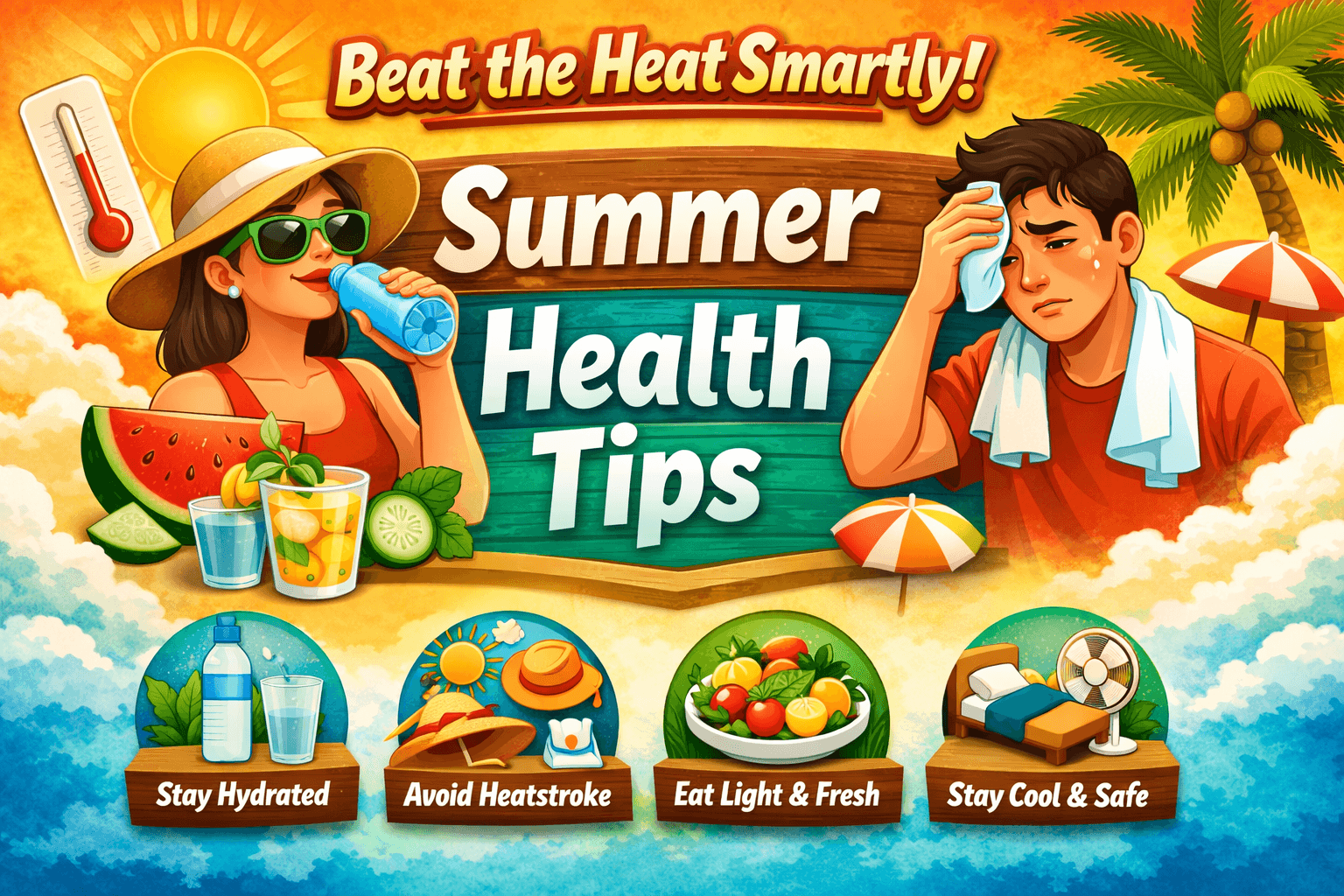
How to Keep Your Body Cool and Healthy During Summer
Summer can feel great at first — longer days, more energy, and a lively vibe all around. But as the heat increases, it slowly starts affecting your body in ways you might not even notice immediately. Feeling tired without reason, getting headaches, or losing appetite — these are small signals that your body is struggling to cope with the heat. That’s why taking proper care of your health during summer is not just a choice, it’s a necessity.
The most important thing during summer is staying hydrated. When the temperature rises, your body sweats more to cool itself down. This process leads to loss of water and essential minerals. If you don’t replace them, you may feel weak, dizzy, or even face dehydration. So instead of waiting to feel thirsty, make it a habit to drink water throughout the day. Keeping a water bottle with you can help. You can also include natural drinks like lemon water or coconut water, which not only hydrate you but also refresh your body.
Food habits also play a very important role. During hot weather, heavy and oily foods can make you feel uncomfortable and slow. Your body prefers light and easy-to-digest meals in summer. Try to eat more fresh fruits and vegetables that contain high water content. Foods like watermelon, cucumber, and oranges are not just refreshing but also help in keeping your body cool from the inside. At the same time, reducing spicy and fried food can prevent unnecessary heat buildup in your body.
Another simple but effective step is choosing the right clothing. Many people ignore this, but what you wear directly affects how your body handles heat. Wearing loose and light-colored clothes made of breathable fabrics like cotton allows air to pass through your body, helping you stay cool. Tight and dark clothes, on the other hand, can trap heat and make you feel more uncomfortable.
Sun exposure is something you should be careful about. The heat is usually at its peak between noon and mid-afternoon. Stepping out during this time without protection can lead to sunburn or even heat-related problems. If you have to go outside, try to cover your head, wear sunglasses, and protect your skin as much as possible. Small precautions can save you from bigger problems later.
Listening to your body is equally important. Sometimes we ignore early signs like excessive sweating, fatigue, or slight dizziness, thinking it’s normal. But these can be warning signs that your body is overheating. In such situations, it’s better to take a break, move to a cooler place, and hydrate yourself. Pushing your body too much in extreme heat can make things worse.
Maintaining a balanced daily routine also helps a lot. Waking up early, avoiding too much physical activity during peak heat hours, and giving your body enough rest can keep your energy levels stable. Even small changes in your routine can make a noticeable difference in how you feel throughout the day.
In the end, staying healthy during summer is all about being a little more aware and taking simple steps consistently. You don’t need anything complicated — just proper hydration, the right food, comfortable clothing, and a bit of care towards your body. If you follow these basic habits, you can enjoy the summer season without letting the heat affect your health.
Common Summer Diseases and Their Simple Remedies
Summer may seem like a fun and energetic season, but it also brings along several common health problems that many people face every year. The rising temperature, strong sunlight, and increased sweating create the perfect conditions for certain illnesses. The good thing is that most of these problems can be managed or even prevented with a little awareness and simple remedies.
One of the most common issues during summer is dehydration. When your body loses more water than it takes in, you may start feeling weak, tired, or dizzy. In some cases, it can also cause headaches and low energy levels. The simplest way to deal with this is to keep drinking water regularly throughout the day. You can also add natural drinks like lemon water or buttermilk to your routine, which help restore lost fluids and keep your body refreshed.
Another serious condition is heatstroke. This happens when your body temperature rises too high due to prolonged exposure to heat or sun. Symptoms may include high body temperature, nausea, confusion, and even fainting in extreme cases. If someone experiences these signs, it is important to move them to a cool place immediately, give them water, and allow their body to cool down. Avoid going out during peak heat hours whenever possible to reduce the risk.
Food poisoning is also quite common in summer. Due to the heat, food spoils faster, especially if it is left outside for too long. Eating contaminated or stale food can lead to stomach pain, vomiting, or diarrhea. To prevent this, always eat fresh food and avoid street food that may not be hygienic. Washing fruits and vegetables properly before eating is also a simple but important step.
Skin problems like rashes and sunburn are another concern. Excessive sweating and exposure to sunlight can irritate your skin, causing redness, itching, or burning sensation. Wearing loose clothes, keeping your skin clean, and avoiding direct sunlight can help prevent these issues. If needed, applying soothing creams or using natural remedies like aloe vera can provide relief.
Many people also experience fatigue and weakness during summer. This is often due to loss of fluids and lack of proper nutrition. Eating light but nutritious meals, staying hydrated, and taking enough rest can help maintain your energy levels.
The key to staying safe during summer is not just treatment, but prevention. Paying attention to small habits like drinking enough water, eating fresh food, and avoiding too much heat exposure can protect you from most of these common illnesses.
In the end, summer health problems are quite common, but they are not difficult to manage. With simple care and a little awareness, you can keep yourself and your family safe and healthy throughout the season.
What to Eat and What to Avoid in Summer: A Complete Guide
When summer arrives, one of the biggest mistakes people make is continuing the same eating habits they follow during winter or cooler seasons. But the truth is, your body’s needs change with the weather. In hot temperatures, your digestion slows down slightly, and your body demands lighter, water-rich, and easily digestible foods. If you understand what to eat and what to avoid, you can stay energetic, fresh, and healthy throughout the season.
Let’s start with what you should eat. During summer, your focus should be on foods that naturally cool your body from the inside. Fresh fruits are your best friends in this season. Watermelon, cucumber, muskmelon, oranges, and grapes are not only refreshing but also full of water and essential nutrients. These fruits help maintain hydration and provide instant energy without making you feel heavy.
Vegetables also play an important role. Light and simple meals made with vegetables like bottle gourd, spinach, and zucchini are easy to digest and keep your stomach calm. Including salads in your daily diet is a great idea because they are fresh, quick to prepare, and packed with nutrients. Yogurt and buttermilk are also excellent choices. They improve digestion, cool your body, and help maintain gut health.
Now, let’s talk about drinks. Staying hydrated is not just about drinking water, but also about choosing the right fluids. Along with water, you can include coconut water, lemon water, and fresh homemade juices. These drinks help restore the minerals lost through sweat and keep your body feeling active. Avoid packaged drinks as much as possible, as they often contain excess sugar and preservatives.
On the other hand, there are certain foods you should avoid during summer. Heavy, oily, and fried foods can make you feel sluggish and uncomfortable. They increase body heat and put extra pressure on your digestive system. Similarly, very spicy food can cause acidity and irritation, especially in hot weather.
Another thing to be careful about is stale or uncovered food. In summer, food spoils quickly due to high temperatures. Eating such food can lead to stomach infections or food poisoning. Always try to eat freshly prepared meals and store food properly.
Caffeine and sugary drinks are also something you should limit. While a cold drink or iced coffee may seem refreshing at first, they can actually dehydrate your body if consumed in excess. Instead, natural and homemade options are always better.
Timing of meals also matters. Eating smaller meals more frequently is better than having heavy meals at once. It keeps your digestion smooth and prevents that heavy, uncomfortable feeling.
In simple words, summer diet is all about balance and smart choices. You don’t need to follow any strict rules — just listen to your body and choose foods that make you feel light, fresh, and energetic. By eating right and avoiding harmful foods, you can enjoy summer without feeling drained or unhealthy.
Essential Tips to Prevent Heatstroke During Summer
Heatstroke is one of the most serious health risks during summer, yet many people don’t realize how quickly it can happen. It’s not just about feeling “too hot” — heatstroke occurs when your body loses its ability to control temperature. This can lead to dangerous symptoms like high fever, confusion, dizziness, and in severe cases, even unconsciousness. The good news is that with a few simple precautions, you can easily protect yourself and your family.
The first and most important tip is to avoid direct sun exposure during peak hours. The sun is usually strongest between 12 PM and 4 PM. During this time, stepping outside without any protection can quickly increase your body temperature. If it’s not necessary, try to stay indoors. And if you do need to go out, plan your tasks in the early morning or evening when the heat is less intense.
Staying hydrated is another powerful way to prevent heatstroke. Your body constantly loses water through sweat, and if you don’t replace it, your internal cooling system starts to fail. Make it a habit to drink water regularly throughout the day. Don’t wait until you feel thirsty, because by then your body is already slightly dehydrated. Natural drinks like lemon water, coconut water, or buttermilk can also help maintain fluid balance.
Wearing the right clothes can make a big difference. Choose light-colored, loose-fitting clothes made of breathable fabric like cotton. These allow air to circulate and help your body release heat more effectively. Tight or dark clothing can trap heat and increase the risk of overheating.
Another important step is to protect your head and skin. When going outside, try to cover your head with a cap, scarf, or umbrella. Direct sunlight on your head can quickly raise your body temperature. Sunglasses can protect your eyes, and applying sunscreen can prevent skin damage caused by harsh UV rays.
You should also avoid heavy physical activity during extreme heat. Exercise or hard work under direct sunlight puts extra stress on your body. If you need to work outdoors, take frequent breaks, rest in shaded areas, and drink water often. Overexertion in hot weather is one of the main causes of heatstroke.
Listening to your body is very important. Early signs of heatstroke include excessive sweating, weakness, headache, nausea, and dizziness. If you notice these symptoms, don’t ignore them. Immediately move to a cooler place, drink water, and rest. Cooling your body at the right time can prevent the situation from becoming serious.
Keeping your surroundings cool also helps. Use fans, coolers, or air conditioning if available. Taking a cool shower or washing your face and hands frequently can also help lower your body temperature.
In the end, preventing heatstroke is all about awareness and small daily habits. You don’t need anything complicated — just avoid extreme heat, stay hydrated, dress smartly, and pay attention to your body. By following these simple tips, you can stay safe and enjoy the summer without any health risks.
Healthy Daily Habits to Follow During Summer
Summer is not just about dealing with heat for a few hours — it’s about how you manage your entire day. Small daily habits can make a huge difference in how your body feels and performs during hot weather. If your routine is not adjusted according to the season, you may feel tired, irritated, or even unhealthy without any clear reason. But the good part is, with a few simple changes, you can stay fresh, active, and healthy all day long.
The first habit to focus on is starting your day early. Early mornings are cooler and more comfortable, making it the perfect time to complete important tasks, exercise, or go for a walk. This not only helps you avoid peak heat later in the day but also keeps your energy levels stable. Waking up late often forces you to be active during the hottest hours, which can drain your body quickly.
Another important habit is maintaining a consistent hydration routine. Instead of drinking a large amount of water at once, try to sip water throughout the day. Keeping a bottle near you acts as a reminder and helps you stay on track. You can also include refreshing drinks like lemon water or buttermilk in between meals to keep your body cool and hydrated.
Your eating pattern also needs attention. Eating heavy meals can make you feel sluggish, especially in hot weather. A better approach is to have small and balanced meals at regular intervals. Include fresh fruits, salads, and light home-cooked food in your daily routine. This keeps your digestion smooth and prevents that heavy, uncomfortable feeling after meals.
Rest is something people often ignore, but it becomes even more important in summer. Your body gets tired faster due to heat, so giving it enough time to relax is necessary. Try to get proper sleep at night and, if possible, take short breaks during the day. Even sitting in a cool place for a few minutes can refresh your mind and body.
Personal hygiene is another key habit. Due to sweating, your body can feel sticky and uncomfortable, which may also lead to skin problems. Taking a bath regularly, wearing clean clothes, and keeping your surroundings clean can help you stay fresh and prevent infections.
You should also plan your activities wisely. Avoid going out unnecessarily during peak heat hours. If you have outdoor work, try to schedule it in the morning or evening. Managing your time smartly reduces exposure to extreme heat and keeps your body stress-free.
Limiting screen time and avoiding excessive caffeine can also help. Spending too much time on devices or consuming too much tea and coffee can make you feel more tired and dehydrated. Instead, give your body a break and focus on relaxing activities when possible.
In simple terms, summer health is all about building the right habits. You don’t need any complicated routine — just small, consistent actions like waking up early, staying hydrated, eating light, and taking enough rest. These habits may seem simple, but they have a powerful impact on your overall health. If you follow them daily, you’ll notice that summer feels much more comfortable and enjoyable.
Conclusion
Summer is a season that can either energize you or completely drain you — it all depends on how you take care of yourself. As we’ve seen, staying healthy during summer is not about doing anything complicated or expensive. It’s about understanding your body’s needs and making smart, simple choices every single day.
Keeping your body cool, staying hydrated, and eating the right foods form the foundation of good health in hot weather. At the same time, being aware of common summer illnesses and taking early precautions can save you from bigger problems. Small habits like avoiding direct sunlight, wearing comfortable clothes, and following a balanced daily routine may seem basic, but they create a powerful impact over time.
The key is consistency. You don’t need to follow everything perfectly from day one — just start with a few habits and slowly make them part of your lifestyle. Listen to your body, respect its limits, and give it the care it deserves.
In the end, summer should be a season you enjoy, not suffer through. With the right approach, you can stay active, fresh, and healthy — no matter how high the temperature goes.
➤ Click this link to discover powerful remedies for common body diseases and valuable tips to protect and maintain your overall health.
https://onlinehelpful.com/category/complete-body-health/
https://www.facebook.com/share/1DUjuewXJu/
https://www.instagram.com/online_helpful_?igsh=cGlkbG1xbWFkbjl1
Frequently Asked Questions
Q1. What are the best summer health tips to stay cool?
A: The best summer health tips include staying hydrated, eating light foods, avoiding direct sunlight, and wearing breathable clothes. Following a simple daily routine can help keep your body cool and active.
Q2. How can I prevent heatstroke during summer?
A: To prevent heatstroke, avoid going out during peak heat hours, drink plenty of water, wear loose cotton clothes, and take regular breaks in a cool place if you are outdoors.
Q3. What foods should I eat in summer to stay healthy?
A: In summer, you should eat water-rich and light foods like watermelon, cucumber, yogurt, and fresh vegetables. These help keep your body cool and improve digestion.
Q4. Which foods should be avoided during hot weather?
A: You should avoid oily, spicy, and heavy foods in summer. Also, avoid stale food and sugary drinks as they can cause dehydration and digestive problems.
Q5. How much water should I drink daily in summer?
A: It is recommended to drink at least 8–10 glasses of water daily, but it can vary depending on your activity level and weather conditions. Drinking water regularly is more important than drinking large amounts at once.