
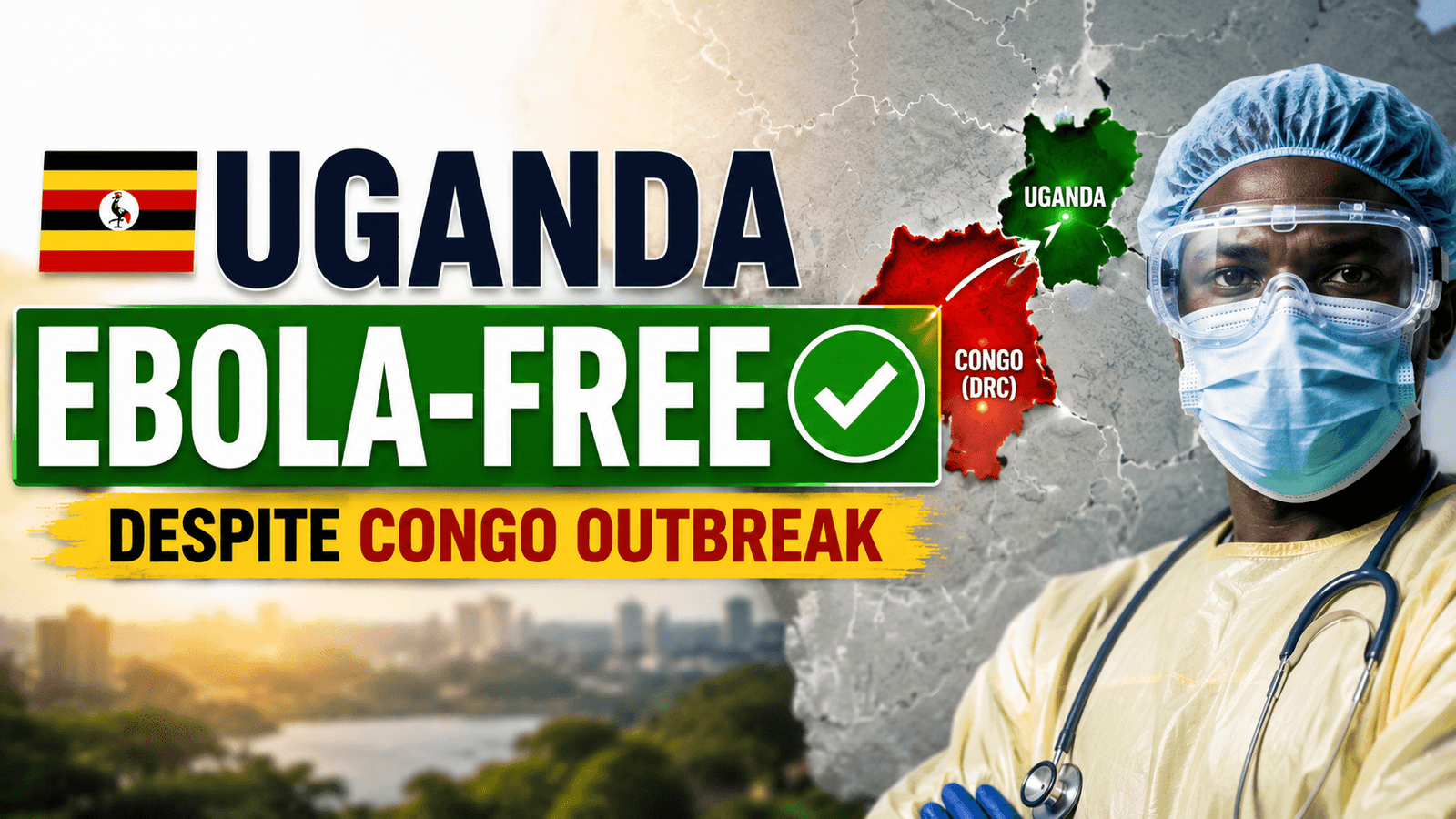
Why Did Uganda Declare Itself Ebola-Free?
Uganda’s declaration of being Ebola-free represents an important milestone in the country’s public-health response to the disease. Such a declaration does not simply mean that Ebola has disappeared forever. Instead, it generally means that health authorities have gone through a defined period without detecting new cases and have met established public-health criteria for ending an outbreak.
When an Ebola outbreak occurs, health officials work quickly to identify infected people, isolate suspected and confirmed cases, trace people who may have been exposed, and monitor contacts for possible symptoms. These measures are designed to break chains of transmission before the virus can spread further.
What Does “Ebola-Free” Actually Mean?
Being declared Ebola-free usually means that authorities have found no new confirmed Ebola infections for the required monitoring period after the last known patient has recovered or otherwise exited the infectious period.
The declaration is therefore an assessment of the current outbreak, rather than a guarantee that Ebola can never return. Uganda remains vulnerable to imported cases or future outbreaks because Ebola viruses continue to circulate in parts of Africa.
Key points to understand:
- Ebola-free status refers to the end of a specific outbreak.
- Health authorities must conduct extensive surveillance before making the declaration.
- People who had contact with Ebola patients may be monitored for symptoms.
- Health workers continue watching for unusual illnesses after an outbreak ends.
- A future imported case could potentially lead to another outbreak.
How Uganda Can Stop Ebola Transmission
Containing Ebola requires a coordinated response involving hospitals, laboratories, government agencies, communities, and international health organizations. One of the most important steps is early detection.
When a person develops symptoms that could be consistent with Ebola and has a relevant exposure history, health workers can investigate the case and arrange testing. Confirmed patients can then receive appropriate medical care while infection-control measures help protect healthcare workers and other patients.
Contact tracing is another major part of outbreak control. Health teams identify people who may have been exposed to an infected person and monitor them during the relevant observation period. If someone develops symptoms, health authorities can investigate quickly rather than allowing an undetected chain of transmission to continue.
Safe and dignified burial practices can also be important because Ebola can spread through direct contact with the bodies of people who have died from the disease.
Why Surveillance Remains Important After an Outbreak
Even after an outbreak has officially ended, public-health authorities cannot simply stop watching for Ebola. Continued surveillance helps identify a possible new case quickly.
This is particularly important in countries that have experienced Ebola outbreaks or share borders with regions where Ebola activity has been reported. Cross-border movement does not automatically mean an outbreak will spread, but it makes communication and disease surveillance especially important.
Health authorities may therefore continue strengthening laboratory testing, training healthcare workers, improving infection-prevention practices, and educating communities about symptoms and when to seek medical care.
Uganda’s Ebola-Free Declaration Is Not a Permanent Guarantee
An Ebola-free declaration should be understood as good news about the successful control of a particular outbreak, not as proof that Ebola has been permanently eliminated from the region.
The Ebola virus can reappear through different pathways, including an infected person entering a new area. This is why countries with previous outbreaks often maintain preparedness systems even after transmission has stopped.
For Uganda, achieving Ebola-free status demonstrates the importance of rapid detection, effective isolation, contact tracing, medical care, community cooperation, and continued public-health preparedness.
Ultimately, the declaration is a sign that the known outbreak has been brought under control, while ongoing surveillance remains essential to protect communities and detect any future cases as early as possible.
What Is Happening With Ebola Cases in Congo?
The Ebola situation in the Democratic Republic of the Congo (DRC), commonly called Congo, is an important regional health concern because Ebola outbreaks can develop quickly and require an immediate public-health response. However, it is important to distinguish between confirmed cases, suspected cases, and historical outbreaks when discussing the situation. Case numbers and outbreak status can change rapidly as health authorities investigate suspected infections and conduct laboratory testing.
The DRC has experienced multiple Ebola outbreaks over the years. Its health authorities have developed considerable experience in detecting and responding to the virus, including contact tracing, laboratory testing, isolation, infection prevention, and community engagement.
Why Congo Is Closely Watched for Ebola
The DRC has repeatedly faced Ebola outbreaks, making disease surveillance especially important. Some affected areas can present significant challenges for healthcare teams because of remote communities, limited healthcare infrastructure, population movement, and difficulties reaching people quickly.
When Ebola is suspected, health officials generally focus on identifying possible transmission chains and determining whether additional people have been exposed.
Important areas of an Ebola response include:
- Quickly identifying people with possible Ebola symptoms.
- Testing suspected cases in qualified laboratories.
- Isolating confirmed or suspected patients when appropriate.
- Tracing and monitoring people who may have been exposed.
- Strengthening infection-prevention and control measures in healthcare facilities.
- Providing accurate information to local communities.
- Monitoring movement between affected and neighboring areas.
Rising Cases Do Not Automatically Mean a Regional Outbreak
Reports about increasing suspected or confirmed cases can understandably cause concern, but the meaning of the numbers depends on several factors. Health authorities need to determine where the cases occurred, whether they are laboratory-confirmed, whether they are linked to one another, and whether transmission is continuing.
This distinction is particularly important when comparing Congo with neighboring countries such as Uganda. A country can successfully end an Ebola outbreak while another country is dealing with a separate outbreak or investigation.
Therefore, Uganda being declared Ebola-free does not necessarily conflict with Ebola activity elsewhere. Outbreak status is determined separately for each affected area based on surveillance and epidemiological evidence.
How Health Officials Investigate Possible Ebola Cases
When a suspected case is identified, health workers may investigate the person’s symptoms, recent travel, contact history, and possible exposure to someone infected with Ebola.
Laboratory testing plays a critical role in confirming whether the Ebola virus is present. Once a case is confirmed, public-health teams work to identify people who may have had close contact with the patient.
This process is known as contact tracing. Contacts can be monitored for symptoms so that any new infection can be detected quickly.
The goal is to interrupt transmission before a single infection develops into a larger chain of cases.
Why Congo’s Situation Matters to Neighboring Countries
The DRC shares borders with several countries, including Uganda. Because people regularly travel across national borders for work, trade, family visits, healthcare, and other reasons, neighboring countries need strong surveillance and communication systems.
This does not mean that everyone traveling from an affected region is infected or that an outbreak will inevitably spread across a border. Instead, it highlights why health authorities monitor unusual illnesses and maintain preparedness.
Cross-border cooperation can help countries:
- Share information about suspected and confirmed cases.
- Improve disease surveillance.
- Coordinate investigations.
- Strengthen laboratory capacity.
- Train healthcare workers.
- Communicate accurate health information to communities.
Ebola Response Requires More Than Treating Patients
Controlling Ebola is not only about treating people after they become sick. Public-health teams must also understand how transmission is occurring and identify opportunities to stop further infections.
Community cooperation can make a major difference. People who understand the symptoms and know where to seek medical help are more likely to report illness early. Healthcare workers also need proper protective equipment and infection-control procedures to reduce the risk of transmission inside medical facilities.
Misinformation can make outbreak control more difficult. False claims may cause people to delay treatment, avoid healthcare facilities, or distrust public-health workers. For this reason, transparent communication is an important part of the response.
Why the Situation Can Change Quickly
Ebola outbreaks can evolve rapidly. A health authority may identify suspected cases, conduct testing, confirm infections, trace contacts, and later determine that some suspected cases were caused by another illness.
For this reason, the latest information from official health authorities should always be checked before publishing or sharing specific case numbers.
A headline saying that cases are “rising” may refer to suspected cases, confirmed cases, or newly reported cases over a particular period. These terms are not interchangeable.
Congo and Uganda Should Be Viewed Separately
It is useful to keep the two situations separate when discussing Ebola in the region. Uganda’s Ebola-free declaration relates to its own outbreak status, while developments in Congo concern the epidemiological situation inside the DRC.
A country reaching Ebola-free status is an important public-health achievement even when another country continues to investigate or manage Ebola cases. At the same time, continued Ebola activity in a neighboring country means regional surveillance and preparedness remain important.
The key message is simple: Uganda’s Ebola-free status can represent successful control of an outbreak in Uganda, while Congo may still require intensive surveillance and response efforts. Both situations can exist at the same time without contradicting each other.
How Is Ebola Spread, and What Are the Warning Signs?
Ebola is a rare but serious viral disease that can cause severe illness in humans. Understanding how the virus spreads and recognizing possible warning signs can help people seek medical attention quickly and reduce the risk of further transmission.
Ebola does not normally spread through casual contact such as simply being near an infected person. Transmission generally requires direct contact with the blood or other body fluids of an infected person or someone who has died from Ebola, particularly when appropriate protective measures are not being used.
The virus can also spread through contaminated objects or materials that have been exposed to infected body fluids. This is why strict infection-prevention procedures are essential in healthcare settings and during caregiving.
How Does Ebola Spread?
Ebola transmission usually occurs when a person comes into direct contact with infectious body fluids. These may include blood, vomit, feces, urine, breast milk, semen, and other body fluids.
The risk of transmission is especially important when a person is seriously ill or after death because the virus can remain present in certain body fluids.
Common situations that can increase the risk of exposure include:
- Providing close care to someone with Ebola without appropriate protection.
- Contact with blood or other infectious body fluids.
- Handling contaminated clothing, bedding, or medical equipment.
- Caring for or preparing the body of someone who died from Ebola without proper precautions.
- Certain healthcare procedures performed without appropriate infection-control measures.
Ebola is not generally spread through ordinary casual contact, such as sitting next to someone or simply passing them on the street.
What Are the Early Symptoms of Ebola?
The symptoms of Ebola can initially resemble those of several other infectious diseases. This can make early recognition difficult, particularly in regions where illnesses such as malaria, typhoid, or other infections are common.
Early symptoms may include:
- Fever
- Severe headache
- Muscle and joint pain
- Weakness or fatigue
- Sore throat
- Vomiting
- Diarrhea
- Stomach pain
Not everyone will experience exactly the same symptoms, and symptoms can develop at different times after exposure.
A person who develops compatible symptoms after a possible Ebola exposure should seek urgent medical evaluation and tell healthcare workers about the potential exposure or relevant travel history.
Can Ebola Cause More Serious Symptoms?
As the illness progresses, some patients can develop more severe disease. Serious symptoms may include significant weakness, dehydration, organ problems, and bleeding.
Bleeding can occur in some cases, but it is important to understand that not every person with Ebola develops visible bleeding. Waiting for bleeding before seeking medical care can therefore be dangerous.
Severe illness can require hospitalization and specialized supportive treatment. Medical teams may monitor hydration, blood pressure, oxygen levels, organ function, and other complications while providing appropriate care.
Why Early Medical Attention Matters
Because Ebola can resemble other illnesses in its early stages, symptoms alone cannot confirm that someone has Ebola. Laboratory testing and professional medical assessment are needed for diagnosis.
If someone has had a possible exposure and develops symptoms, early communication with healthcare professionals can help authorities take appropriate precautions.
A person should avoid unnecessary close contact with others while seeking medical guidance if Ebola exposure is genuinely suspected. Healthcare workers can then determine the safest way to evaluate and transport the patient.
How Can People Reduce the Risk of Ebola Transmission?
Prevention focuses heavily on avoiding contact with infected body fluids and following public-health guidance during an outbreak.
Important precautions include:
- Avoid close contact with people known or suspected to have Ebola unless trained and properly protected.
- Follow instructions from local health authorities during an outbreak.
- Wash hands regularly with soap and water or use an appropriate alcohol-based hand sanitizer.
- Do not handle the bodies of people who have died from suspected or confirmed Ebola without proper training and protective measures.
- Healthcare workers should follow recommended infection-prevention and control procedures.
- People who may have been exposed should cooperate with health authorities and follow monitoring instructions.
What About Sexual Transmission?
Ebola can persist in certain body fluids after a person has recovered, meaning public-health guidance may include precautions related to sexual activity for survivors and their partners.
Because recommendations can depend on the specific Ebola virus, outbreak circumstances, and available testing or public-health guidance, people should follow the latest advice from qualified health authorities rather than relying on general assumptions.
Why Public Awareness Is Important During an Outbreak
Public awareness can play an important role in controlling Ebola. People who understand how transmission occurs are better positioned to avoid unnecessary exposure and recognize when professional medical advice is needed.
At the same time, fear and misinformation can create additional problems. Ebola should be taken seriously, but people should not assume that every fever or flu-like illness is Ebola.
The most important approach is informed caution: understand the possible exposure risks, recognize warning signs, avoid contact with infectious body fluids, and seek professional medical care when exposure and symptoms make Ebola a possibility.
What Does Uganda’s Ebola-Free Status Mean for Travelers and the Region?
Uganda being declared Ebola-free is an important public-health milestone, particularly because the country has experienced Ebola outbreaks in the past and shares borders with countries where viral diseases can pose regional concerns. However, an Ebola-free declaration should not be interpreted as meaning that the virus has disappeared from Africa or that there is no possibility of future cases.
For travelers, the key message is that travel decisions should be based on the latest official health guidance, rather than fear or rumors. When an outbreak has been officially controlled, normal travel and trade may continue, while health authorities can maintain surveillance systems to detect any possible new infections.
What Does Ebola-Free Status Mean for Travelers?
For most travelers, an official declaration that an Ebola outbreak has ended is reassuring. It indicates that authorities have met the criteria required to conclude that the known chain of transmission has been interrupted.
However, travelers should still practice ordinary health precautions and pay attention to official announcements, particularly when visiting areas where infectious diseases are being monitored.
Travelers should:
- Check current health advisories before traveling.
- Follow instructions issued by local and national health authorities.
- Maintain good hand hygiene.
- Avoid unnecessary contact with blood or other body fluids.
- Seek medical advice if they become seriously ill after possible exposure.
- Inform healthcare professionals about relevant travel or exposure history.
An Ebola-free declaration does not mean travelers need to panic or automatically avoid an entire country.
Why Border Surveillance Still Matters
Uganda is geographically connected to several countries, and people cross borders for business, family, tourism, education, healthcare, and trade. During periods of Ebola activity in the region, this movement can make cross-border disease surveillance particularly important.
Health authorities may work together to identify people who could have been exposed, investigate unusual illnesses, and share information about potential cases.
The purpose of border surveillance is not to stop ordinary movement unnecessarily. Instead, it helps authorities detect possible infections early and respond before transmission can become widespread.
Could Ebola Return to Uganda?
An Ebola-free declaration does not provide a permanent guarantee that Uganda will never record another case.
Ebola outbreaks can potentially reappear through different routes, including the introduction of the virus into a community from an area where transmission is occurring. This is why maintaining trained healthcare workers, laboratory capacity, disease surveillance, and emergency response systems remains important even after an outbreak has ended.
Preparedness is especially valuable because early action can make a major difference.
If a suspected case is detected, health authorities can investigate rapidly, arrange appropriate testing, identify contacts, and introduce infection-control measures when necessary.
What Should Travelers Do If They Develop Symptoms?
Travelers who develop symptoms that could be consistent with Ebola should not automatically assume they have the disease. Many other illnesses can cause fever, weakness, headache, vomiting, diarrhea, and other similar symptoms.
However, if a person has had a credible exposure to Ebola or has recently traveled to an area experiencing an Ebola outbreak, they should promptly seek professional medical advice and clearly explain their travel and exposure history.
Healthcare professionals can then determine whether Ebola testing or additional precautions are appropriate.
People should avoid unnecessary close contact with others if Ebola exposure is genuinely suspected until they receive appropriate medical guidance.
Why Uganda’s Status Matters Beyond Its Borders
An Ebola-free declaration can have significance beyond Uganda because controlling transmission in one country reduces the chance of continued spread through communities and cross-border networks.
Successful outbreak control can also demonstrate the value of:
- Early disease detection.
- Rapid laboratory testing.
- Contact tracing.
- Isolation and appropriate patient care.
- Infection-prevention measures.
- Community cooperation.
- Clear public-health communication.
- Cross-border coordination.
These measures are useful not only for Ebola but also for responding to other infectious disease threats.
What Does This Mean for the Region?
Uganda’s Ebola-free status and Ebola developments elsewhere in the region can exist at the same time. The end of an outbreak in one country does not automatically mean that Ebola activity has ended everywhere.
For neighboring countries, continued communication and surveillance can help identify potential cases quickly. This is particularly important when countries share borders and have frequent movement of people and goods.
Regional cooperation allows health authorities to exchange information, coordinate investigations, and strengthen preparedness.
Travelers Should Rely on Official Health Information
During infectious-disease outbreaks, social media posts and online headlines can sometimes create unnecessary fear. Case numbers may change as suspected cases are tested and investigations are completed.
Travelers should therefore rely on current information from recognized public-health authorities when making decisions about travel.
A headline about Ebola cases in one part of the region should not automatically be interpreted as a warning that every neighboring country is experiencing an outbreak.
The Bigger Public-Health Message
Uganda’s Ebola-free declaration is best understood as a sign that a particular outbreak has been successfully brought under control. It is a positive development, but continued vigilance remains important.
For travelers, the sensible approach is awareness without unnecessary panic. Follow official health advice, practice good hygiene, understand potential exposure risks, and seek medical care if illness occurs after a credible exposure.
For the wider region, the situation highlights why countries need strong surveillance and rapid-response systems. Ebola can present serious challenges, but coordinated public-health action can help detect cases early and interrupt transmission.
Ultimately, an Ebola-free declaration is not the end of preparedness. It is an opportunity for health authorities, communities, and travelers to remain informed and ready to respond if a new threat emerges.
Conclusion
Uganda’s Ebola-free declaration is an important public-health achievement and shows how early detection, contact tracing, effective medical care, infection-control measures, and community cooperation can help bring an Ebola outbreak under control. At the same time, Ebola activity or investigations in other parts of the region demonstrate why countries cannot become complacent once an outbreak ends.
For travelers and communities, the most important message is awareness without unnecessary panic. Uganda being declared Ebola-free does not mean Ebola has disappeared completely from the region, nor does activity in Congo automatically mean that Uganda is experiencing another outbreak. Each country’s situation must be assessed separately using the latest information from health authorities.
Continued surveillance, strong healthcare systems, accurate public-health communication, and cooperation between neighboring countries remain essential. Travelers should follow official health guidance, maintain good hygiene, and seek medical advice if they develop concerning symptoms after a credible exposure.
In short, Uganda’s Ebola-free status is encouraging news, but continued vigilance remains the best protection against future outbreaks.
Frequently Asked Questions
Q1. What does Uganda being declared Ebola-free mean?
A. It means the Ebola outbreak in Uganda had met the required public-health criteria for being declared over, including the absence of newly confirmed cases during the required monitoring period. It does not mean Ebola can never return to the country.
Q2. Does Ebola activity in Congo mean Uganda is at immediate risk?
A. Not necessarily. Ebola situations are assessed separately in each country. However, because Uganda and Congo are neighboring countries, continued surveillance, cross-border cooperation, and rapid detection of suspected cases remain important.
Q3. How does Ebola spread from one person to another?
A. Ebola mainly spreads through direct contact with the blood or other body fluids of an infected person or someone who has died from Ebola. It can also spread through contaminated objects or materials. Casual contact, such as simply being near someone, does not normally transmit Ebola.
Q4. What should travelers do to reduce the risk of Ebola?
A. Travelers should follow the latest official health advice, practice good hand hygiene, avoid contact with blood or other body fluids, and seek medical advice if they develop concerning symptoms after a credible exposure. Staying informed is important, but travelers should avoid unnecessary panic based on unverified reports.