
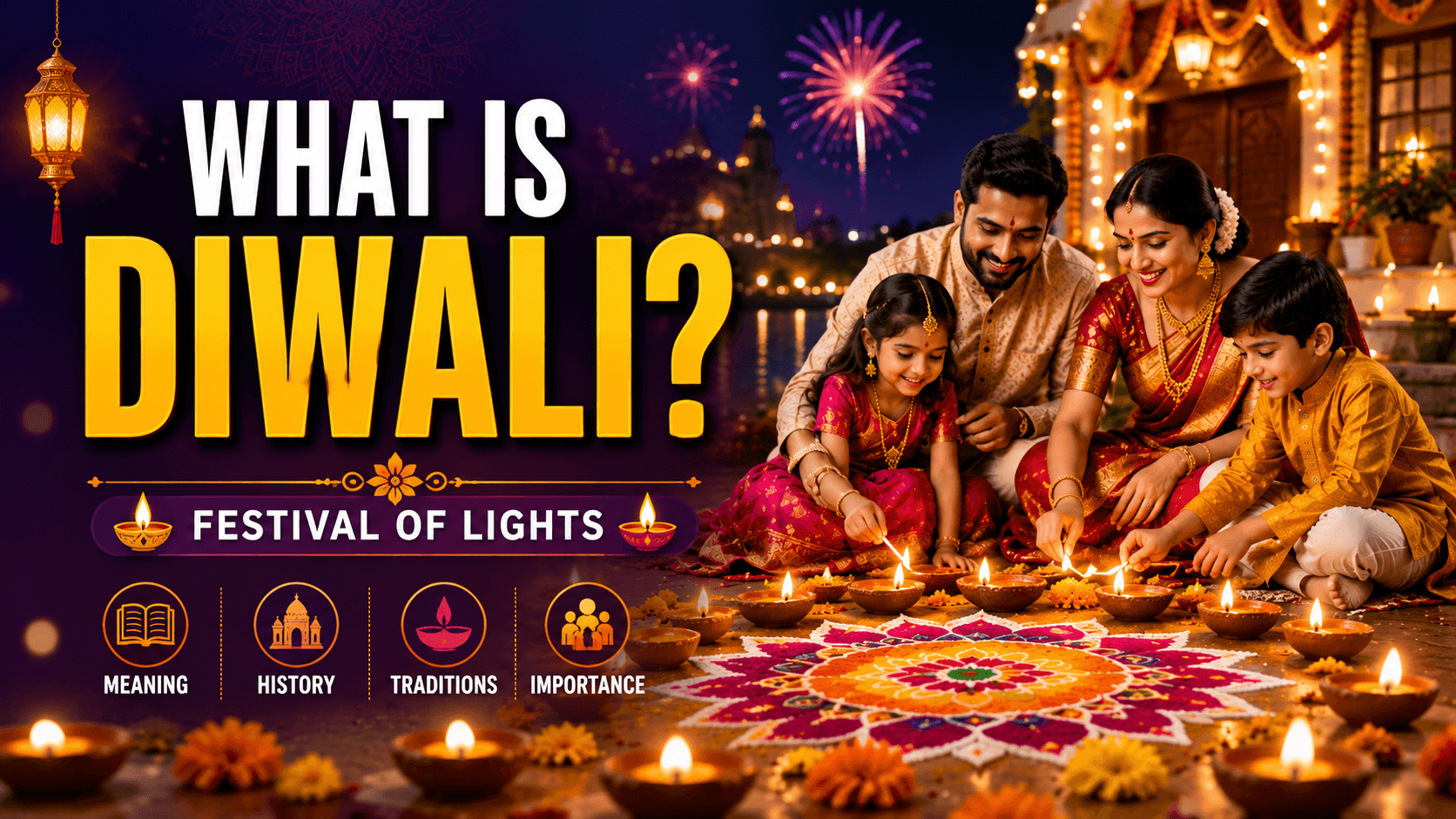
What Is the Festival of Diwali? Understanding Its Meaning
Diwali, the Festival of Lights, is one of India’s biggest festivals. It is observed by millions of people every year and has become a global celebration of joy, hope, and togetherness. The festival symbolizes the victory of light over darkness, good over evil, and knowledge over ignorance, making it much more than a cultural event. It carries a timeless message that inspires people to live with honesty, kindness, and positivity.
The word “Diwali” is derived from the Sanskrit word “Deepavali,” which means “a row of lamps.” During the festival, people decorate their homes, temples, and streets with rows of clay lamps (diyas), candles, and colorful lights. These lights represent the removal of darkness and the arrival of happiness, peace, and prosperity. This beautiful tradition is one of the reasons Diwali is known around the world as the Festival of Lights.
What Does Diwali Symbolize?
Diwali is a festival with deep spiritual and cultural meaning. It encourages people to remove negativity from their lives and embrace a brighter future.
The festival represents:
- The victory of good over evil.
- Light overcoming darkness.
- Truth defeating falsehood.
- Knowledge replacing ignorance.
- Hope, peace, and happiness.
- Prosperity and success.
- New beginnings and fresh opportunities.
These values make Diwali meaningful for people of all ages and backgrounds.
Why Is Diwali So Special?
Diwali is not only a religious festival but also a time when families and communities come together to celebrate. It provides an opportunity to reconnect with loved ones, express gratitude, and create lasting memories.
During Diwali, many families:
- Clean and decorate their homes.
- Light diyas and decorative lamps.
- Create colorful rangoli designs.
- Wear new traditional clothes.
- Perform Lakshmi Puja.
- Exchange gifts with relatives and friends.
- Share sweets and festive meals.
- Spend quality time together.
These traditions help strengthen family bonds while preserving cultural heritage.
Religious Importance of Diwali
Diwali holds special significance for several religions.
For Hindus, the festival celebrates the return of Lord Rama, Goddess Sita, and Lakshmana to Ayodhya after fourteen years of exile and Lord Rama’s victory over Ravana. The people of Ayodhya welcomed them by lighting thousands of diyas, giving rise to the Festival of Lights.
Diwali is also important for other communities:
- Jains celebrate the attainment of nirvana by Lord Mahavira.
- Sikhs celebrate Bandi Chhor Divas, marking Guru Hargobind Ji’s release.
- Some Buddhist communities observe Diwali as a cultural festival of peace and harmony.
These different traditions demonstrate how Diwali promotes unity while respecting diverse beliefs.
When Is Diwali Celebrated?
Diwali is celebrated every year during October or November, depending on the Hindu lunar calendar. Although the exact date changes annually, the excitement surrounding the festival remains the same.
Before Diwali arrives, people prepare by:
- Cleaning their homes.
- Shopping for clothes and decorations.
- Buying gifts and sweets.
- Decorating houses with lights.
- Preparing festive foods.
- Planning family gatherings.
- Visiting temples for prayers.
The days leading up to Diwali are filled with enthusiasm, making it one of the most anticipated festivals of the year.
The Universal Message of Diwali
Beyond its religious traditions, Diwali carries a universal message that is relevant even today. It reminds us that every challenge can be overcome through courage, patience, and righteousness. The festival encourages people to forgive, appreciate their loved ones, help those in need, and welcome every new beginning with optimism.
Its timeless teachings inspire everyone to:
- Choose honesty over dishonesty.
- Spread kindness and compassion.
- Respect family values.
- Help those less fortunate.
- Stay hopeful during difficult times.
- Live with gratitude and positivity.
Today, Diwali is celebrated not only in India but also in many countries across the world. Regardless of where it is observed, the festival continues to unite people through its powerful message of light, love, peace, and hope. It reminds us that even the smallest act of kindness can brighten someone’s life, making Diwali a celebration that goes far beyond lights and decorations.
History and Origin of Diwali
The history of Diwali dates back thousands of years and is deeply rooted in Indian culture, religion, and tradition. Although the festival is celebrated across the country, its origin is connected with several historical events and religious beliefs. These stories may differ from one region or community to another, but they all share one common message—the victory of good over evil, light over darkness, and truth over falsehood.
The Story of Lord Rama’s Return to Ayodhya
The most well-known origin of Diwali comes from the Hindu epic Ramayana.
According to the Ramayana:
- Lord Rama was sent into exile for 14 years.
- His wife Goddess Sita and brother Lakshmana accompanied him.
- During the exile, the demon king Ravana kidnapped Sita.
- Lord Rama fought a great battle against Ravana and defeated him.
- After completing the exile, Rama, Sita, and Lakshmana returned to Ayodhya.
The people of Ayodhya welcomed them with immense joy by:
- Lighting thousands of oil lamps (diyas).
- Decorating homes and streets.
- Celebrating with music and festivities.
- Sharing happiness with friends and family.
This historic celebration is believed to be the beginning of the Festival of Lights, and it continues to inspire Diwali celebrations today.
Other Religious Beliefs Associated with Diwali
While Lord Rama’s story is the most popular, Diwali has different meanings for various religious communities.
For Hindus, Diwali is also associated with the worship of Goddess Lakshmi, the goddess of wealth, prosperity, and fortune. On the main day of Diwali, families perform Lakshmi Puja to seek blessings for happiness, success, and financial well-being.
For Jains, Diwali marks the day when Lord Mahavira, the 24th Tirthankara, attained nirvana (liberation). It is considered one of the most sacred occasions in Jainism.
For Sikhs, the festival commemorates the release of Guru Hargobind Ji from imprisonment. This event, known as Bandi Chhor Divas, symbolizes freedom, justice, and compassion.
Some Buddhist communities also observe Diwali as an important cultural festival, reflecting peace, wisdom, and harmony.
How Diwali Has Evolved Over Time
Over the centuries, Diwali has grown from a religious celebration into one of the world’s most recognized cultural festivals.
Today, people celebrate Diwali in many different ways, including:
- Lighting diyas and decorative lights.
- Decorating homes with rangoli.
- Wearing new clothes.
- Preparing traditional sweets and festive meals.
- Visiting temples and offering prayers.
- Exchanging gifts with relatives and friends.
- Spending quality time with family.
Although modern celebrations may include electric lights and various decorations, the central message of Diwali has remained unchanged.
Why the History of Diwali Still Matters Today
Understanding the history of Diwali helps people appreciate the deeper meaning behind the festival rather than seeing it only as a celebration.
The stories connected with Diwali teach valuable life lessons, such as:
- Always stand for truth and righteousness.
- Good deeds eventually overcome evil.
- Patience and courage are rewarded.
- Family, loyalty, and faith are powerful values.
- Hope can shine even during difficult times.
- Kindness and compassion make society stronger.
These lessons remain relevant in today’s fast-changing world and continue to inspire millions of people across generations.
A Festival That Connects the Past with the Present
Diwali’s rich history is one of the main reasons why it continues to be celebrated with great enthusiasm every year. While customs and traditions have evolved over time, the festival still reflects the same timeless values that inspired its origin centuries ago.
Whether people celebrate Diwali because of Lord Rama’s return to Ayodhya, the worship of Goddess Lakshmi, the enlightenment of Lord Mahavira, or the remembrance of Guru Hargobind Ji, the festival ultimately encourages everyone to embrace goodness, spread light, and begin a new chapter with hope, faith, and positivity.
Why Is Diwali Celebrated?
Diwali is celebrated for many religious, cultural, and spiritual reasons. While different communities observe the festival based on their own traditions and beliefs, the central message remains the same—the victory of good over evil, light over darkness, truth over falsehood, and hope over despair. This universal meaning is one of the main reasons why Diwali continues to be one of the most loved and widely celebrated festivals in the world.
For millions of people, Diwali is more than a holiday. It is a time to reflect on life, express gratitude, strengthen family relationships, and welcome new opportunities with a positive mindset. Every tradition followed during Diwali has a deeper meaning that reminds people to live with honesty, kindness, and compassion.
The Victory of Good Over Evil
The most well-known reason for celebrating Diwali is the return of Lord Rama to Ayodhya after defeating the demon king Ravana. According to the Ramayana, Lord Rama completed fourteen years of exile and rescued Goddess Sita before returning home. The people of Ayodhya welcomed him by lighting thousands of oil lamps, symbolizing the victory of righteousness over evil.
This story teaches several important values:
- Always stand for truth.
- Good eventually defeats evil.
- Courage and patience bring success.
- Honesty is stronger than dishonesty.
- Faith and determination help overcome challenges.
These timeless lessons continue to inspire people of all ages.
A Celebration of Light and Hope
One of the biggest symbols of Diwali is the lighting of diyas and decorative lamps. Light represents wisdom, hope, positivity, and spiritual awakening, while darkness symbolizes ignorance, fear, and negativity.
By lighting lamps during Diwali, people express their desire to:
- Remove negativity from their lives.
- Welcome happiness and peace.
- Spread kindness to others.
- Begin a fresh chapter with optimism.
- Inspire hope during difficult times.
This symbolic act reminds everyone that even a small light can brighten the darkest place.
Honoring Goddess Lakshmi and Lord Ganesha
Another important reason Diwali is celebrated is to worship Goddess Lakshmi, the goddess of wealth, prosperity, and fortune. On the main day of the festival, families perform Lakshmi Puja and pray for financial stability, happiness, and success.
Many households also worship Lord Ganesha, who is believed to remove obstacles and bless people with wisdom before they begin new ventures.
During Lakshmi Puja, families often:
- Clean and decorate their homes.
- Light diyas throughout the house.
- Offer flowers, sweets, and fruits.
- Recite prayers and devotional songs.
- Seek blessings for prosperity and well-being.
These traditions reflect both spiritual devotion and gratitude for life’s blessings.
A Time for Family, Love, and Togetherness
Diwali is also celebrated because it brings families and communities together. People often travel long distances to spend time with their loved ones, making the festival a special occasion for reconnecting and creating lasting memories.
Common family traditions include:
- Sharing festive meals together.
- Exchanging thoughtful gifts.
- Visiting relatives and friends.
- Preparing homemade sweets.
- Decorating homes with colorful rangoli.
- Wearing new traditional clothes.
- Participating in community celebrations.
These joyful moments strengthen relationships and promote a sense of belonging.
Welcoming New Beginnings
Many people consider Diwali the perfect time to start something new. Businesses often begin a new financial year, entrepreneurs launch new ventures, and families make plans for a brighter future.
People celebrate Diwali to welcome:
- New opportunities.
- Financial growth.
- Personal success.
- Better health and happiness.
- Positive changes in life.
- Peace and prosperity.
The festival encourages everyone to move forward with confidence and hope.
Why Diwali Continues to Inspire People
Although Diwali has been celebrated for centuries, its message remains meaningful in modern life. The festival reminds people that success is built on honesty, kindness, patience, and hard work. It inspires people to embrace positivity, forgive, value loved ones, and look ahead with hope.
Whether celebrated for religious faith, cultural traditions, or family gatherings, Diwali continues to unite millions of people across the world. Its values of compassion, gratitude, generosity, and hope make it more than a festival of lights.
How Is Diwali Celebrated Across India?
Diwali is celebrated with great enthusiasm in every part of India, but the customs and traditions can vary from one state to another. Despite these regional differences, the festival brings people together with a shared spirit of happiness, gratitude, and togetherness. Homes are beautifully decorated, families gather to celebrate, prayers are offered, and people exchange sweets and gifts to mark this joyful occasion.
The celebration of Diwali usually begins several days before the main festival. Families spend time cleaning and decorating their homes because it is believed that a clean and welcoming house attracts positive energy and the blessings of Goddess Lakshmi. Markets become crowded with people shopping for clothes, decorations, sweets, gifts, and festive items, creating an exciting atmosphere across the country.
Decorating Homes for Diwali
One of the most beautiful traditions of Diwali is decorating homes with colorful and festive decorations.
Popular decorations include:
- Lighting traditional clay diyas.
- Hanging decorative lanterns.
- Using colorful LED lights.
- Creating beautiful rangoli designs at the entrance.
- Decorating doors with flowers and torans.
- Placing candles around the house.
- Displaying festive ornaments and artwork.
These decorations symbolize the arrival of happiness, prosperity, and positive energy into the home.
Performing Lakshmi Puja
The most important ritual on the main day of Diwali is Lakshmi Puja. Families gather in the evening to worship Goddess Lakshmi, the goddess of wealth, along with Lord Ganesha, who is believed to remove obstacles and bless new beginnings.
During the puja, families typically:
- Light diyas throughout the house.
- Offer flowers, fruits, and sweets.
- Recite prayers and devotional hymns.
- Burn incense sticks.
- Seek blessings for prosperity, health, and peace.
- Pray for success in the coming year.
For many business owners, this is also an auspicious time to worship account books and begin a new financial year.
Sharing Sweets and Gifts
Diwali is a festival of sharing and generosity. Exchanging sweets and gifts is one of the most cherished traditions, helping strengthen relationships with family, friends, neighbors, and colleagues.
Common Diwali gifts include:
- Traditional Indian sweets.
- Dry fruit gift boxes.
- Chocolates.
- Decorative diyas.
- Home décor items.
- Clothing.
- Religious idols and prayer items.
- Personalized gift hampers.
These thoughtful exchanges express love, appreciation, and good wishes for the festive season.
Wearing New Clothes and Enjoying Festive Foods
People of all ages wear new traditional outfits during Diwali as a symbol of new beginnings and celebration. Families also prepare a wide variety of delicious dishes that bring everyone together around the dining table.
Popular Diwali foods include:
- Laddoo.
- Barfi.
- Kaju Katli.
- Gulab Jamun.
- Jalebi.
- Chakli.
- Namak Pare.
- Shakarpara.
- Samosas.
- Various homemade festive snacks.
Preparing and sharing these foods has become an important part of the celebration and creates lasting family memories.
Regional Celebrations Across India
Although the spirit of Diwali remains the same, different regions celebrate it in unique ways.
Some examples include:
- North India: Diwali mainly commemorates the return of Lord Rama to Ayodhya after his victory over Ravana.
- West India: Many business communities celebrate the beginning of a new financial year and perform special Lakshmi Puja ceremonies.
- South India: In several states, the festival is linked to the victory of Lord Krishna over the demon Narakasura.
- East India: Many families worship Goddess Kali, especially in West Bengal, where Kali Puja is celebrated on the same night as Diwali.
These regional traditions highlight India’s rich cultural diversity while preserving the festival’s universal values.
Celebrating Responsibly
Modern Diwali celebrations increasingly focus on protecting the environment and ensuring public safety. Many families now choose eco-friendly ways to celebrate without reducing the festive spirit.
Responsible celebration practices include:
- Using eco-friendly diyas and decorations.
- Limiting the use of loud fireworks.
- Choosing green crackers where permitted.
- Keeping pets and elderly family members comfortable.
- Avoiding unnecessary waste.
- Recycling festive decorations whenever possible.
These simple steps help make Diwali enjoyable for everyone while protecting the environment.
A Festival That Brings Everyone Together
Across India, Diwali is much more than a religious celebration—it is a festival that strengthens family bonds, promotes generosity, and spreads joy throughout communities. Whether people are decorating their homes, performing Lakshmi Puja, sharing sweets, exchanging gifts, or simply spending time with loved ones, every tradition reflects the true spirit of Diwali. The festival reminds us that happiness grows when it is shared, making Diwali a celebration of light, love, unity, and hope for a brighter future.
The Five Days of the Diwali Festival
Diwali is not just a one-day celebration—it is a five-day festival, with each day holding its own religious, cultural, and spiritual significance. Every day has unique traditions, rituals, and celebrations that gradually build up to the main festival before concluding with a celebration of family bonds. Understanding these five days helps people appreciate the deeper meaning of Diwali and the values it represents.
Day 1: Dhanteras
The first day of Diwali is known as Dhanteras, which marks the beginning of the festive season. The word “Dhan” means wealth, while “Teras” refers to the thirteenth day of the lunar calendar.
On Dhanteras, people believe it is highly auspicious to purchase new items as a symbol of prosperity and good fortune.
Common Dhanteras traditions include:
- Buying gold, silver, or jewelry.
- Purchasing new kitchen utensils.
- Shopping for household items.
- Cleaning and decorating homes.
- Lighting diyas in the evening.
- Worshipping Lord Dhanvantari, the god of health and Ayurveda.
- Offering prayers to Goddess Lakshmi for prosperity.
Many businesses also begin new financial records on this day, believing it brings success throughout the year.
Day 2: Naraka Chaturdashi (Choti Diwali)
The second day is called Naraka Chaturdashi, commonly known as Choti Diwali. According to Hindu tradition, this day celebrates the victory of Lord Krishna over the demon Narakasura, symbolizing the triumph of righteousness over evil.
People celebrate Choti Diwali by:
- Taking an early morning oil bath.
- Lighting diyas around the home.
- Decorating entrances with rangoli.
- Offering prayers.
- Preparing festive foods.
- Spending time with family.
This day reminds people to eliminate negativity from their lives and embrace goodness and positivity.
Day 3: Lakshmi Puja (Main Diwali)
The third day is the main day of Diwali and is considered the most important celebration of the entire festival.
During the evening, families perform Lakshmi Puja to seek the blessings of Goddess Lakshmi, the goddess of wealth and prosperity, and Lord Ganesha, who is worshipped for wisdom and the removal of obstacles.
The main Diwali celebrations usually include:
- Lighting hundreds of diyas.
- Decorating homes with lights and flowers.
- Performing Lakshmi Puja.
- Creating colorful rangoli designs.
- Exchanging gifts.
- Sharing sweets and festive meals.
- Visiting relatives and friends.
- Offering prayers for happiness and success.
This day symbolizes hope, peace, prosperity, and positive energy.
Day 4: Govardhan Puja (Annakut)
The fourth day is celebrated as Govardhan Puja, also known as Annakut in many regions of India.
This day commemorates the story of Lord Krishna lifting Govardhan Hill to protect the people of Vrindavan from heavy rains caused by Lord Indra’s anger. The event teaches the importance of faith, humility, and divine protection.
Popular Govardhan Puja traditions include:
- Preparing a large variety of vegetarian dishes.
- Offering food to Lord Krishna.
- Visiting temples.
- Performing special prayers.
- Participating in community celebrations.
- Expressing gratitude for nature and food.
Many temples prepare an enormous display of food known as Annakut, which symbolizes abundance and gratitude.
Day 5: Bhai Dooj
The final day of Diwali is known as Bhai Dooj, a celebration dedicated to the special relationship between brothers and sisters.
On this occasion, sisters pray for their brothers’ health, happiness, and long life, while brothers promise to protect and support their sisters.
Traditional Bhai Dooj customs include:
- Applying a ceremonial tilak on the brother’s forehead.
- Performing aarti.
- Exchanging gifts.
- Sharing festive meals.
- Spending quality time together.
- Offering blessings and good wishes.
The festival beautifully highlights the importance of family love, trust, and lifelong relationships.
Why the Five-Day Celebration Is Special
Each day of Diwali has a unique meaning, making it more than a one-day festival.
Together, the five days symbolize:
- Prosperity and good fortune.
- Health and well-being.
- The victory of good over evil.
- Gratitude and devotion.
- Family unity and lasting relationships.
- New beginnings and hope for the future.
By celebrating all five days, people not only honor ancient traditions but also strengthen their connections with family, friends, and their spiritual beliefs. This unique combination of devotion, culture, and togetherness is what makes the five-day Diwali festival one of the most cherished celebrations in the world.
Traditional Foods, Sweets, and Decorations for Diwali
Diwali is not only a festival of lights but also a celebration of delicious food, traditional sweets, and beautiful decorations. These customs have been passed down through generations and play an important role in creating the festive atmosphere. From preparing homemade delicacies to decorating homes with colorful rangoli and glowing diyas, every tradition reflects the joy, gratitude, and togetherness that Diwali represents.
In many families, the preparations begin several days before the festival. Kitchens become busy with the aroma of freshly prepared sweets and snacks, while homes are cleaned and decorated to welcome guests and the blessings of Goddess Lakshmi. These traditions make Diwali one of the most colorful and enjoyable festivals of the year.
Popular Diwali Sweets
Preparing and sharing sweets is one of the oldest Diwali traditions. Families often make homemade desserts or purchase beautifully packed sweet boxes to exchange with relatives, friends, neighbors, and colleagues.
Some of the most popular Diwali sweets include:
- Kaju Katli
- Besan Laddoo
- Motichoor Laddoo
- Gulab Jamun
- Barfi
- Rasgulla
- Jalebi
- Peda
- Soan Papdi
- Mysore Pak
Offering sweets symbolizes happiness, prosperity, and the wish for a sweet and successful future.
Traditional Diwali Snacks and Festive Meals
Besides sweets, families also prepare a variety of savory snacks and festive dishes that are enjoyed throughout the celebration. Every region of India has its own traditional recipes, making Diwali a wonderful festival for food lovers.
Common Diwali snacks include:
- Chakli
- Namak Pare
- Mathri
- Sev
- Chivda
- Shakarpara
- Samosas
- Kachori
Many households also prepare festive meals featuring:
- Puri
- Vegetable curries
- Paneer dishes
- Rice preparations
- Dal
- Raita
- Traditional desserts
Sharing meals with loved ones strengthens family bonds and creates lasting memories.
Beautiful Diwali Decorations
Decorating homes is one of the most exciting parts of Diwali preparations. People believe that a clean and beautifully decorated home welcomes positive energy and the blessings of Goddess Lakshmi.
Popular Diwali decorations include:
- Traditional clay diyas.
- Decorative candles.
- LED string lights.
- Colorful paper lanterns.
- Fresh flower garlands.
- Torans for doorways.
- Decorative wall hangings.
- Festive table decorations.
Many families combine traditional decorations with modern lighting to create a warm and inviting atmosphere.
The Importance of Rangoli
One of the most recognizable Diwali traditions is creating rangoli at the entrance of homes. Rangoli designs are made using colored powders, flower petals, rice, or eco-friendly materials.
Rangoli is believed to:
- Welcome guests.
- Invite prosperity.
- Bring positive energy.
- Express creativity.
- Add beauty to the celebration.
Today, people create both traditional and modern rangoli patterns featuring floral designs, geometric shapes, diyas, and festive symbols.
Eco-Friendly Decoration Ideas
As environmental awareness grows, many families now choose sustainable ways to decorate during Diwali without reducing the festive spirit.
Eco-friendly decoration ideas include:
- Using reusable clay diyas.
- Decorating with fresh flowers and leaves.
- Choosing biodegradable rangoli colors.
- Reusing decorative lights.
- Avoiding plastic decorations.
- Using handmade paper lanterns.
- Selecting natural fabrics for festive décor.
These simple choices help reduce waste while preserving traditional celebrations.
Why Food and Decorations Matter During Diwali
The traditions of preparing delicious food and decorating homes are about much more than appearance. They bring families together, encourage creativity, and create an atmosphere filled with warmth and celebration.
These customs also represent important values such as:
- Hospitality toward guests.
- Gratitude for life’s blessings.
- Sharing happiness with others.
- Preserving cultural traditions.
- Strengthening family relationships.
- Welcoming prosperity and peace.
Whether it is enjoying homemade sweets, preparing festive meals, lighting rows of diyas, or creating colorful rangoli, every tradition adds meaning to the Diwali celebration. Together, these foods, decorations, and family activities transform Diwali into a festival of joy, generosity, and unforgettable memories that continue to be cherished by millions of people around the world.
Safety Tips and Eco-Friendly Ways to Celebrate Diwali
Diwali is a festival filled with happiness, lights, delicious food, and family celebrations. While enjoying the festivities is important, celebrating responsibly is equally essential. Every year, accidents caused by fireworks, electrical decorations, and overcrowded public places can lead to injuries and property damage. At the same time, excessive pollution from fireworks can affect air quality, animals, and public health.
By following simple safety precautions and choosing eco-friendly practices, families can enjoy a joyful Diwali while protecting themselves, others, and the environment.
Firecracker Safety Tips
Fireworks are a popular part of Diwali celebrations in many places. However, they should always be handled with care to reduce the risk of accidents.
Follow these important safety tips when using fireworks:
- Buy fireworks only from authorized and legal sellers.
- Carefully read and follow the instructions on the packaging.
- Light fireworks in open outdoor spaces away from buildings and vehicles.
- Keep children under adult supervision at all times.
- Wear cotton clothing instead of highly flammable synthetic fabrics.
- Maintain a safe distance after lighting a firecracker.
- Never relight a firecracker that fails to ignite.
- Keep water or a fire extinguisher ready.
- Dispose of fireworks only after they cool completely.
These precautions can significantly reduce the risk of burns, fires, and other injuries.
Stay Safe with Lights and Decorations
Decorative lights create a beautiful festive atmosphere, but faulty electrical connections can become dangerous if proper care is not taken.
Electrical safety tips include:
- Use certified decorative lights.
- Inspect wires for damage before use.
- Avoid overloading electrical outlets.
- Turn off decorative lights before sleeping or leaving home.
- Keep candles and diyas away from curtains and other flammable materials.
- Place diyas on stable, heat-resistant surfaces.
- Keep decorations away from children and pets.
Simple precautions can help prevent electrical accidents and household fires.
Protect Children, Elderly People, and Pets
Some members of the family are more sensitive to loud noises, smoke, and crowded environments.
To ensure everyone’s comfort:
- Supervise children throughout the celebration.
- Keep fireworks away from young children.
- Provide ear protection if necessary.
- Create a quiet indoor space for elderly family members.
- Keep pets safely indoors during fireworks.
- Make sure drinking water is easily available.
- Have a basic first-aid kit ready.
A little planning helps every family member enjoy the celebration safely.
Eco-Friendly Ways to Celebrate Diwali
Many people choose eco-friendly alternatives to reduce environmental impact.
Some eco-friendly ideas include:
- Light traditional clay diyas instead of excessive electric decorations.
- Choose reusable decorative items.
- Use natural flowers and leaves for decoration.
- Create rangoli using flower petals or eco-friendly colors.
- Avoid single-use plastic decorations.
- Use energy-efficient LED lights.
- Minimize unnecessary waste.
- Recycle decorations whenever possible.
These small changes can make a meaningful difference for the environment.
Reduce Air and Noise Pollution
Air pollution and loud noise are among the biggest environmental concerns during Diwali. Excessive fireworks can temporarily worsen air quality and affect people with asthma, allergies, and other respiratory conditions.
To celebrate more responsibly:
- Limit the use of fireworks.
- Avoid extremely loud firecrackers.
- Celebrate during permitted hours according to local regulations.
- Encourage community light shows instead of excessive fireworks.
- Spend more time enjoying family traditions, prayers, and festive meals.
These practices help create a healthier and more peaceful celebration for everyone.
Celebrate the True Spirit of Diwali
The real meaning of Diwali goes beyond fireworks and decorations. It is a festival that celebrates kindness, gratitude, generosity, and togetherness.
You can make Diwali more meaningful by:
- Donate food, clothes, or essential items to those in need.
- Supporting local artisans by purchasing handmade products.
- Spending quality time with family members.
- Visiting elderly relatives or neighbors.
- Sharing homemade sweets with friends.
- Expressing gratitude for life’s blessings.
- Promoting peace and harmony within your community.
These thoughtful actions reflect the deeper values that Diwali represents.
A Safe and Sustainable Diwali
A memorable Diwali does not depend on loud celebrations—it depends on the happiness shared with loved ones. By following basic safety measures and adopting eco-friendly habits, everyone can enjoy the festival while protecting people, animals, and the environment. Lighting diyas, offering prayers, sharing sweets, helping others, and celebrating responsibly allow the true message of Diwali to shine. When every family chooses safer and greener traditions, the Festival of Lights becomes not only brighter but also healthier, more meaningful, and more sustainable for future generations.
The Importance of Diwali in Modern Times
Diwali has been celebrated for centuries, yet its significance remains just as meaningful in today’s fast-changing world. While modern celebrations may include decorative lights, online shopping, digital greetings, and social media, the true essence of Diwali has never changed. It continues to inspire people to choose kindness over hatred, honesty over dishonesty, and hope over fear. These timeless values make Diwali much more than a traditional festival—it is a celebration that encourages positive living and stronger human connections.
Diwali is celebrated in India and around the world today. Indian communities living abroad organize cultural events, temple celebrations, and family gatherings that keep the traditions alive while introducing the festival to people from different backgrounds. Diwali has become a global celebration of light, unity, and diversity.
A Festival That Strengthens Family Bonds
One of the greatest strengths of Diwali is its ability to bring families together. In today’s busy lifestyle, people often have limited time to spend with loved ones. Diwali provides an opportunity to reconnect, celebrate, and create lasting memories.
Families usually celebrate by:
- Gathering for festive meals.
- Performing Lakshmi Puja together.
- Decorating the home.
- Preparing traditional sweets.
- Exchanging thoughtful gifts.
- Visiting relatives and friends.
- Sharing stories and traditions with children.
These moments help strengthen relationships and preserve family values across generations.
Promoting Kindness and Generosity
Diwali reminds people that true happiness grows when it is shared with others. Along with celebrating at home, many individuals and organizations extend support to those who are less fortunate.
Meaningful ways to spread the spirit of Diwali include:
- Donating food and clothing.
- Supporting charitable organizations.
- Helping elderly neighbors.
- Sharing sweets with friends and colleagues.
- Purchasing products from local artisans and small businesses.
- Volunteering for community activities.
Acts of kindness reflect the deeper purpose of the festival and inspire compassion within society.
Diwali in the Digital Age
Technology has changed the way people celebrate Diwali, making it easier to stay connected with loved ones around the world.
Today, many people:
- Send digital greeting cards.
- Make video calls with family members living abroad.
- Share festive wishes on social media.
- Shop online for gifts and decorations.
- Attend virtual cultural events.
- Watch live temple ceremonies online.
Although celebrations have become more modern, these technologies simply provide new ways to maintain traditions and strengthen relationships.
Supporting Local Businesses and the Economy
Diwali is one of the year’s biggest shopping seasons. People buy clothes, jewelry, electronics, gifts, and home items, boosting businesses and creating jobs.
During the festive season, people often support:
- Small local shops.
- Handmade craft businesses.
- Sweet shops.
- Clothing stores.
- Flower vendors.
- Pottery makers.
- Decorative item manufacturers.
Choosing locally made products not only preserves traditional craftsmanship but also contributes to the growth of local communities.
Preserving Culture for Future Generations
Passing Diwali traditions to future generations preserves India’s rich cultural heritage. Parents and grandparents play an important role in teaching children the history, values, and customs associated with the festival.
Children learn about:
- The story of Lord Rama.
- The importance of Lakshmi Puja.
- Respect for family traditions.
- Sharing and generosity.
- Cultural values.
- Responsible celebration practices.
These lessons help keep the true spirit of Diwali alive for future generations.
A Universal Message of Hope
Although Diwali has deep religious roots, its message is universal and meaningful for people of all backgrounds. The festival reminds us that every challenge can be overcome with courage, patience, and faith. It encourages people to replace negativity with positivity, forgive past mistakes, appreciate loved ones, and move forward with renewed confidence.
The lasting message of Diwali can be summarized through these values:
- Choose goodness over wrongdoing.
- Spread kindness wherever possible.
- Value family and friendships.
- Respect different cultures and traditions.
- Help those in need.
- Stay hopeful during difficult times.
- Welcome every new beginning with gratitude and optimism.
As the Festival of Lights continues to be celebrated across the globe, it serves as a powerful reminder that even the smallest act of kindness or the smallest light can brighten someone’s life. Today, Diwali celebrates tradition, unity, compassion, and hope for a brighter future.
Conclusion
Diwali is much more than a festival of lights—it is a celebration of hope, positivity, unity, and new beginnings. From understanding the meaning and history of Diwali to exploring its five-day celebration, traditional foods, decorations, and modern-day significance, this festival continues to inspire millions of people around the world. Every ritual, whether it is lighting diyas, performing Lakshmi Puja, creating colorful rangoli, sharing sweets, or spending time with loved ones, carries a deeper message of love, gratitude, and togetherness.
In today’s fast-paced world, Diwali reminds us to slow down, appreciate our blessings, strengthen family relationships, and spread kindness wherever possible. It also encourages us to celebrate responsibly by following safety precautions and choosing eco-friendly practices that protect both people and the environment.
Whether you celebrate Diwali for its religious importance, cultural traditions, or simply as a joyful family festival, its timeless values remain relevant for every generation. The true spirit of Diwali lies not in the number of lights we decorate our homes with, but in the kindness we show others, the hope we carry in our hearts, and the positive changes we bring into our lives.
As you celebrate this beautiful Festival of Lights, may your home be filled with happiness, your heart with peace, and your future with success and prosperity. Let Diwali inspire you to leave behind darkness, embrace new opportunities, and continue spreading light, love, and compassion throughout the year.
➤ Click here to discover the history, significance, celebrations, and fascinating facts about important national and international days from around the world.
https://onlinehelpful.com/category/important-days/
➤ Would rather watch than read? Click the link below to see the full video guide.
https://youtu.be/tvF85bmCvWc?si=9zeY_EVeJ3BAbFcb
Frequently Asked Questions
Q1. What is the festival of Diwali?
A: Diwali, also known as the Festival of Lights, is one of the most important festivals in India. It symbolizes the victory of light over darkness, good over evil, and knowledge over ignorance. People celebrate it by lighting diyas, offering prayers, sharing sweets, and spending time with family.
Q2. Why is Diwali celebrated?
A: Diwali is primarily celebrated to mark the return of Lord Rama to Ayodhya after defeating Ravana and completing 14 years of exile. It also celebrates prosperity, new beginnings, and the triumph of righteousness.
Q3. When is Diwali celebrated every year?
A: Diwali is celebrated between October and November according to the Hindu lunar calendar. The exact date changes each year.
Q4. How many days does the Diwali festival last?
A: Diwali is a five-day festival consisting of Dhanteras, Naraka Chaturdashi (Choti Diwali), Lakshmi Puja, Govardhan Puja (Annakut), and Bhai Dooj.
Q5. What is the significance of Lakshmi Puja during Diwali?
A: Lakshmi Puja is performed to seek the blessings of Goddess Lakshmi for wealth, prosperity, happiness, and good fortune. Lord Ganesha is also worshipped for wisdom and success.
Q6. What are the traditional foods prepared during Diwali?
A: Popular Diwali foods include Kaju Katli, Laddoo, Barfi, Gulab Jamun, Jalebi, Chakli, Namak Pare, Chivda, Samosas, and many other festive sweets and snacks.
Q7. Why are diyas lit during Diwali?
A: Diyas symbolize the victory of light over darkness and hope over negativity. Lighting diyas is believed to welcome prosperity, peace, and positive energy into the home.
Q8. How is Diwali celebrated across India?
A: People celebrate Diwali by cleaning and decorating their homes, performing Lakshmi Puja, lighting diyas, making rangoli, exchanging gifts, sharing sweets, wearing new clothes, and enjoying family gatherings.
Q9. Is Diwali celebrated only by Hindus?
A: No. Although Diwali is primarily a Hindu festival, it is also observed by Jains, Sikhs, and some Buddhist communities, each with its own religious significance and traditions.
Q10. What are some eco-friendly ways to celebrate Diwali?
A: You can celebrate Diwali responsibly by using clay diyas, reusable decorations, eco-friendly rangoli colors, energy-efficient lights, avoiding excessive fireworks, and reducing plastic waste.
Q11. Why is Diwali called the Festival of Lights?
A: Diwali is called the Festival of Lights because people light rows of diyas and lamps to symbolize the victory of light over darkness and the triumph of goodness over evil.
Q12. What message does Diwali teach us?
A: Diwali teaches the importance of truth, kindness, hope, gratitude, generosity, family unity, and overcoming negativity with positivity.
Q13. Why is Diwali important in modern times?
A: In modern times, Diwali continues to bring families together, preserve cultural traditions, encourage generosity, support local businesses, and inspire people to spread love, peace, and positivity in their communities.