
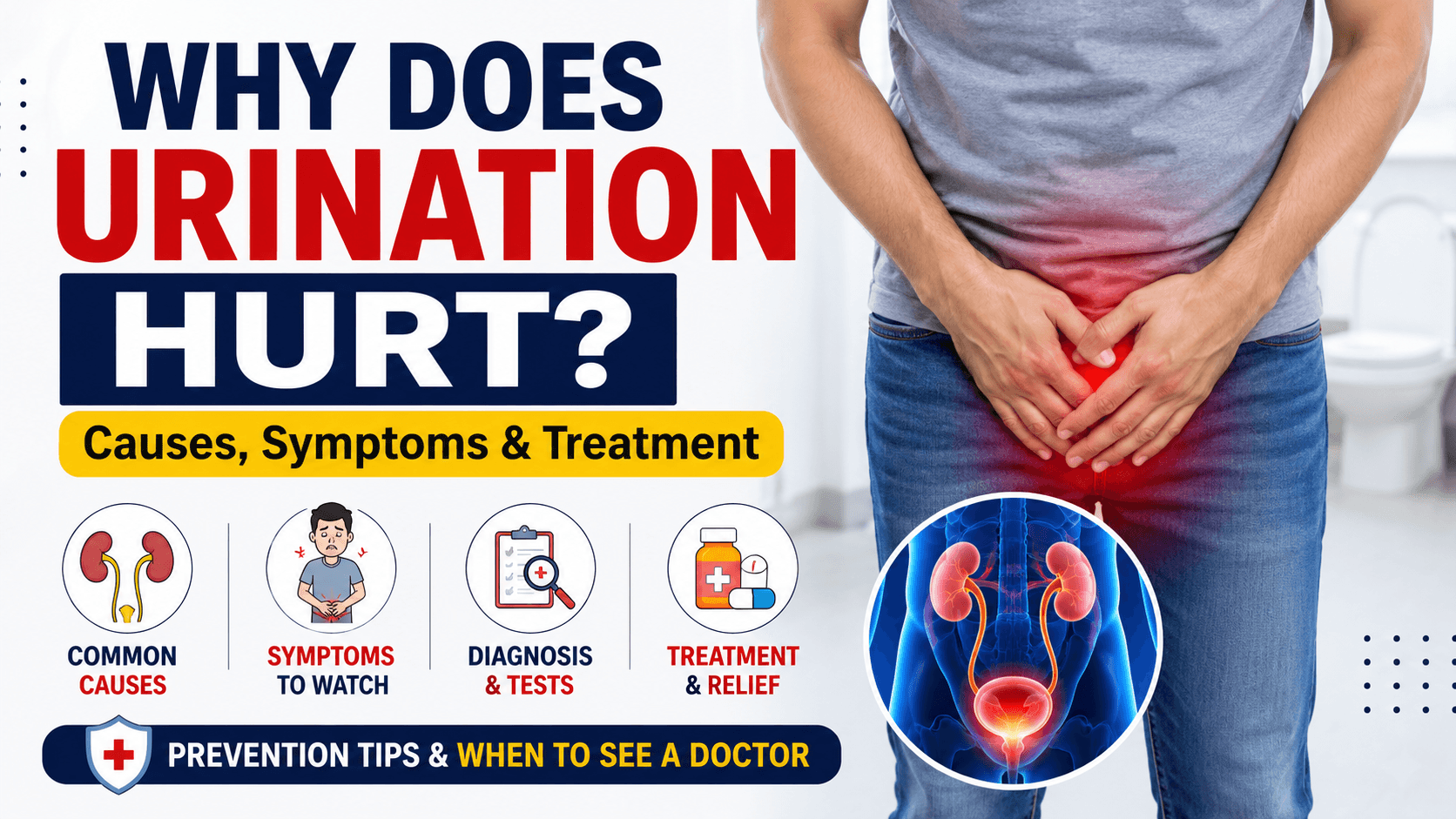
What Is Pain During Urination?
Pain during urination, also known as dysuria, is a burning, stinging, or painful sensation experienced while passing urine or immediately afterward. It is a symptom, not a disease itself, and it can affect both men and women of any age. The pain may be mild or severe and can occur in the urethra, bladder, or pelvic area depending on the underlying cause.
Common Signs of Pain During Urination
- Burning or stinging sensation while urinating
- Sharp or aching pain during or after urination
- Frequent urge to urinate
- Difficulty passing urine
- Cloudy, dark, or foul-smelling urine
- Blood in the urine
- Lower abdominal or pelvic discomfort
The intensity of the pain varies from person to person. Some individuals experience only mild discomfort, while others may find urination extremely painful. The exact location and severity of the pain often help doctors identify the underlying cause.
Why Does It Happen?
Pain during urination is often caused by irritation, inflammation, or a urinary tract infection. Common causes include:
- Urinary tract infection (UTI)
- Bladder infection
- Kidney stones
- Sexually transmitted infections (STIs)
- Prostate problems in men
- Vaginal infections in women
- Irritation from soaps, perfumes, or personal hygiene products
- Certain medications or medical treatments
Although infections are the most common reason, painful urination can also result from non-infectious conditions such as urinary tract irritation or inflammation.
Symptoms That May Occur Along With It
You may also experience other symptoms, such as:
- Fever or chills
- Pain in the lower back or sides
- Strong-smelling urine
- Nausea or vomiting
- Frequent urination with little urine output.
- Feeling that the bladder is not completely empty
If these symptoms occur along with painful urination, medical evaluation is important because they may indicate a more serious condition.
Why You Should Not Ignore It
Ignoring pain during urination can allow an underlying condition to worsen. A simple urinary tract infection, for example, may spread to the kidneys if left untreated. Seeking medical advice early can help identify the exact cause and start appropriate treatment before complications develop.
Maintaining good hydration, practicing proper personal hygiene, and avoiding irritating products can help reduce the risk of urinary problems. However, if the pain lasts more than a day or two, becomes severe, or is accompanied by blood in the urine, high fever, or severe back pain, you should consult a healthcare professional promptly.
Common Causes of Pain During Urination
Pain during urination can occur for many different reasons. In some cases, the cause is a minor irritation that goes away quickly, while in others it may indicate an infection or a more serious medical condition. Identifying the exact cause is important because the treatment depends on the underlying problem. Below are the most common reasons why people experience pain or a burning sensation while urinating.
1. Urinary Tract Infection (UTI)
A UTI is a common cause of painful urination, caused by bacteria in the urinary tract.
Common symptoms of a UTI include:
- Burning pain while urinating
- Frequent urge to urinate
- Passing small amounts of urine.
- Cloudy or foul-smelling urine
- Blood in urine.
- Lower abdominal discomfort
Women are generally more likely to develop UTIs than men because they have a shorter urethra, allowing bacteria to reach the bladder more easily.
2. Kidney Stones
Kidney stones are hard mineral deposits that can cause severe pain during urination.
Other symptoms may include:
- Sharp pain in the back or side
- Blood in the urine
- Nausea and vomiting
- Difficulty passing urine
- Pain that comes in waves
Small stones may pass naturally; larger stones require treatment.
3. Sexually Transmitted Infections (STIs)
Certain sexually transmitted infections, such as chlamydia, gonorrhea, and genital herpes, can cause painful urination by irritating or inflaming the urinary tract.
Possible warning signs include:
- Burning sensation while urinating
- Unusual discharge
- Genital sores or irritation
- Pain during sexual activity
- Pelvic pain
Early testing and treatment help prevent complications and infection spread.
4. Bladder Infection (Cystitis)
A bladder infection is a common UTI. It causes inflammation, making urination uncomfortable or painful.
Symptoms often include:
- Burning while urinating
- Frequent urination
- Pressure in the lower abdomen
- Cloudy or bloody urine
- Mild fever in some cases
Prompt treatment usually clears the infection.
5. Prostate Problems in Men
Men may experience painful urination due to an enlarged or inflamed prostate gland. Prostatitis can put pressure on the urinary tract and cause discomfort.
Common symptoms include:
- Painful urination
- Difficulty starting urination
- Weak urine flow
- Pelvic or lower back pain
- Frequent urination, especially at night
A healthcare provider can determine the exact cause and recommend suitable treatment.
6. Vaginal Infections in Women
Women with yeast infections or bacterial vaginosis may feel pain when urine comes into contact with irritated vaginal tissues.
Other symptoms may include:
- Vaginal itching
- Abnormal discharge
- Redness or swelling
- Pain during intercourse
- Unpleasant odor
Treating the vaginal infection usually relieves the painful urination.
7. Irritation from Personal Care Products
Painful urination isn’t always caused by infection. It can also result from irritation caused by scented soaps or harsh hygiene products.
Common irritants include:
- Scented soaps
- Bubble baths
- Perfumed toilet paper
- Feminine hygiene sprays
- Strong detergents
Using fragrance-free products can help reduce irritation.
8. Certain Medications or Medical Treatments
Some medications, chemotherapy drugs, or radiation therapy can irritate the bladder and urinary tract, leading to pain during urination.
This may happen because:
- The bladder lining becomes inflamed
- Urine contains irritating substances from medications
- The urinary tract becomes more sensitive during treatment
If symptoms begin after starting a new medication, consult your healthcare provider before making any changes.
Key Takeaway
Pain during urination can result from infections, kidney stones, prostate conditions, vaginal infections, urinary tract irritation, or even certain medications. Because the causes vary widely, persistent or severe pain should never be ignored. Getting an accurate diagnosis ensures that the underlying condition is treated properly and helps prevent complications.
Symptoms That May Occur Along With Painful Urination
Pain during urination is often not the only symptom a person experiences. Depending on the underlying cause, several other signs may appear before, during, or after urination. Recognizing these symptoms can help identify whether the problem is caused by a urinary tract infection (UTI), kidney stones, bladder inflammation, prostate issues, or another medical condition. Paying attention to these warning signs can also help doctors make a quicker and more accurate diagnosis.
Common Symptoms Associated with Painful Urination
In addition to a burning or stinging sensation while passing urine, you may notice:
- Frequent urge to urinate, even when the bladder is not full
- Passing small amounts of urine each time.
- Cloudy or foul-smelling urine
- Blood in the urine (pink, red, or brown).
- Pain in the lower abdomen or pelvic area
- Difficulty starting or maintaining urine flow
- Feeling that the bladder is not completely empty
These symptoms often occur together and may become more noticeable if the underlying condition is left untreated.
Signs of a Urinary Tract Infection (UTI)
If you have a UTI, you may also experience:
- A strong, persistent urge to urinate
- Burning sensation every time you urinate
- Pressure or discomfort in the lower abdomen
- Fever and chills (especially if the infection spreads)
- Tiredness or feeling generally unwell
Treat a UTI promptly to prevent it from spreading to the kidneys.
Symptoms That May Indicate Kidney Problems
When painful urination is related to kidney stones or a kidney infection, the symptoms are usually more severe.
Watch for the following signs:
- Sharp pain in the back, side, or below the ribs.
- Severe pain that comes and goes in waves
- Nausea and vomiting
- High fever with chills
- Blood in the urine
- Difficulty passing urine
These symptoms require immediate medical attention, especially if the pain is intense or accompanied by fever.
Symptoms in Men and Women
Although many symptoms are similar, some are more common in one gender than the other.
Men may experience:
- Pain or swelling around the prostate
- Pain during ejaculation
- Weak urine stream
- Frequent nighttime urination
Women may experience:
- Vaginal itching or irritation
- Unusual vaginal discharge
- Pain during sexual intercourse
- Pelvic pressure or discomfort
These additional symptoms can help determine whether the problem involves the urinary tract, reproductive organs, or both.
When Symptoms Become an Emergency
Some symptoms should never be ignored because they may indicate a serious infection or another urgent medical condition.
Seek immediate medical care if you have:
- High fever with chills
- Severe back or side pain
- Large amounts of blood in the urine
- Inability to urinate
- Persistent vomiting
- Severe abdominal pain
- Symptoms that continue for more than two days or worsen despite home care
Early treatment helps prevent complications and speeds recovery.
Key Takeaway
Painful urination is often accompanied by other symptoms that provide important clues about the underlying cause. Frequent urination, cloudy urine, blood in the urine, fever, pelvic pain, and back pain should not be overlooked. If these symptoms are persistent, severe, or combined with high fever or difficulty urinating, consult a healthcare professional as soon as possible. Early treatment not only relieves discomfort but also helps prevent more serious urinary tract or kidney complications.
How Is Pain During Urination Diagnosed?
Finding the cause helps ensure the right treatment. Since painful urination can result from infections, kidney stones, sexually transmitted infections (STIs), prostate problems, or other medical conditions, healthcare providers use a combination of medical history, physical examination, and diagnostic tests to determine the exact cause.
In many cases, a simple urine test is enough to identify the problem. However, if symptoms are severe, recurring, or accompanied by fever, blood in the urine, or severe back pain, additional tests may be needed.
Medical History
The diagnosis usually begins with a detailed discussion about your symptoms and overall health. Your healthcare provider may ask questions such as:
- When did the pain during urination begin?
- Is the pain burning, stinging, or sharp?
- Does the pain occur before, during, or after urination?
- How often do you urinate each day?
- Have you noticed blood or a strong odor in your urine?
- Do you have a fever, chills, back pain, or nausea?
- Have you had urinary tract infections or kidney stones before?
- Are you currently taking any medications?
- Have you recently become sexually active or had unprotected sex?
Providing accurate answers helps narrow down the possible causes and determine which tests are necessary.
Physical Examination
A physical examination allows the doctor to check for signs of infection, inflammation, or other medical conditions.
The examination may include:
- Checking your body temperature for fever
- Feeling the abdomen for tenderness or swelling
- Examining the lower back for kidney pain
- A pelvic examination for women if a vaginal infection is suspected
- A prostate examination for men if prostatitis or an enlarged prostate is suspected
These findings help identify whether the problem is related to the urinary tract or another part of the body.
Urinalysis (Urine Test)
A urinalysis is a common test for painful urination. A small urine sample is examined for signs of infection or other abnormalities.
A urine test can detect:
- White blood cells, which may indicate an infection
- Red blood cells (blood in the urine)
- Bacteria
- Protein or glucose
- Crystals that may suggest kidney stones
This test is quick, painless, and often provides valuable information.
Urine Culture
If a bacterial infection is suspected, the doctor may order a urine culture.
This test helps:
- Identify the exact bacteria causing the infection
- Determine which antibiotic is most effective
- Confirm whether the infection is resistant to certain medications
Although results usually take one to three days, they help ensure the most appropriate treatment is prescribed.
Blood Tests
Blood tests may be recommended if the doctor suspects that the infection has spread beyond the bladder or if kidney function needs to be evaluated.
Blood tests can help assess:
- Signs of infection
- Kidney function
- Levels of inflammation
- Overall health status
These tests are especially useful in severe or complicated cases.
Imaging Tests
If kidney stones, urinary blockage, or structural abnormalities are suspected, imaging tests may be required.
Common imaging tests include:
- Ultrasound of the kidneys and bladder
- CT scan for kidney stones
- X-rays in selected cases
- MRI in specific situations
These scans provide detailed images of the urinary tract and help detect conditions that cannot be identified through urine tests alone.
STI Testing
If symptoms suggest a sexually transmitted infection, your healthcare provider may recommend additional laboratory tests.
These tests may include:
- Urine-based STI tests
- Swab samples
- Blood tests for certain infections
Early diagnosis allows prompt treatment and helps prevent complications or transmission to others.
Cystoscopy (When Needed)
In some cases, especially when symptoms keep returning or no clear cause is found, a cystoscopy may be recommended.
During this procedure:
- A thin camera is inserted into the urethra.
- The doctor checks the urethra and bladder for abnormalities.
- It can detect bladder stones, tumors, strictures, or chronic inflammation.
Although not required for everyone, cystoscopy is valuable for investigating persistent urinary symptoms.
Key Takeaway
Diagnosing pain during urination involves more than simply identifying the symptom—it requires finding the underlying cause. Doctors typically begin with your medical history, a physical examination, and a urine test. Depending on the results, additional tests such as urine culture, blood tests, imaging scans, STI screening, or cystoscopy may be recommended. An accurate diagnosis ensures that the correct treatment is started quickly, reducing discomfort and helping prevent complications such as kidney infections or long-term urinary tract problems.
Treatment Options for Pain During Urination
Treatment depends on the underlying cause. Since painful urination is a symptom rather than a disease, identifying the exact reason is essential before starting treatment. In many cases, proper medication and simple lifestyle changes can relieve symptoms within a few days. However, more serious conditions such as kidney infections or large kidney stones may require specialized medical care.
Medications for Infections
If a bacterial urinary tract infection (UTI) or bladder infection is diagnosed, the doctor will usually prescribe antibiotics. Complete the full course of antibiotics, even if you feel better.
Treatment may include:
- Antibiotics for bacterial infections
- Antifungal medications for yeast infections
- Antiviral medicines for certain viral infections
- Pain-relieving medications to reduce burning and discomfort
Never take antibiotics without a prescription, as using the wrong medication can make bacterial resistance more likely.
Treatment for Kidney Stones
Kidney stone treatment depends on the stone’s size and location.
Small kidney stones may be treated with:
- Drinking plenty of water
- Pain-relieving medications
- Medicines that help the stone pass naturally
For larger stones, the doctor may recommend:
- Shock wave therapy to break the stones
- Ureteroscopy to remove the stone
- Surgery in severe cases
Prompt treatment helps prevent kidney damage and urinary blockage.
Lifestyle and Home Care
Simple self-care measures can help reduce discomfort and support recovery, especially in mild cases.
Helpful home care tips include:
- Drink plenty of water throughout the day.
- Avoid holding urine for long periods.
- Maintain good personal hygiene.
- Wear loose-fitting cotton underwear.
- Avoid scented soaps, bubble baths, and other irritating products.
- Limit alcohol, caffeine, and spicy foods if they worsen symptoms.
These healthy habits help prevent future urinary tract problems.
Treatment for STIs and Other Conditions
If painful urination is caused by a sexually transmitted infection (STI), both the patient and, when appropriate, their sexual partner may need treatment to prevent reinfection.
Depending on the diagnosis, treatment may include:
- Antibiotics for bacterial STIs
- Antiviral medication for viral infections
- Follow-up testing after treatment
- Temporary avoidance of sexual activity until treatment is completed
Follow your healthcare provider’s instructions for a full recovery.
When Hospital Treatment May Be Needed
Although most cases can be treated at home, some situations require immediate medical attention or hospitalization.
Seek urgent medical care if you have:
- High fever with chills
- Severe back or side pain
- Persistent vomiting
- Difficulty or inability to urinate
- Large amounts of blood in the urine
- Symptoms that continue despite treatment
These signs may indicate a kidney infection, urinary obstruction, or another serious condition that requires prompt medical care.
Key Takeaway
The best treatment depends on the underlying cause. Bacterial infections often improve with antibiotics, while kidney stones, STIs, or prostate problems may require different treatments. Drinking plenty of water, practicing good hygiene, and avoiding urinary irritants can help relieve symptoms and reduce the risk of recurrence. If the pain is severe, lasts more than a few days, or is accompanied by fever, blood in the urine, or severe back pain, consult a healthcare professional without delay for proper diagnosis and treatment.
How to Prevent Pain During Urination
Although not every case of painful urination can be prevented, many common causes—such as urinary tract infections (UTIs), bladder irritation, and certain infections—can often be avoided by following healthy daily habits. Maintaining good urinary health not only reduces the risk of pain during urination but also helps protect the kidneys and bladder from future problems.
Stay Well Hydrated
Drinking enough water is one of the easiest and most effective ways to support urinary tract health. Water helps flush bacteria and other harmful substances out of the urinary system.
To stay hydrated:
- Drink plenty of water throughout the day.
- Drink more fluids during hot weather or exercise.
- Limit sugary drinks and excessive caffeine.
- Avoid becoming dehydrated for long periods.
Proper hydration can reduce the risk of urinary tract infections and kidney stone formation.
Practice Good Personal Hygiene
Good hygiene plays an important role in preventing bacteria from entering the urinary tract.
Healthy hygiene habits include:
- Wash the genital area daily with clean water.
- Wipe from front to back after using the toilet.
- Change underwear every day.
- Wear clean, breathable cotton underwear.
- Avoid staying in wet clothing for long periods.
These simple habits can significantly lower the chance of developing urinary infections.
Avoid Irritating Products
Certain personal care products may irritate the urethra and surrounding skin, causing discomfort during urination.
Try to avoid:
- Scented soaps
- Bubble baths
- Feminine hygiene sprays
- Perfumed toilet paper
- Strong detergents used on underwear
Choosing fragrance-free and gentle products is often better for sensitive skin.
Maintain Healthy Bathroom Habits
Your daily bathroom routine can also affect urinary health.
Helpful habits include:
- Do not hold urine for long periods.
- Empty your bladder completely when urinating.
- Urinate after sexual activity to help remove bacteria.
- Avoid rushing while using the toilet.
These habits reduce the risk of bacterial growth inside the urinary tract.
Follow a Healthy Lifestyle
A healthy lifestyle helps your body fight infections.
Healthy lifestyle tips:
- Eat plenty of fruits and vegetables.
- Limit excessive alcohol and caffeine.
- Exercise regularly.
- Get enough sleep each night.
- Avoid smoking and tobacco products.
A strong immune system can help lower the risk of many urinary tract conditions.
Know When to Seek Medical Advice
Even with good preventive habits, painful urination can still occur. Early medical evaluation helps prevent minor problems from becoming serious.
Consult a healthcare professional if you experience:
- Pain during urination lasting more than two days
- Frequent or recurring urinary tract infections
- Blood in the urine
- High fever or chills
- Severe back or side pain
- Difficulty passing urine
Prompt diagnosis and treatment can prevent complications such as kidney infections or long-term urinary problems.
Key Takeaway
Preventing pain during urination starts with simple everyday habits. Drink plenty of water, maintain good hygiene, avoid irritating products, and follow healthy bathroom habits to reduce urinary tract problems. While prevention is important, persistent or severe symptoms should always be evaluated by a healthcare professional to identify the underlying cause and receive appropriate treatment.
When Should You See a Doctor for Pain During Urination?
Mild pain during urination may sometimes improve on its own, especially if it is caused by temporary irritation or mild dehydration. However, painful urination should never be ignored if it persists, becomes more severe, or is accompanied by other concerning symptoms. Seeking medical attention at the right time can help diagnose the underlying cause early and prevent complications such as kidney infections or permanent urinary tract damage.
See a doctor if pain lasts more than 2 days.
Occasional discomfort may not always indicate a serious condition, but pain that continues for more than 48 hours should be evaluated by a healthcare professional.
You should schedule a medical appointment if:
- The burning sensation does not improve after two days.
- Pain becomes more severe with each urination.
- Symptoms keep returning after treatment.
- Home remedies do not provide relief.
Persistent symptoms often indicate an infection or another medical condition that requires proper treatment.
Watch for Warning Signs
Certain symptoms suggest that painful urination may be caused by a more serious health problem.
Seek medical care immediately if you notice:
- Blood in the urine
- High fever or chills
- Severe pain in the lower back or sides
- Persistent nausea or vomiting
- Difficulty or inability to urinate
- Severe pelvic or abdominal pain
- Confusion or weakness, especially in older adults
These symptoms may indicate a kidney infection, urinary blockage, or another urgent medical condition.
People Who Should Not Delay Medical Care
Some individuals have a higher risk of developing complications and should seek medical advice as soon as symptoms appear.
This includes:
- Pregnant women
- Older adults
- Young children
- People with diabetes
- Individuals with weakened immune systems
- People with chronic kidney disease
- Anyone with a history of frequent urinary tract infections
Early treatment helps prevent serious complications.
What to Expect During Your Medical Visit
During your appointment, the doctor will ask about your symptoms and medical history before recommending the appropriate tests.
The evaluation may include:
- A discussion about your symptoms
- Physical examination
- Urinalysis (urine test)
- Urine culture
- Blood tests if necessary
- Ultrasound or CT scan for suspected kidney stones
- STI testing when appropriate
These tests help identify the exact cause of painful urination so the most effective treatment can be started.
Why Early Diagnosis Matters
Many people delay seeking medical care because they assume the pain will disappear on its own. Unfortunately, untreated urinary problems can become much more serious over time.
Early diagnosis can help:
- Treat infections before they spread to the kidneys
- Prevent complications from kidney stones
- Detect prostate or bladder problems sooner
- Reduce pain and discomfort more quickly
- Lower the risk of recurrent urinary tract infections
- Improve overall urinary health
Early treatment speeds recovery and improves outcomes.
Tips Before Visiting the Doctor
To help your healthcare provider make an accurate diagnosis, consider preparing the following information before your appointment:
- When the pain first started
- When the pain occurs—before, during, or after urination.
- Any additional symptoms you have noticed
- Current medications or supplements
- Recent urinary tract infections or kidney stones
- Recent sexual activity if STI exposure is possible
Providing clear information can make diagnosis and treatment more efficient.
Key Takeaway
Pain during urination should not be ignored if it lasts more than two days, becomes severe, or is accompanied by symptoms such as fever, blood in the urine, severe back pain, vomiting, or difficulty urinating. Early medical evaluation can identify the underlying cause, whether it is a urinary tract infection, kidney stones, a sexually transmitted infection, or another condition. Prompt diagnosis and appropriate treatment not only relieve discomfort but also help prevent serious complications and protect your long-term urinary health.
Conclusion
Pain during urination is a common symptom that should never be ignored, as it may indicate an underlying condition such as a urinary tract infection (UTI), kidney stones, bladder inflammation, sexually transmitted infections (STIs), or prostate problems. While some cases are mild and improve with proper hydration and self-care, persistent or severe symptoms require prompt medical evaluation.
The key to effective treatment is identifying the exact cause. A healthcare provider may recommend urine tests, blood tests, imaging scans, or other diagnostic procedures to determine the underlying problem. Once diagnosed, most conditions can be successfully treated with medications, lifestyle changes, or other appropriate medical interventions.
You can also reduce your risk of painful urination by following healthy daily habits, including:
- Drink plenty of water for a healthy urinary tract.
- Maintain good personal hygiene.
- Avoid scented or irritating personal care products.
- Do not hold your urine for long periods.
- Practice safe sexual habits.
- Seek medical care if symptoms persist or become severe.
If you experience blood in the urine, high fever, severe back pain, vomiting, difficulty urinating, or pain that lasts for more than two days, do not delay seeking medical attention. Early diagnosis and timely treatment can prevent complications, speed up recovery, and protect your long-term urinary health.
By understanding the causes, recognizing the warning signs, following preventive measures, and knowing when to see a doctor, you can take the right steps to manage painful urination effectively and maintain a healthy urinary system.
➤ Click this link to discover powerful remedies for common body diseases and valuable tips to protect and maintain your overall health.
https://onlinehelpful.com/category/health/
➤ Would rather watch than read? Click the link below to see the full video guide.
https://youtu.be/j3d4gWHRhZU?si=7v61_6rCmRmAkD3P
Frequently Asked Questions
Q1. Why does it hurt when I urinate?
Answer: Pain during urination is usually caused by a urinary tract infection (UTI), bladder infection, kidney stones, sexually transmitted infections (STIs), prostate problems in men, or vaginal infections in women. In some cases, irritation from scented soaps or personal hygiene products can also cause discomfort.
Q2. Is pain during urination always a sign of a UTI?
Answer: No. Although UTIs are one of the most common causes, painful urination can also result from kidney stones, STIs, bladder inflammation, prostate conditions, or irritation from certain chemicals and medications.
Q3. When should I see a doctor for painful urination?
Answer: You should see a doctor if the pain lasts longer than two days, becomes severe, is accompanied by fever, chills, blood in the urine, severe back pain, vomiting, or difficulty urinating.
Q4. Can dehydration cause pain during urination?
Answer: Yes. Dehydration can make urine more concentrated, which may irritate the urinary tract and cause a burning sensation. Drinking enough water often helps reduce mild discomfort caused by dehydration.
Q5. How is pain during urination diagnosed?
Answer: Doctors usually diagnose the cause through your medical history, a physical examination, urine tests, urine culture, blood tests, imaging scans such as an ultrasound or CT scan, and STI testing if necessary.
Q6. What is the best treatment for pain during urination?
Answer: The best treatment depends on the underlying cause. Bacterial infections are typically treated with antibiotics, while kidney stones, fungal infections, or other conditions require different treatments. Your doctor will recommend the most appropriate treatment after diagnosis.
Q7. Can pain during urination go away on its own?
Answer: Mild irritation caused by dehydration or temporary chemical irritation may improve on its own. However, if symptoms persist, worsen, or recur frequently, medical evaluation is important to identify and treat the underlying condition.
Q8. How can I prevent pain during urination?
Answer: You can lower your risk by drinking plenty of water, maintaining good personal hygiene, avoiding scented personal care products, not holding your urine for long periods, practicing safe sex, and seeking early treatment for urinary infections.
Q9. Is pain during urination a medical emergency?
Answer: Pain during urination itself is not always an emergency. However, it becomes urgent if it is accompanied by high fever, severe back or side pain, large amounts of blood in the urine, inability to urinate, or persistent vomiting. These symptoms require immediate medical attention.